Finance


S&P U.S. Charter Schools Rating Actions, Second-Quarter 2020.

View the Rating Actions.


S&P Credit FAQ: Pension And OPEB Guidance In U.S. Public Finance Credit Analysis

On Oct. 7, 2019, S&P Global Ratings published “Guidance: Assessing U.S. Public Finance Pension And Other Postemployment Benefit Obligations For GO Debt, Local Government GO Ratings, And State Ratings.” Here, we answer the most frequently asked questions from investors and other market participants.

Elsewhere, we have also provided an overview on our approach to U.S. state and local government pensions within the context of our three government criteria (see “Credit FAQ: Quick Start Guide To S&P Global Ratings’ Approach To U.S. State And Local Government Pensions,” published May 13, 2019).

Frequently Asked Questions

Will the guidance change over time?

Yes, guidance may change over time. Specifically, the market periodically changes and the discount rate and long-term medical trend guidelines may be adjusted to align with updated capital market assumptions and medical trend models. It is important to note that, while we expect this discount rate guideline may continue to be updated periodically, it represents a long-term view of underlying risk.

Why did the discount rate guideline change?

The discount rate, generally equivalent to the assumed return on assets in the U.S. public sector, is equal to inflation plus the real return on accepted market risk for an individual pension plan. The guideline is updated for two primary reasons: the underlying long-term inflation assumption decreased to 2.4% from 2.6%; and updated market conditions reflect generally lower returns for a given level of risk.

Will ratings change as a result of the published guidance, including periodic updates?

We expect no rating changes due to the publication, or periodic update, of guidance, as the purpose of this guidance is to provide clarity on important pension and OPEB factors, including actuarial inputs, that we consider in applying our existing criteria. Our analysts consider the guidelines for assumptions and methods within the context of an obligor’s overall unique credit profile, including its ability to afford rising costs and proactive management measures to address them. Because guidance articulates and provides transparency about application of existing criteria, it does not necessitate a review of existing ratings covered by these criteria.

Continue reading.


Public Pensions Face a COVID-19 Conundrum.

Scholars disagree over how to deal with the threat of exhausting a plan’s assets.

Faced with depleting assets, and with state and local governments under fiscal pressure from the COVID-19 recession, public pension plan sponsors have some tough choices ahead of them in order to remain sustainable during economic uncertainty.

However, there are widely differing views among economic scholars as to what the most prudent strategy is for state and local governments dealing with low returns on pension investments, aging workforces, and pressure to build portfolios to cover promised future benefits—as well as other budgetary responsibilities.

Those conflicting views were on display at the 2020 Municipal Finance Conference, which was organized by thinkthank the Brookings Institution and held virtually earlier this week.

Louise Sheiner and Finn Schuele of the Brookings Institution’s Hutchins Center on Fiscal and Monetary Policy and Jamie Lenney of the Bank of England expanded on their presentations from last year’s conference, which argued that state and local government pension liabilities can be stabilized as a share of the economy with relatively modest fiscal adjustments.

They examined how the change in the economic landscape, such as lower interest rates, has affected pension sustainability. And, considering the fiscal distress most state and local governments are currently dealing with, they also looked into how reducing or putting a moratorium on pension contributions in the near-term to avoid bigger cuts to core services would affect that sustainability.

The three noted that pension contributions in 2019 for the US as a whole represented 4.7% of revenues raised from taxes and fees, which is a significant source of funds considering gross domestic product (GDP) is expected to be down approximately 6% in 2020, with state and local revenue down even more than that.

They argued that cutting back on pension contributions could “go a long way” toward mitigating spending cuts and considered the sustainability implications of putting a moratorium on pension contributions for three years.

Sheiner said that if plans are allowed to be less funded, but stable after a moratorium, it actually lowers the required contributions that must be made or, at worst, would only raise them a little. She said that this was because when rates of return are below economic growth, rates assets are expensive to maintain, and the moratorium reduces assets but makes everyone better off.

“This is probably not going to be the right thing to do for every plan,” she said at the conference. “But I think it’s likely that is the right thing to do for many plans and it should at least be on the table.”

However, Robert Costrell and Josh McGee from the University of Arkansas disagreed with Sheiner, Schuele, and Lenney, arguing that perpetually rolling over pension debt puts a plan in a “precarious financial position” and significantly increases the chance it will run out of assets.

They said that if a plan runs out of assets, it would have to enter pay-as-you-go status, which means benefit payments would have to be made from the state or local government’s annual budget.

“Pay-go is a huge risk,” McGee said during his presentation. “The benefit payments rate is a natural contribution threshold, but most governments are contributing far less than the pay-go rate. So if plans exhaust their assets, contributions would have to increase from around 25% of payroll to around 40% of payroll.”

To put this in context, McGee said that for teachers in Illinois, this would translate to an approximate $1.3 billion increase, or a 25% increase in dollar terms. And for Pennsylvania teachers, that would be approximately a $1.5 billion increase or a 30% rise in dollar terms.

“So this is a big increase that would be incurred if plans exhaust their assets completely,” he said.

Chief Investment Officer

July 16, 2020


Toll Roads With Fewer Cars an Unlikely Haven for Bond Buyers.

Municipal-bond investors are scouring for pockets of the $3.9 trillion market that are a haven from the coronavirus and its recession. Turns out toll roads may be a safe bet.

The nearly $140 billion of debt sold for U.S. toll roads would seem like an unlikely place to shelter from the crippling economic side effects of the pandemic. Cars have disappeared from roads and highways across the country as tens of millions of Americans work from home, have lost their jobs or are bunkered down to avoid infection.

But operators of toll roads were prepared by keeping large cash balances to help them withstand shocks like the pandemic. The Oklahoma Turnpike Authority, one of the largest toll operators by mileage, had more than 590 days of cash on hand at the end of 2019, a figure it had gradually increased following the Great Recession a decade ago, according to data compiled by Bloomberg.

That’s good news for bond buyers. GW&K Investment Management, which oversees more than $30 billion in municipal bond investments, sees such debt as being well positioned even as toll operators report declines in business, said Sheila May, director of municipal bond research.

“This is a sector that traditionally has held a lot of cash,” May said, adding that her firm favors large toll operators serving metro areas.

Moody’s Investors Service found that most of the publicly-owned toll roads it rates should be able to absorb a 30% revenue decline before debt service coverage ratios reach 1-times or below. Even then, the agencies’ existing cash would help them avoid tapping debt service reserve funds right away, the rating company said in April.

Commercial trucks have also helped blunt the impact of the pandemic on toll agencies’ finances as Americans turned more and more to online shopping to avoid potential infection from the coronavirus. The American Trucking Associations’ index of truck tonnage jumped 8.7% in June, the most for a month since 2013, according to a July 21 report. The trade group said the increase wasn’t enough to put trucking tonnage to pre-pandemic levels.

Wendy Smith, director of finance and revenue at the Oklahoma Turnpike Authority, said trucking activity has helped prop up the agency. Revenue from trucking customers dropped 11% in April but was down less than 1% for June.

“It really did start to come back,” Smith said.

Using a seven-day rolling average, the authority’s overall revenue is down between 5% and 8%, a level of decline that Smith said could last for the rest of the year. She said she expects the authority will be able to avoid fare hikes.

Additionally, this summer, as the economy reopens in some parts of the country, people using their cars to go on day trips or stay-cations rather than fly may also support the sector.

GW&K’s May said the firm has been looking for “greenshoots” during the downturn. They’re taking into consideration potential changes in people’s habits. “We have to look under the hood a bit more,” she said.

Bloomberg Markets

By Amanda Albright

July 23, 2020, 10:30 AM PDT

— With assistance by Sophia Sung, and Matthew Begley


Investors Have More Faith in Bonds Issued by Airports Than Might be Expected.

KEY POINTS

With airlines suffering from low traffic and billions in losses, investing in airports right now may seem unwise.

But, in fact, airport bonds have been outperforming the broader municipal bond market. Strategists say it’s because airports went into the Covid crisis with a lot of cash on hand and that should help them weather the storm.

According to Moody’s, airports had an average more than 659 days worth of cash.

“I would describe that as a very good cushion of liquidity,” said Tom Kozlik, head of municipal strategy and credit at Hilltop Securities. He said that data on cash holdings was from fiscal year 2018, and the airports were able to build up their hordes even more in 2019.

“They’ve had several years since the end of the last recession, where enplanements were relatively higher. But plenty of them also had infrastructure upgrades they wanted to do,” said Kozlik. “It seems they took advantage of a situation where activity was higher-than-expected, but they also socked some money away.”

Airport bonds were among the hardest hit when the credit markets seized up in February and March, as investors feared the worst for air travel. While air traffic is still weak and enplanement, or passenger boardings, are low, the airport bonds have been able to recover.

“Right now, investors are leaning toward the larger airports,” said Kozlik. “I think the reason is because the market opinion is such they feel there’s less risk in a situation where enplanements might continue to be lower than what we’ve seen pre-Covid. I think folks believe those large airports aren’t going anywhere. There’s just more positive sentiment for those larger airports as a result.”

A $460 billion offering Thursday for Dallas-Fort Worth International Airport, for instance, was met with strong demand. The cities of Dallas and Fort Worth issued the of Series 2020B joint revenue refunding bonds for the airport. According to Bond Buyer, they were repriced to yield from 0.27% with a 5% coupon in 2021 to 1.97% with a 4% coupon in 2040. The 2045 maturity was repriced to yield 2.12%, with a 4% coupon.

There were also bonds issued for the airport last week. The spread on the 10-year revenue bond issued l was just 63 basis points above the AAA rated muni benchmark, according to Kozlik. The bonds were rated A1 by Moody’s and A by Standard and Poor’s. Another $1.14 billion offering is expected for the airport next week.

“Along with the boarder market, the airport sector has tightened up quite a bit,” said Jeffrey Lipton, head of municipal research and strategy at Oppenheimer. “We are seeing evidence that a number of airport bonds are being priced tighter than some other higher end credits.”

While airlines were given relief under the CARES Act, Congress also gave funds to airports. Kozlik said the funds amounted to 22% of revenues for a list of airports he follows.

Rating agencies have a negative outlook on the sector, and strategists warn there could be downgrades. Not all airports are attractive, and investors should pick among the better rated, bigger airports.

“Heading into Covid-19, I was a fan of the airport sector, and I’m still a fan of the airport sector,” said Lipton. “But we have to be more selective now. If you look at gateway airports, those aren’t going anywhere.” Gateways would be Los Angeles or San Francisco or New York.

Moody’s warns that airports could be at risk if they have a high concentration of service by one airline, since an airline can cancel where it travels to and from. They also are at risk if an airline undergoes massive layoffs.

“Though large airports can bear the risk of high airport concentration, they also benefit from being essential to the airline’s network and are typically highly profitable for airlines,” Moody’s wrote. “However, small airports with high airline concentration do not share this benefit. We expect the hubs that are the most profitable for airlines to see quicker recovery from the effects of the coronavirus because of their outsized contribution to the airlines’ route networks and profitability.”

In a note from earlier this month, Moody’s said Charlotte, N.C. Airport Enterprise, which it rates Aa3 stable, and Dallas-Fort Worth are among the airports with the best recovery in enplanements so far.

“Small airports in highly competitive markets are likely to face some service consolidations by the airlines into larger airports, as demonstrated by JetBlue’s decision to consolidate its West Coast operations in Los Angeles Departments of Airports- Los Angeles International Airport Enterprise (Aa2 stable) and moving away from LGB (Long Beach Airport),” Moody’s wrote.

Hawaiian airports, which posted the sharpest overall drop in passenger volume in April and May, are likely to see the slowest recovery in passenger volume as long as the state’s stringent travel restrictions remain in place,” noted Moody’s. Hawaii requires that travelers to the state be quarantined for two weeks.

Lipton said airports are difficult to analyze because they have very different revenue streams that go into their debt service.

“Revenues come from parking, revenues can come from hot dogs being sold, alcohol and various products you see in the airports. Often times, they have minimum guarantee revenue agreements” with concessions, he said. They also collect landing fees, and can pass along some of their costs by raising fees.

Lipton said there could be downgrade activity affecting airport bonds. “I think it’s going to be confined to a single notch. We’re not ruling out downgrades, but those downgrades would probably be confined to a single notch as opposed to multiple notch downgrades. I think the sector overall will display relative resiliency throughout this cycle,” Lipton said.

Kozlik said it helps airports to have strong carriers. In the years before Covid, airports were breaking financial records as enplanements grew. Kozlik said the airports that will be better positioned to take advantage of the recovery will be those that stress sound finances and are located in regions and cities with industries and demographic bases that are growing.

In addition to different revenue sources, airports also had widely different amounts of cash. For fiscal year 2018, Miami International, for instance, had 318 days worth of cash, while Boston’s Logan Airport had 628 days, according to Moody’s data. Hartsfield-Jackson in Atlanta had more than 1,000 days worth of cash. This is based on fiscal year 2018 data.

Kozlik said some investors are avoiding airports because of the hit to travel. “That may not be the way to look at it. Look at the underlying credit fundamentals,” he said. Airports, like water and sewer or toll roads issue revenue bonds.

“Typically, a revenue bond, all things being equal … you’re going to get a little more spread compared to the general obligation bonds, and then when you go out the risk spectrum, that’s going to increase the amount of spread you’re going to get,” said Kozlik.

Lipper said munis overall so far are returning 1.21% month to date, based on Bloomberg Barclays data. The transportation sector, including airports, has returned 1.29% in the same period , through July 22. Health care, which outperformed in June at 2%, is returning 1.60% in July so far.

Revenue bonds typically lag general obligation bonds, but because of the outsized hit to revenue bonds earlier in the year, their comeback has helped them outperform GO debt.

cnbc.com

by Patti Domm

JUL 24 2020


SIFMA: Joint Support of LOCAL Infrastructure Act

SUMMARY

SIFMA as part of a joint industry letter provides comments to the Honorable Mitch McConnell and the the Honorable Charles Schumer in strong support of S. 4129, the Lifting Our Communities through the Advance Liquidity for Infrastructure Act (LOCAL), as well as in support of S. 4203, the American Infrastructure Bonds Act.

Read Letter.


States, Cities Shelve Public Works as Recession Hammers Revenue.

America’s states and cities are putting infrastructure projects on hold as tax revenue tumbles, threatening to deal another setback to an already sputtering economy.

New York’s Metropolitan Transportation Authority, the operator of the nation’s largest public transit system, is putting its $51.5 billion, five-year capital program on hold as the pandemic decimates subway ridership. The Port Authority of New York and New Jersey said in securities filing that its plans may also need to be delayed. In Massachusetts, the agency that runs Boston’s Logan Airport said it’s cutting $100 million in spending and shelving $1 billion of projects.

Across the country, about two-thirds of cities reported delaying or canceling infrastructure and capital spending since the coronavirus drove the nation into a recession, according to a survey by the National League of Cities. At least $9 billion of construction work on transportation projects has been shelved so far, according to the American Road & Transportation Builders Association.

David Berger, mayor of Lima, Ohio, with 36,000 residents, said the city doesn’t have the money for large-scale infrastructure projects without federal help and needs to reduce its payroll by 10% to make up for lost revenue.

“Our budget has been severely impacted,” he said.

The cutbacks illustrate how local budget deficits will weigh on the recovery, just as they did in the wake of the last recession, if aid isn’t forthcoming from Washington. While the U.S. House approved a $3.5 trillion stimulus measure that provides about $1 trillion to states and cities, Senate Republicans intend to scale the spending back and are balancing the aid against other priorities, including calls to extend federal unemployment benefits that are set to lapse.

The cutbacks also threaten to worsen the state of America’s infrastructure, which the American Society of Civil Engineers already said needed $2 trillion of additional investment over 10 years. While President Donald Trump promised to deliver a major infrastructure program when he ran for office, none has been enacted.

With interest rates holding at the lowest in decades, governments have been aggressively refinancing their debts to save money. But even during the economic expansion they were loathe to take on new obligations, which has kept the amount of state and local government debt outstanding roughly steady for the past decade.

Randy Gerardes, head of municipal strategy at Wells Fargo Securities, said the outlook for borrowings to fund new projects looks grim.

“Generally, they’re trying to deal with the virus and what’s right in front of them,” he said.

Bloomberg Markets

By Emmy Lucas and Amanda Albright

July 20, 2020, 7:35 AM PDT


Transportation Agencies Are Bracing For The Worst.

Widespread public fear of traveling and especially using public transportation paired with the shelter-in-place mandate in most metropolitan cities are two key detriments for transportation agencies around the United States.

In the first stimulus round of funding, the federal government allocated around $25 billion for transit agencies in the United States, which kept them afloat for the time being. However, with a prolonged shutdown and no clear solution in sight, many agencies are contemplating different ways to cut costs, including service cuts. Furthermore, transportation agencies are also requesting additional federal help to sustain their operations until their ridership levels start rising to normal levels.

In this article, we will take a closer look at the impact of COVID-19 on various transportation agencies and what to expect in the near future.

Continue reading.

municipalbonds.com

by Jayden Sangha

Jul 22, 2020


FY21 Appropriations Bill Calls for Billions in Transportation Funding - Nossaman

The full House will consider the FY21 Transportation, Housing and Urban Development (THUD) bill that the House Appropriations Committee approved with a final vote of 30-22 on July 14, 2020. For FY2021, the THUD bill provides a total of $107.2 billion in total budgetary resources for the U.S. Department of Transportation, including:

The legislation also provides $26 billion of emergency funding to support economic recovery from the coronavirus pandemic by investing in transportation infrastructure, including:

Additionally, the bill adopted by the full Committee includes amendments requiring the use of masks and enhanced sanitation measures on airlines, Amtrak, and in large transit agencies.

The same day the THUD bill passed out of committee, the American Public Transit Association (APTA) sent a letter to congressional leadership requesting $32-36 billion in additional transit funding. Estimates of the pandemic’s devastating financial impact on transit include: $700-800 million/month loss by New York MTA, $1.8 billion loss over two years for Los Angeles County MTA, $500-$800 million loss through 2023 for Southeastern Pennsylvania Transportation Authority, $100-150 million deficit in 2021 for Regional Transportation District of Denver, and $975 million deficit over a three year period for Bay Area Rapid Transit.

Nossaman LLP

By Donna Brady on 07.22.2020


What Investors Want to Know: U.S. Transportation and the Coronavirus Crisis (Questions from Investor Discussions)

Read the Fitch Q&A.

Tue 14 Jul, 2020 – 8:45 PM ET


Fitch: Coronavirus-Induced Travel Stoppage Clouds U.S. Transportation

Related Fitch Ratings Content: What Investors Want to Know: U.S. Transportation and the Coronavirus Crisis (Questions from Investor Discussions)

Fitch Ratings-Austin-14 July 2020: With non-essential travel largely ground to a halt due to the coronavirus, the ability of transportation segments to maintain revenues and passenger traffic will be an increasing challenge according to a new report that addresses questions Fitch Ratings has received from investors over the health of transportation infrastructure as fallout from the pandemic continues.

The investor questions include a query about U.S. airports’ ability to fund capital projects, which will face a stiff test in the near term because pay-go funding liquidity is under strain against the volatile capital markets. ‘Federal monies that airports can use for any lawful purpose and existing funds held in unrestricted reserves and construction accounts will soften the blow somewhat,’ said Senior Director Seth Lehman. ‘That said, obtaining broad airline support will be more difficult until the aviation environment recovers.’

As a result, airports are likely to either defer expansionary projects or scale back less essential projects altogether to offset cash flow weakness. Examples include capital projects at LAX (Midfield Concourse), New York’s LaGuardia Airport (Central Terminal) and Kansas City, all of which are likely to continue given the funding was covered from previous bond issues, which is leading investors to inquire as to what happens to completion prospects once the funding well runs dry for these projects.

The CDC’s current “no sail order” has put a lid on cruise travel through at least Sept. 15 and will put substantial pressure on cruise operator passenger levels through at least the end of the third quarter. As a result, investors are asking how this will affect cruise ports over time. ‘Ports are shielded to some extent thanks to minimum annual guarantees with cruise operators, though most cruise ports were operating well above their minimum annual guarantees level in recent years,’ said Lehman. ‘Cruise lines at some ports invoked force majeure clauses under their contracts due to the coronavirus, which may provide cruise lines relief from meeting their minimum annual guarantee levels during their contract year if cruise operations are suspended for a long period.’

This also brings into question how traffic for nearby toll roads will be affected if cruise demand continues to hover at around 50%. ‘Lower cruise demand will undoubtedly have an effect, but it is doubtful it would be sufficient in isolation to lead to negative rating actions for toll roads,’ said Lehman. ‘Regions that serve large numbers of cruise passengers like Miami and Fort Lauderdale have a significant tourism component to their economies, but tend to be midsize to large and growing with increasingly diverse economic activity.’

Fitch will continue to maintain an active dialogue with investors as the fallout of the pandemic plays out for transportation infrastructure over time. ‘What Investors Want to Know: U.S. Transportation and the Coronavirus Crisis’ is available at ‘www.fitchratings.com’.

Contact:

William Schmid
Associate Director
+1-512-813-5704
Fitch Ratings, Inc.
111 Congress Avenue, Suite 2010
Austin, TX 78701

Seth Lehman
Senior Director
+1-212-908-0755

Media Relations: Sandro Scenga, New York, Tel: +1 212 908 0278, Email: sandro.scenga@thefitchgroup.com

Additional information is available on www.fitchratings.com


Congress Considers Additional Support for Tax-Exempt Issuers and State and Local Infrastructure Projects during COVID-19 Recovery.

Two bills from the House of Representatives (H.R.2, the Moving Forward Act, and H.R.3967, the Municipal Bond Market Support Act) and two from the Senate (S.4203, the American Infrastructure Bonds Act, and S.4129, the Lifting Our Communities through Advance Liquidity (“LOCAL”) for Infrastructure Act) could have significant effects on state and local government bond issuers and developers of infrastructure, if enacted, as lawmakers continue to address financial hurdles facing issuers related to the COVID-19 pandemic. This alert will discuss some of the significant provisions of each bill and how each could affect state and local government issuers, as well as certain 501(c)(3) conduit borrowers.

H.R.2, the Moving Forward Act
On June 30, 2020 the House of Representatives voted to pass H.R.2 the Moving Forward Act. The 2,300 page bill dedicates $1.5 trillion over the next five years to dramatically improve and develop American infrastructure.

The Moving Forward Act introduces taxable “qualified infrastructure bonds,” under which the Treasury Department would make direct payments to issuers to offset a portion of the interest paid by issuers on such bonds. Under the Moving Forward Act, a qualified infrastructure bond is a bond (1) that would otherwise be exempt from taxation under existing IRS rules and (2) which 100% of the net proceeds are to be used for capital expenditures or operations and maintenance expenditures in connection with capital expenditures. This program is similar to the Build America Bonds program that expired in 2010. The direct payments would begin at 42% of the interest on the bonds, decreasing over seven years to 30%.

The Moving Forward Act proposes the reinstatement of tax-exempt advance refundings, which were eliminated after the passage of the Tax Cuts and Jobs Act of 2017. In addition, the Moving Forward Act would also nearly double the annual volume cap on Private Activity Bonds allotted to the states. Finally, the legislation would greatly expand the New Markets Tax Credit and the Historic Tax Credit programs.

S.4129, the LOCAL Infrastructure Act
On July 1, 2020, Mississippi Senator Roger Wicker introduced S. 4129, the LOCAL Infrastructure Act. The LOCAL Infrastructure Act, like the Moving Forward Act, proposes the elimination of the Tax Cuts and Jobs Act 2017’s repeal of tax-exempt advance refundings. It would permit issuers to refinance certain outstanding obligations while maintaining their tax-exempt status. These actions could, potentially provide significant cost savings that issuers could use to fund additional infrastructure, education, healthcare, or other capital improvements.

S.4203, the American Infrastructure Bonds Act
On July 8, 2020, Senator Wicker and Colorado Senator Michael Bennet introduced S.4203, the American Infrastructure Bonds (“AIB”) Act, a bipartisan bill which substantially expands upon the “qualified infrastructure bonds” provision of Moving Forward Act.

Under the AIB Act, state and local governments would be permitted to issue taxable American Infrastructure Bonds (“AIBs”) for any public expenditure that is eligible to be financed with tax-exempt bonds. This program is also modeled after the Build America Bonds program. However, unlike the Moving Forward Act, proceeds of AIBs are not limited to expenses related to capital expenditures, permitting issuers to use bond proceeds on a wide array of public projects. However, the direct payments under the AIB Act are slightly less than under the Moving Forward Act, beginning at 35% of the interest on the bonds, decreasing over six years to a revenue neutral 28%.

H.R.3967, the Municipal Bond Market Support Act
A fourth bill introduced in the House last year also could provide additional support for certain non-profit and small issuers in their COVID-19 recovery. H.R.3967, the Municipal Bond Market Support Act, introduced by Alabama Representative Terri Sewell and New York Representative Tom Reed in July 2019, would increase the annual limit for certain bank qualified borrowing for small issuers and increase the availability of tax-exempt debt for 501(c)(3) organizations.

Section 265 of the Internal Revenue Code currently permits issuers that issue less than $10 million in tax-exempt obligations annually to designate certain bonds as “qualified tax-exempt obligations.” This designation provides an incentive for banks to purchase debt of these “qualified small issuers” by permitting the banks to deduct 80% of the carrying costs of these obligations. These bonds typically bear interest at lower rates due to their attractive tax-exempt status.

Two large hurdles make taking advantage of qualified tax-exempt obligations particularly difficult for many small issuers. First, the $10 million dollar limit has not been indexed for inflation since its enactment in 1986, meaning that over time, many issuers have become too large to qualify as a qualified small issuer. The bipartisan Municipal Bond Market Support Act proposes to adjust the limit up to $30 million in annual tax-exempt debt and index the limit to inflation to prevent small issuers from losing their qualified status over time.

Second, 501(c)(3) borrowers of tax-exempt conduit issues are pooled together in determining if the conduit issuer may designate the issue as a qualified small issue. The act proposes to count each 501(c)(3) conduit borrower as a separate issuer for purposes of determining whether conduit debt may be designated as qualified tax-exempt obligations. This change would substantially increase the number of nonprofit organizations able to take advantage of the program.

Conclusion
Each of these legislative items could prove helpful for issuers that have been forced to put critical infrastructure projects on hold due to capital markets drying up in the wake of COVID-19 by increasing the number of prospective investors in their obligations. Ultimately, these bills reflect Congress’s continued efforts to stimulate state and local economies throughout the country. The bipartisan support of these bills strongly suggests that some form of additional support is likely forthcoming, and issuers should maintain contact with their bond counsel and advisors in order to stay prepared for any enacted legislation.

Frost Brown Todd LLC

Authors: Denise Y. Barkdull David A. Rogers Michael D. Elliott Michael A. Brockman Emmett M. Kelly

Jul 16, 2020

For updates on the status of the proposed legislation or other information on tools available to government issuers to address financing and cash flow issues related to COVID-19, contact Denise Barkdull, David Rogers, Emmett Kelly, Michael Elliott, Michael Brockman, or any attorney in Frost Brown Todd’s Public Finance industry team, Government Services practice group or the Public-Private Partnerships (P3) industry team.


How Covid-19 Could Revive PPPs in the US Infrastructure Market.

US infrastructure has been badly hit by the Covid-19 outbreak, but there are hopes that the post-pandemic environment will see a refreshed approach to public-private partnership (PPP) projects, as Viola Caon reports.

As has been the case in many countries around the world, the US transport sector has taken a strong hit from the Covid-19 outbreak.

The American Road and Transportation Builders Association reported in July that 14 states and 19 localities cancelled or delayed more than $8.5bn-worth of work planned in the sector due to the outbreak.

While new airport projects are expected to take the biggest hit, works in other sub-sectors were mostly only delayed, and in some cases the quietness brought on by the lockdown meant that some projects were completed ahead of schedule.

The infrastructure investment community does not see this as the end of greenfield public-private partnerships (PPPs) in the country, but warns that federal government support is strongly needed.

However, some point out that an opportunity may be arising from the crisis for the public and private sectors to work more efficiently together.

Availability payment versus traffic risk
Before Covid-19 struck, the US was experiencing what looked like the start of a promising season for much-needed airport renovation and expansion projects. Some of these activities, including capital projects at Los Angeles airport – LAX (Midfield Concourse), New York’s LaGuardia Airport (Central Terminal) and JFK International, and Kansas City International Airport are likely to continue given that the funding was covered from previous bond issues.

Across the sector, availability payment projects – where the private sector is reimbursed by the public sector through a predetermined performance-based payment plan – are likely to be favoured in the medium term over traffic and demand risk projects, where revenues depend on traffic and user demand.

“Investors, whether foreign or domestic, will likely prefer availability payment projects over traffic risk ones,” says Paul Epstein, a partner at law firm Shearman & Sterling’s project development and finance practice. “It should be noted, however, that certain investors in the PPP space have always been more comfortable with the former rather than the latter, and Covid-19 has just emphasised this preference.

“It will be interesting to see if hybridised projects gain pace in the future as a result of the virus outbreak,” he adds.

Managing partner at fund manager Upper Bay Infrastructure Partners Mario Maselli says that in terms of live projects, even the ones that have just an availability payment component are going ahead.

“We are involved in a rail project in North America, which is going ahead according to schedule as the final product is on an availability payment basis,” he adds. “Another tunnel project that we were looking at was heavily competed for and while it is not an availability payment situation, it guarantees a payment stream over the next ten years, which is pretty rare in transport these days.”

Other transport projects at procurement stage include the Capital Beltway and I-270 Corridor in Maryland – a traffic and revenue risk project – which sources say has attracted less interest and is likely to proceed more slowly than the SR 400 Express Lanes in Georgia (an availability payment project).

While the first one has only attracted the interest of four consortia at the first round, the Georgia Department of Transportation Road P3 on 26 June shortlisted Metro-Atlanta Express Solutions (led by Spain’s ACS Infrastructure and Itinera Infrastructure); MW 400 Partners (led by France’s Meridiam); and North Link Partners (led by the UK’s John Laing Investments) for the second project’s final round.

Pipeline issues: An opportunity for renaissance?
While projects that had already launched before the virus outbreak were able to proceed with varying degrees of difficulty, the biggest unknown is the extent to which new projects are going to come to market in the medium term.

David Baxter, sustainable PPP and development consultant and committee member of the World Association of PPP Units & Professionals, recently conducted a survey of 157 PPP practitioners across 69 countries on the status of the industry amid the pandemic.

Of transport, he says responses identified it as one of the most concerning but potentially one of the most promising sectors in the post-Covid world.

In advance of the launch of our FDI-focused site, please complete the following survey aimed at investigating how investment plans are changing in the wake of Covid-19.

Your participation is confidential and the survey will take no longer than 5-10 minutes to complete. As a thank you we will share a copy of the survey write up with you.

“Overall, PPPs are not going to die as a result of Covid-19,” says Baxter. “If anything, I believe we are going to see a renaissance in the approach to PPP. This crisis might lead to the improvement in the interaction between the public and private sectors that the industry so desperately needs. Both sides have resources, but they are limited unless they join forces.

“Another theme to emerge strongly from the crisis is going to be innovation,” he adds. “The infrastructure sector, especially in the US and especially in transport, needs a lot of improvement and renovation. Sustainable and resilient transport PPPs are going to be a big trend, and it is likely to bring about more brownfield project consideration alongside greenfield projects.”

However, this is not the end for greenfield infrastructure either, Baxter argues.

“Mega, multi-billion-dollar projects are unlikely to come to market over the next four to five years during the resetting of post-pandemic priorities,” he says. “There is not going to be the money nor the appetite to finance those for a while, but there will likely be a focus on smaller projects on the greenfield side.”

Government support needed
Whether big or small, infrastructure projects are likely to require support from the federal government if they are to carry on. An already well-trodden debate in the US, Covid-19 has further exposed the need for the central government to support the states and municipalities that are struggling to shoulder the economic burden of delivering the infrastructure programme that the country needs alone.

Achieving this is, however, easier said than done, according to many.

“Federal government intervention is what the industry should be focusing on right now,” says Kent Rowey, a partner at law firm Allen & Overy’s projects, energy and infrastructure practice. “The federal gas tax trust fund outlived its usefulness long ago. Reforms are needed, for instance, around private use limitations on tax-exempt bonds and increases in allocation for wider sector eligibility for private activity bonds where the federal government would be able to use existing funding tools and subsidies to give a much-needed shot in the arm to the sector.

“There have been discussions, for instance, about including the airport sector in the Transportation Infrastructure Finance and Innovation Act (Tifia), which provides credit assistance for surface transport projects,” he adds. “However, it is probably unrealistic to expect legislation for infrastructure spending stimulus before the elections [in November].”

Partner at consultancy firm Arup Tim Treharne explains that a proposed relaxation of the requirements for Tifia is part of the major pending federal legislation regarding infrastructure stimulus, the $494bn, five-year Invest in America Act, a reauthorisation of federal surface transportation programmes that was passed by the House Committee on Transport and Infrastructure on 18 June.

On 1 July, the House of Representatives passed the $1.5trn Moving Forward Act, which included the Invest in America Act. However, President Donald Trump announced on the same day that he would veto the measure if it reached his desk.

As often happens, the infrastructure stimulus from the federal government has become caught up in disputes between the two parties. The industry agrees, however, that the way forward is for all parties to come together and contribute on infrastructure spending.

“A combination of expansion of existing federal funding programmes, such as Tifia, private activity bonds, and private equity and debt [present] the way forward for infrastructure in the US,” concludes Rowey.

20 JULY 2020


Recent Bipartisan Actions to Restore Tax-Exempt Advance Refundings and Authorize American Infrastructure Bonds: Butler Snow

The “Lifting Our Communities through Advance Liquidity for Infrastructure (LOCAL Infrastructure) Act” (the “LOCAL Infrastructure Act”) and the “American Infrastructure Bonds Act of 2020” (the “AIBs Act”) were recently introduced in the Senate in a bipartisan effort to assist local governments as they respond to the COVID-19 pandemic. If enacted, the LOCAL Infrastructure Act would restore tax-exempt advance refundings for municipal bonds and the AIBs Act would create a new class of “direct-pay” taxable municipal bonds. This post summarizes both items as introduced.

Advance Refunding Bonds and The LOCAL Infrastructure Act

When interest rates decrease, issuers often seek to refinance their outstanding debt. In some cases, previously-issued debt has call protections that prevent the debt from being paid off immediately until such call protections expire. Advance Refunding Bonds allow states, local governments, and other eligible issuers to refinance their existing debt at the lowest possible costs when market conditions favor refinancing. Under this structure, the proceeds of the Advance Refunding Bonds are used to purchase certain types of United States Treasury Securities that are deposited into a restricted escrow account until the prior bonds’ call protections expire and the previously-issued debt is redeemed.

Prior to 2017, Advance Refunding Bonds were allowed to be issued on a tax-exempt basis under the Internal Revenue Code and saved states, local governments, and other eligible issuers billions of dollars in financing costs. The LOCAL Infrastructure Act is a two-page piece of legislation that reinstates the ability of states, local governments, and other eligible issuers to issue Advanced Refunding Bonds on a tax-exempt basis.

United States Senators Roger Wicker, R-(MS), Debbie Stabenow, D-(MI), Shelley Moore Capito, R-(WV), Michael Bennet, D-(CO), John Barrasso, R-(WY), Bob Menendez, D-(NJ), Jerry Moran, R-(KS), and Tom Carper, D-(DE) introduced the LOCAL Infrastructure Act (Senate Bill 4129) on Wednesday, July 1, 2020. To read the full text of the bill, click here.

The LOCAL Infrastructure Act has received support from several national organizations, including The National League of Cities, United States Conference of Mayors, National Association of Counties, National Conference of State Legislatures, American Hospital Association, American Public Power Association, American Society of Civil Engineers, American Public Works Association, National School Boards Association, Government Finance Officers Association, the National Association of Bond Lawyers, the Securities Industry and Financial Markets Association (SIFMA), and the National Association of Towns and Townships.

American Infrastructure Bonds and the AIBs Act

On Wednesday, July 8, 2020, United States Senators Roger Wicker R-(MS) and Michael Bennet D-(CO) introduced the AIBs Act (Senate Bill 4203). The AIBs Act proposes the creation of a new class of “direct-pay” taxable municipal bonds known as American Infrastructure Bonds. To read the full text of the AIBs Act, click here.

As proposed, American Infrastructure Bonds would be “direct-pay” taxable bonds where the United States Treasury Department pays a percentage of the interest due directly to a state or local government issuer of American Infrastructure Bonds to offset the difference in the costs of borrowing on a taxable basis. All direct payments under the program would be exempt from sequestration. The proposed amounts of the direct payments would be as follows:

American Infrastructure Bonds would allow states and local governments to access a much larger universe of taxable bond investors that want to invest in infrastructure (including pension funds) that are not eligible to receive the tax advantages associated with traditional tax-exempt municipal debt. Further, American Infrastructure Bonds would be available to all state and local government issuers that want to issue American Infrastructure Bonds and that can find a bond buyer in the taxable bond market. There would be no allocation among the states and no application to a federal agency would need to be made.

As proposed, American Infrastructure Bonds could be issued for any public expenditures that would otherwise be eligible for financing on a tax-exempt basis, including roads, bridges, tunnels, canals, ports, water systems, sewage treatment facilities, storm water management systems, pipelines, utility system expansions and environmental and safety upgrades, long-term natural gas supplies for municipal utility gas distribution systems and electric generation facilities, long-term supplies of electricity for municipal electric utility systems including renewable energy projects, broadband and other telecommunications systems, rail facilities, subways, and other purposes.

The AIBs Act has also received support from several groups, including the National League of Cities, the National Association of Counties, the Government Finance Officers Association, the American Public Gas Association, the National Association of Bond Lawyers, the Bond Dealers of America, the American Society of Civil Engineers, the American Council on Education, the Securities Industry and Financial Markets Association, and the American Planning Association.

Butler Snow LLP

July 24, 2020


Three Measures in the House’s Infrastructure Package Most Fiscally Important to Cities and Towns.

Through NLC’s Rebuild With Us campaign, local leaders are asking Congress to pass a comprehensive infrastructure package that steps up federal support for transportation, water, broadband, workforce, and more. On July 1, the U.S. House of Representatives passed the Moving Forward Act (H.R.2), which makes significant investments to support cities’ infrastructure requests, but Senate action will be needed. This is the fourth in a series examining infrastructure components of the Moving Forward Act focused on finance priorities.

On July 1, 2020, the House passed The Moving Forward Act (H.R. 2), a $1.5 trillion infrastructure package now awaiting action in the Senate. As Chair of the NLC Finance Administration and Intergovernmental Relations (FAIR) Committee, I was pleased to see several legislative priorities we’ve advocated for prior to the passage of the Tax Cuts and Jobs Act (TCJA) in 2017 included in the bill. Relaunching the Build America Bonds program, restoring the tax-exempt status for Advance Refunding Bonds, and extending the New Market Tax Credit are all priorities that will improve the fiscal health of localities across the nation. As city leaders, and as we grapple with the costs associated with COVID-19, we must champion H.R. 2. Our constituents are counting on us.

A critical priority of the infrastructure package is relaunching the Build American Bonds (BABs) Program. Favorable especially to local and state government issuers, BABs are taxable municipal bonds that previously included federal tax credits or subsidies for either the bondholder or the issuer. Seen widely as an alternative to traditional tax-exempt financing, BABs allow for decreased borrowing costs with increased savings for the locality.

The program expired in 2010, but as of 2019, nine Texas cities had BABs outstanding, with a total principal exceeding just over $2.1 billion with total payments peaking at $4.01 billion. Among these nine Texas cities, three are in the top ten most populous cities in the United States (Houston, San Antonio, and Dallas). Also included is San Marcos, frequently named among the nation’s fastest growing localities. These cities and their respective regions are experiencing tremendous population growth – and that’s just in Texas.

It’s critical that we as city leaders continue to make infrastructure development a policy priority interconnected with broader issues such as quality of life and equity. With an increasing demand, the fiscal bill for much of our current infrastructure came due years – and in some cases, decades – ago.

For small and large issuers alike, BABs offset many of the fiscal challenges communities across the nation saw as a result of the Great Recession. Citizens, weary of traditional markets, turned to the municipal bond market, and local governments turned to BABs to attract investment to offset costs associated with large-scale investments in our infrastructure. BABs are a fiscally responsible tool we must bring back.

Advance Refunding Bonds have been a longstanding tool in local governments’ tool chests as well, allowing issuers to take advantage of lower interest rates while minimizing borrowing costs. Here in Houston, the city has realized more than $900 million in present value savings in the last decade alone due to advance refundings. With the restoration of the tax-exempt status for advance refundings, those savings could be even higher.

In 2017, the Tax Cuts and Jobs Act (TCJA) removed the tax exemption for savings generated as a result of advance refundings. Similar to how a homeowner would refinance their home with better interest rates, localities should be able to take advantage of the same benefit. Especially at a time when local governments are staring down rising costs associated with COVID-relief, among other large costs, restoring the tax-exempt status of Advance Refunding Bonds is a critical step in improving the fiscal health of our communities big and small.

Created in 2000 to attract private capital to economically distressed communities, the New Markets Tax Credit (NMTC) provides investors with a Federal tax credit that finance businesses such as manufacturing, food, retail, housing, health, technology and many others in low-income communities.

Since 2003, more than $27 billion in investments have been deployed to communities and neighborhoods most in need. The Community Development Financial Institutions Fund (CDFI Fund) estimates that for every dollar invested by the federal government, more than $8 in private investment is realized. With roughly $1.9 billion in annual federal spending dedicated to NMTC, the multiplier effect of this investment easily offsets the benefits realized by the community as a result of tax obligations forgiven for the new investor. This too is a positive cost-benefit tool intended to incentivize private investment and should be extended permanently.

As the Senate deliberates on the House-passed infrastructure package, many local leaders are still responding to everyday challenges in their communities. From addressing annual budget shortfalls, to funding retirement benefits and rising service demand, our cities and towns are facing a new reality: the pandemic caused by COVID-19. Many of our localities are facing fiscal hardship, and it is our Senators’ obligation to our shared constituencies to pass this tangibly beneficial legislation.

National League of Cities

July 13, 2020

About the Author: Chris Brown is the Controller for the City of Houston and Chair of NLC’s Finance, Administration and Intergovernmental Relations (FAIR) Committee.


To Survive Financial Storm of Virus, States Turn to Congress.

State governments trying to weather the financial storm brought on by the coronavirus are borrowing billions of dollars and desperately trying to slash costs by furloughing workers, delaying construction projects, cutting aid to schools and even closing highway rest areas.

For many states, as well as local governments, the main hope for avoiding even deeper cuts is to get help from Congress, which returns from vacation this week.

In Nevada, lawmakers contending with a $1.2 billion budget gap made deep cuts in a spending plan that was approved over the weekend after painful deliberations. They passed a resolution last week urging Congress to step in.

“We are forced to make impossible decisions regarding funding critical public health, education and more,” Democratic Gov. Steve Sisolak said in a statement. “Congressional leadership must act to help us restore devastating reductions being made to fill this historic shortfall.”

Before the pandemic, states generally were meeting revenue goals for their budget years. Now Congress has already allocated more than $3 trillion in coronavirus aid to individuals, businesses and governments that went into financial shock last spring as much of the nation’s economy shut down.

Unlike most states, the federal government is not required to have a balanced budget. The deficit this year is already a record $2.7 trillion.

The House passed a bill in May to provide another $3 trillion, with about a third of it going to state and local governments. Senate Majority Leader Mitch McConnell, a Kentucky Republican, is calling for a more modest package worth around $1 trillion total. He has not announced details, but he has said that school funding is a priority.

Bipartisan groups including the National Governors Association and the National League of Cities, along with a long list of businesses, want a major aid proposal. If it does not come through, they foresee harsh consequences.

States face a cumulative budget gap of $312 billion over the next two years, and local governments would need nearly $200 billion to meet their expenses, Moody’s Analytics said in a report last month.

Without quick aid, the U.S. economic crisis could deepen, costing 4 million jobs in government and the private sector, according to the economic research arm of the credit rating agency.

Some other estimates, including one from the Center for Budget and Policy Priorities, put the state budget gap even higher — about $555 billion for states alone over the next two fiscal years.

Governments with higher debt and smaller reserves have the greatest needs. Many conservatives are in no hurry to help them.

A group of more than 200 current and former state lawmakers joined with tea party leaders in signing a letter circulated by the American Legislative Exchange Council warning that “a federal bailout would only encourage this cycle of debt and spending to continue.”

Meanwhile, state lawmakers, city councils and school boards are trying to balance their budgets with tax revenue dropping and expenses rising as the nation keeps fighting the virus.

In many cases, the answer has been furloughing or laying off employees.

By last month, there were about 1.5 million fewer people working for governments in the U.S. compared with February, according to seasonally adjusted data from the federal government. More than half the layoffs were in education.

Governments have also adopted budgets with an eye toward what may come out of Washington.

California, for instance, is requiring state government employees to take off two unpaid days each month, but those furloughs could be reduced or eliminated if federal help arrives.

New Jersey is one of a handful of states to authorize debt to keep basic services running, allowing borrowing of nearly $10 billion over the next year, over the objections of some GOP lawmakers. The governor’s office said that figure might be reduced if aid arrives.

Similarly, New York, which also is borrowing, and Missouri have budgets that call for cuts if not enough federal aid shows up.

Wyoming has closed highway rest areas at least through September, while Florida has halted work on a new courthouse in St. Petersburg, one of many construction projects put on hold around the country.

In Lexington, South Carolina, a community of more than 18,000, a park renovation has been put on hold, as have plans to buy new police cars as the town contends with lower local revenue and no word yet on how much it will get from the state government.

“Our municipal employees, who are awesome, will not be getting a raise this year, and that just breaks my heart,” said Kathy Maness, a member of the town council and vice president of the National League of Cities, which is calling for $500 billion in federal help just for cities and counties.

School districts across the country are wrestling with whether to hold classes remotely this fall or bring students back to campus. They are weighing health concerns as well as the cost of reopening. Teachers unions and the National School Boards Association have pegged reopening costs at more than $100 billion.

Other public agencies are struggling too.

Transit systems have seen fare collections evaporate amid stay-at-home orders. Officials at Caltrain, a San Francisco Bay Area commuter rail line, said this week that they may have to end service after San Francisco supervisors blocked a tax increase to boost the agency’s subsidy.

Maryland Gov. Larry Hogan, a Republican who serves as chairman of the National Governors Association, has been making weekly appeals for federal help on teleconferences between governors and the White House.

Last week, Hogan told Vice President Mike Pence it was “the number one issue for all of us.”

By The Associated Press

July 20, 2020


Local, State Aid In Question As GOP Loiters On Stimulus (Radio)

MUNIS in FOCUS: Eric Kazatsky, Senior U.S. Municipals Strategist for Bloomberg Intelligence, discusses the lack of progress on Federal stimulus. Hosted by Paul Sweeney and Vonnie Quinn.

Play Episode

Bloomberg Radio

July 24, 2020 — 10:14 AM PDT


American Cities See Economic Hit in Grim Mayors’ Report.

The coronavirus pandemic may lead to an 8.1% decline in the U.S. gross domestic product in 2020 and persistently elevated unemployment in cities, according to an analysis commissioned by the U.S. Conference of Mayors, underscoring the challenge facing investors and borrowers in the municipal-bond market.

The report lays out daunting scenarios for America’s communities that may prove not dire enough, given that it assumes the outbreak will taper this year. Metropolitan areas will suffer a $1.45 trillion drop in economic output in 2020, with the financial effects of the pandemic on par with the Great Recession a decade ago.

“The surge in Covid-19 infections and increases in hospitalizations and mortality threaten the nascent recovery in economic activity that began in May, underscoring the existence of extraordinary uncertainty about the course of the pandemic and the economic outlook,” according to the report, which IHS Markit also prepared for the Council on Metro Economies and the New American City. “The forecast presented here assumes that the pandemic is gradually brought under control in the second half of the year, an outcome that remains in doubt.”

The mayors’ report adds to a series of pessimistic surveys from local governments grappling with the unprecedented health crisis. Counties face an estimated $202 billion budget hit from the pandemic through fiscal 2021 due to lost revenue, extra costs and state funding cuts, according to a report released Tuesday by the National Association of Counties, a lobbying group.

As a result, buyers in the $3.9 trillion municipal-bond market, which has rallied sharply from March, are favoring issuers more likely to prove resilient in the pandemic, said Parker Colvin, a managing director and underwriter at Raymond James Financial Inc., who said “demand is strongest for AA and AAA” general-obligation debt and essential service revenue bonds.

AAA bonds have gained 4.38% year to date while Baa securities are basically flat at 0.03%, according to Bloomberg Barclays indexes.

“Contrasting essential entities with those not considered so, municipals may soon experience ‘a tale of two markets’ moving forward,” wrote Matthew Gastall and Daryl Helsing, investment strategists at Morgan Stanley Wealth Management, in a note Wednesday.

Some cities, for instance, will be more hard hit than others because of factors such as reliance on sales taxes or economically sensitive industries and lack of reserves coming into the pandemic. According to the mayors’ report, the average unemployment rate this year will be above 10% in 161 metros, 42% of all. It will be above 8% in 75% of metros and above 6% for most areas.

Even if infections taper, metro job levels by the first quarter next year will remain 5.2% below that of the year earlier, about the same as was seen in the Great Recession, the report said. Chicago, Detroit and New York are among cities whose employment will remain more than 10% below the figure before the pandemic.

In a call to reporters Wednesday organized by the mayors’ group, city leaders stressed the need for additional federal aid.

“What all mayors are worried about is jobs, food, housing security,” said Greg Fischer, president of the group and mayor of Louisville, Kentucky. “We are talking about basics here in just maintaining a life, all of those are in danger without more direct federal assistance.”

Bloomberg Business

By Romy Varghese and Danielle Moran

July 22, 2020, 10:18 AM PDT Updated on July 22, 2020, 11:30 AM PDT

— With assistance by Emmy Lucas, and Amanda Albright


Wave of Deficit Borrowing Coming From States Hit by Downturn.

A wave of deficit borrowing is headed for the municipal-bond market to close gaping budget holes caused by the coronavirus shutdowns.

New Jersey lawmakers agreed last week to borrow $10 billion to finance half of the state’s estimated budget gap. Illinois plans to sell as much as $5 billion in notes to a municipal facility set up by the Federal Reserve. New York state authorized $11 billion in short-term borrowing that may be refinanced on a long-term basis, if necessary, and New York City is seeking the legislature’s approval to borrow $5 billion.

“It’s pretty simple math,” said Patrick Brett, the head of Citigroup Inc.’s municipal debt capital markets business. “Hundreds of billions of dollars of deficits opened up really quickly. They’re all not going to get plugged with cuts, they’re all not going to get plugged with tax increases.”

Unlike the federal Government, U.S. states are required to balance their budgets, though they frequently rely on short-term loans to cover temporary shortfalls.

Those deficits are poised to swell. With the coronavirus lock-downs decimating sales- and income-tax revenue and costs rising for healthcare, unemployment assistance and social services, municipalities will need at least $500 billion in additional federal aid over the next two years to avoid inflicting a major blow to the economy, according to Moody’s Analytics.

When the economy slows, states typically terminate or furlough employees, put off public-works projects or borrow before raising taxes. Since the coronavirus pandemic hit the U.S., states and local governments have cut nearly 1.5 million jobs, far more than were eliminated after the last recession.

The size of the borrowing wave will depend on how much aid comes from Washington. Republicans and Democrats are negotiating to pass another round of economic relief during the last week of July.

Democrats in the House approved a $3 trillion measure that included about $1 trillion for state and local governments. Republicans have set a $1 trillion ceiling on another stimulus. Barclays Plc municipal strategists estimate states and local governments will get $200 billion to $500 billion.

While most states began the fiscal year on July 1 with full-year budgets in place, coronavirus infections have accelerated in Florida, Texas, California and Arizona since mid-June, prompting renewed lockdowns and weighing on an economic recovery. Uncertainty over tax collections and spending on government services means states will likely need to meet in special sessions to revise their budgets, according to Municipal Market Analytics.

“The interesting stuff and the non-recurring stuff tends to happen in the mid-year sessions,” said Matt Fabian, a managing director at Municipal Market Analytics on a Thursday webinar.

While borrowing to fund operations is a negative sign to bond-rating analysts and investors, they may be more forgiving with states and local governments facing the biggest fiscal crisis since the Great Depression.

“People are viewing this as a one-in-a-century kind of event,” Citigroup’s Brett said. “Even many of those who would generally oppose deficit borrowing are saying this is an act of God, and we should borrow.”

Bloomberg Markets

By Martin Z Braun

July 17, 2020, 10:30 AM PDT


Two Fed Programs Have Bought Only One Loan Each, Watchdog Says.

The Federal Reserve isn’t moving quickly enough to get loans to cash-strapped small businesses and only one state government struggling to cope with the coronavirus crisis has been able to tap central bank funds, according to a panel created to monitor billions of dollars in aid approved in response to the pandemic.

Two of the Fed’s programs have both purchased a single loan each — one to the state of Illinois through its municipal lending facility and a $12 million package through its Main Street lending program, which only became operational on July 6, the Congressional Oversight Commission said in a report released Monday.

“Our initial reaction is that a purchase of one $12 million loan over a week and one half seems like a small amount, given the economic challenges facing some small and medium sized businesses,” the panel said in its third monthly report.

The group questioned whether standards for some businesses should be loosened, noting in the report that that some businesses too big to qualify for Paycheck Protection Program loans under current requirements — such as real estate firms, retailers with large amounts of inventory or new and growing businesses — would be good candidates.

Bond Market

New Jersey, hard hit by an virus outbreak earlier this year, and Hawaii, which has struggled after effectively turning away tourists, have publicly expressed a desire to obtain funding through the Fed’s municipal lending facility, but have yet to do so.

Fed Chairman Jerome Powell and Treasury Secretary Steven Mnuchin told the commission that the relatively low utilization could be because many jurisdictions have been able to obtain financing through the bond market, where interest rates have tended to be lower than through the Fed program, according to the report.

In previous reports, the panel has said that Fed and Treasury Department relief efforts might be falling short in helping small business and found that only a small fraction of the money allocated for loans has been spent. In the new report, it said the Fed has lent $13.6 billion of the $454 billion allocated for its programs.

The panel also criticized a requirement that it says doesn’t do enough to require that firms taking the money to keep workers employed. Companies must make “commercially reasonable” efforts to maintain their payrolls, which Powell said was “hortatory,” or essentially voluntary, the report said.

“It is clear to the Commission they are not going to impose mandatory payroll requirements on businesses” that used the Main Street lending program unless Congress mandates it, according to the report.

Another Round

The commission was created at the insistence of congressional Democrats during negotiations that led to approval of the $2.2 trillion CARES Act stimulus package earlier this year. The new report comes as Congress begins negotiations over another round of stimulus, which Democrats say must include more money for states and local governments. President Donald Trump met with top Republican lawmakers on Monday to iron out differences over a GOP-only proposal.

Members have said the lack of a chairman has hampered the panel’s ability to establish a strategy for policing the $500 billion in bailout money. Joseph Dunford, a former chairman of the Joint Chiefs of Staff, withdrew from consideration for the post earlier this month.

The oversight panel has four members: Democratic Representative Donna Shalala of Florida; GOP Senator Pat Toomey of Pennsylvania; Bharat Ramamurti, a former aide to Senator Elizabeth Warren of Massachusetts; and GOP Representative French Hill of Arkansas.

National Security

The panel also questioned whether shipping company YRC Worldwide Inc., was a good recipient of loan money meant for companies critical to national security. The company, which ships electronics and supplies to military locations around the world, is at risk for bankruptcy because of a heavy pension burden and has been rated non-investment grade for over a decade, according to the report.

The company, which received a $700 million loan, was the first to receive funding from the $17 billion allocated for national security companies.

“This loan may indicate that the Treasury believes the national security designation permits a much higher risk tolerance to provide relief to firms that were struggling well before the Covid-19 pandemic,” according to the report.

Treasury has yet to lend any of the $29 billion it has for airlines, but it has signed letters of intent from 10 airlines that would like to receive the money.

Bloomberg Politics

By Laura Davison

July 20, 2020, 10:13 AM PDT Updated on July 20, 2020, 1:00 PM PDT


Congress Struggles With Covid Relief. How That Will Affect Some States and Their Muni Bonds.

Six states — New Jersey, New York, Illinois, Kansas, Oklahoma, and Louisiana — have a particularly pressing need for relief from the stimulus package currently being wrangled over by Senate Republicans and due to be released for negotiation and debate with Democrats next week.

The Republicans don’t appear to want to provide new money to states, but do seem willing to give them more flexibility in how they spend the aid approved under the $2.2 trillion Cares Act, passed in March. Democratic leaders in the House, however, are pushing for more aid for state and local governments.

Failure to aid state and local governments may not hurt the municipal bonds of financially troubled states, but it may damage municipalities that depend on state aid, analysts say. At the same time, investors shouldn’t fight the Federal Reserve, which has been supporting states by buying bonds.

As staggering unemployment and rising Covid-19 infections continue, state and local governments are in increasingly precarious positions. The demand for public services is as high as ever, while tax revenue is falling. Unlike the federal government, most states have balanced-budget requirements that mean declines in tax revenues, if not offset by increases in federal funding, must be met by spending cuts. While states aren’t able to file for bankruptcy, municipalities can resolve problems with creditors via the bankruptcy route.

“Certainly compared to 2008, we went into this situation in a much stronger position across every municipal credit,” says Cynthia Clemson, co-director of municipal investments at Eaton Vance Management. “But this was a very swift and violent downturn. We’ll see budget gaps average 18% of state revenue. No question, there will be a continuing need for relief.”

In a statement, Gov. Larry Hogan of Maryland and Gov. Andrew Cuomo of New York urged the Senate to include a $500 billion state stabilization fund in the Covid-19 relief package, noting that the states employ more than 20 million people and that governors have already cut budgets and reduced payrolls by 1.5 million.

The Cares Act provided $150 billion for states, but the money was restricted to Covid-19 uses. Most states didn’t have much in Covid-related expenses, says Dan Clifton of consultancy Strategas, and even in states with large caseloads, governors said they wouldn’t use all of the money. Clifton finds that given current tax-revenue forecasts, allowing states to apply Cares Act funding for any purpose and assuming they use their rainy-day funds, six states would still be in net deficit. All face different challenges: Louisiana and Oklahoma have been hit by the oil crisis. New Jersey, New York, Illinois, and Kansas have pension challenges, with underfunded plans facing the Covid-19 double-whammy of asset-price declines and falling interest rates exacerbating funding gaps.

Each state and related municipalities have thousands of obligations, and whether investors should stay away if additional aid doesn’t materialize is a complicated question. “I could find literally hundreds of credits in each of these states that we would be comfortable buying,” says Lyle Fitterer, co-manager of the $1.1 billion Baird Short-Term Municipal Bond fund (ticker: BTMSX).

For example, states may have local credits that can still generate positive margins, says Fitterer.

And much depends on whether a state has the flexibility to potentially increase taxes and cut expenses, as well as the long-term economic impact of the recent shutdown. For example, while New Jersey and Illinois both have large pension issues, Illinois’ state income tax is much lower than New Jersey’s. That may give Illinois a little more flexibility. Meanwhile, New York City has a large commercial real-estate tax base compared to Kansas. But will the values of those properties decline if more people work from home?

“You need to do your credit work on each one, look at valuations in the market, and determine if you are getting paid enough in additional yield to own these credits in your portfolio,” Fitterer says.

Tom Kozlik, head of municipal strategy and credit at Hilltop Securities, says that any aid could also penalize states for having little in their rainy-day funds as a way “to get to a number that could potentially satisfy both sides.” He expects to see $500 billion or so for state and local governments, and greater flexibility for states to use Cares Act money.

The hit for bondholders will come in the form of downgrades. Right now, all states are investment grade. Illinois has the lowest rating: Recently, Fitch downgraded it to BBB-, the lowest rating that is still considered investment grade. Thus, it has the widest yield spread, with its 10-year general obligation bond fetching 266 basis points above the benchmark Thomson Reuters Municipal Market Data (MMD) AAA index, up from 155 at the start of the year, but down from 425 in May when it began narrowing. The benchmark yield is 0.73%. That gives Illinois a yield of 3.4%, compared to 4.8% for high-yield corporate bonds.

The spread for a similar New Jersey issue is 86, up from 60 in May. For New York, it’s 10 basis points, up from minus five in January. Louisiana is at 38, up from 28 in January. And Kansas has spent the year at 18, while Oklahoma started the year at 20 and is now at 19, according to Hilltop Securities.

These risk levels would have been high even before Covid-19, Kozlik says. Still, states have many levers to pull. For example, they can cut aid to municipalities, which can declare bankruptcy with a state’s permission. In the past, observes Adam Stern of Breckinridge Capital Advisors, which specializes in fixed income, the governor of Illinois openly advocated for bankruptcy of Chicago public schools, and the governor of New Jersey threatened to put Atlantic City in Chapter 9 proceedings. Says Randall Gerardes, head of municipal strategy at Wells Fargo Securities: “States will take care of their house first, and are in a better position than local governments,” at least from an investor point of view.

If you’re worried about the outlook for bonds, don’t forget that the Fed has provided support for the muni market. Illinois was able to issue short-term bonds directly to the Fed this year.

Even if more aid doesn’t materialize, Clifton of Strategas tells investors to watch the election. “If the Democrats sweep, I’d expect there to be more aid.”

Ultimately, much depends on the availability of a Covid vaccine: “If you get to 2022 with no vaccine, the willingness to keep the game going for a large number of issuers will start to deteriorate,” says Stern of Breckinridge. Still, most people are expecting a vaccine next year. That should keep the markets liquid and reduce financial system risks, even if the economy does take a second dip.

Barron’s

By Leslie P. Norton

July 27, 2020 5:00 am ET


Putting the Muni in the Fed’s Munificence?

Pressure is intensifying for legislative policymakers to frame Stimulus 4.0 in a way that provides relief to state and local governments, but that pressure is more and more working its way toward the central bank as well.

The Municipal Liquidity Facility unveiled by the Fed four months ago helped the muni market on the margins. But only one borrower has directly tapped the facility, and the Fed has only extended out $1.2 billion of credit from a $500 billion facility. The rates are said to be too high. That seems — how to put it — counter-intuitive, but basically, most municipalities do not struggle for a lack of access to debt capital in the capital markets. The reason why the Fed cannot yet extend its municipal lending operation is that it is currently limited to six-month maturities for direct purchases. The legislation in the House-passed Stimulus 4.0 bill would extend this to ten years. It is not presently legal for the central bank to go longer than “short term paper.” The House bill provides that the Fed can lend (even up to ten years) at the Fed’s discount rate level (a less than demanding 0.25 percent).

I am quite sure the Fed does not want to be making 0.25 percent money available to governments who have displayed the kind of spending discipline we have seen in California, Illinois, and New York.

But as long as Congress gives the Fed the flexibility to buy muni bonds at maturities greater than six months (and I am increasingly convinced it will), the way rates play into it will get resolved (ask the corporate bond market). Fed interventions to lower the spread in muni borrowing (relative to Treasuries) would provide a huge boost to current muni investment returns (as yields would come down and prices up), and it would lower forward borrowing costs for municipal issuers. But it also might be the final chapter in getting an attractive yield going forward in this market (for investors). I am quite sure the capital needs of the states and cities is more on the mind of legislators than the distorted effects on savers and investors.

NATIONAL REVIEW

By DAVID L. BAHNSEN

July 15, 2020 3:28 PM


U.S. Muni Market Remains Under Watchful Eye of Fed, Official Says.

CHICAGO, July 13 (Reuters) – The U.S. Federal Reserve stands ready to consider further intervention in the municipal bond market, which is not “necessarily out of the woods” after recovering from unprecedented volatility arising from the coronavirus pandemic, a Fed official said on Monday.

A selling frenzy by virus-rattled investors in the $3.8 trillion market where states, cities, schools and other issuers sell debt sent yields skyrocketing in March. Moves by the Fed to aid short-term debt markets, as well as a loan program for states and eligible local governments facing a cash crunch, helped restore calm. “My job and our team’s job is to monitor the market and if additional intervention is required, the Fed’s prepared to consider it,” Kent Hiteshew, a former muni banker and U.S. Treasury official who joined the Fed’s financial stability division in March, said at the Brookings Institution’s municipal finance conference.

Hiteshew said the municipal liquidity facility (MLF), which the Fed authorized in April, was designed as a backstop for the market, allowing governments to access short-term, cash-flow loans from the Fed.

As of June 30, however, the MLF had only loaned $1.2 billion to Illinois, the state with the lowest credit ratings at a notch above junk, Fed data shows.

Cash-strapped New Jersey, meanwhile, is eyeing the MLF as an option for a significant portion of a $9.9 billion borrowing agreed to last week by its governor and legislative leaders.

High borrowing costs in the $500 billion program have deterred participation.

Hiteshew said that fiscal issues for states and local governments caused by sinking tax revenue “have only just begun,” and that some were balancing their budgets on the hope of future federal monetary aid.

He added the Fed’s job is to make sure markets function and that it cannot solve the governments’ “huge lost revenue problem.”

Reporting by Karen Pierog in Chicago Editing by Matthew Lewis


2020 Muni Market Midyear Update.

Summary

Continue reading.

Seeking Alpha

by Robert W. Baird

Jul. 15, 2020


Lincoln Center to Pay Wall Street Banks $73 Million to End Swaps.

Lincoln Center for the Performing Arts, which dismissed or furloughed 200 employees after canceling performances because of the pandemic, is borrowing $73 million to end derivative trades with Morgan Stanley and Bank of New York Mellon Corp.

The home of the New York Philharmonic, the Metropolitan Opera and the New York City Ballet entered into interest-rate swaps in 2006 and 2008 to lock in fixed rates on $150 million of floating rate bonds. However, the value of the contracts to Lincoln Center plummeted as interest-rates fell to historic lows and it had to draw $30 million on a line of credit to post collateral.

In mid-August, Lincoln Center plans to issue about $140 million fixed-rate tax-exempt debt at a premium to refinance the bonds and about $73 million taxable bonds to pay off the swaps, according to Leah Johnson, the center’s chief communications and marketing officer. Lincoln Center is taking advantage of low interest rates to cut exposure to variable-rate debt, free up its $100 million credit line, and potentially reduce interest costs compared to alternatives, she said.

“At the time, given the historical interest rate trend line, it seemed like the appropriate course,” to execute the swaps, said Johnson. “We’re not going to second guess.”

Lincoln Center was among scores of U.S. states, cities and non-profits that sought to save money by borrowing with floating-rate bonds paired with interest-rate swaps instead of selling traditional fixed-rate debt. Under the swaps, municipalities received a variable-rate payment from banks, meant to cover those on the bonds, and paid a fixed rate in return.

The deals unraveled during the financial crisis when the housing bust hammered insurers that guaranteed the bonds, causing the interest rates to soar. While many governments paid billions to back out of the deals after the crisis, others, including Lincoln Center, opted to replace insurance on the bonds with bank letters of credit that would guarantee the bonds from default and help lower rates.

Under the swaps, Lincoln Center paid Morgan Stanley a fixed rate of 3.7% on $95 million of variable-rate debt and paid Bank of New York 4% on $50 million of bonds. The banks paid Lincoln Center 69% of 3-month London Interbank Offered Rate, Johnson said.

As long-term rates declined in the last decade — because of Federal Reserve bond purchases, sluggish economic growth and more recently, a coronavirus induced flight to U.S. Treasuries — the value of the swaps to Lincoln Center plummeted from a gain of $2.7 million in 2006, to a $73 million loss. Since 2006, yields on top rated 30-year tax exempt bonds have declined to 1.5% from 4.4%.

Unwinding the swaps will eliminate further losses if interest rates continue to fall and avert the need to transition to a new benchmark when Libor is phased out at the end of 2021, Johnson said.

The pandemic has put even more pressure on Lincoln Center’s finances. It has dismissed 55 staffers permanently and furloughed about 150, Johnson said. Lincoln Center is projecting a $10 million operating loss and $3 million in restructuring expenses, according to an S&P Global Ratings report this week.

Bloomberg Markets

By Martin Z Braun

July 23, 2020, 11:34 AM PDT


Do Muni ETFs Improve Market Quality?

EXECUTIVE SUMMARY

Continue reading.

ETF Trends

By Patrick Luby, Senior Municipal Strategist, Credit Sights

JULY 20, 2020


Century Housing’s $100M Bond Offering Sees Rapid Success.

Last month, the firm launched a bond offering to fund affordable housing, and has quickly seen strong investor interest.

Last month, Century Housing announced a $100 million bond offering to fund affordable housing in California, and the offering has already been an instant success. The offering is the first of its kind with a municipal bond and to be rated by Fitch and S&P. The offering was 12 times oversubscribed with more than $1 billion in investor interest.

“The response exceeded our expectations,” Alan Hoffman, SVP and CFO of Century Housing, tells GlobeSt.com. “In addition to middle market investors and CRA investors, we saw strong interest from social and green/environmental investors. Affordable housing, and notably projects that will ultimately be financed with low income housing tax credits, which is the majority of the projects we finance, incorporate significant energy and water saving features as well as pollution reduction aspects. The social impact of this housing is more important than ever, targeting the economic burden faced by so many that is a major contributor to the social inequalities plaguing our society.”
Century offered the opportunity because its business was growing, and it had the ability to finance more affordable units. “Century’s book of financing for affordable housing throughout California is increasing,” said Hoffman. “Century is seeing opportunities to finance experienced quality developers across the State. In addition to funding an increase in our lending portfolio, we will use a portion of the 2020 bonds to re-finance 2019 bonds that are maturing later this year.”

The offering will provide up to $100 million in ESG municipal CUSIP bonds, which will be federally taxable and state tax-exempt. The strong response shows increasing interest in affordable housing investment. Due to the market dislocation, that demand is set to increase. “We do believe we are seeing a connection between the economic and social impacts of the pandemic, and interest in our paper,” says Hoffman. “Century believes that safe, quality affordable housing is at the foundation of the economic empowerment of low and moderate income communities. It is these communities that are most impacted by the economic disruption caused by the pandemic. Affordable housing is all that Century does, consequently an investment in Century is almost a pure play on affordable housing in our geography.”

The offering has the potential to finance and refinancing nearly 2,000 affordable homes. “In the fourth quarter of this year Century is planning a retail note program to fund further growth in our affordable housing financing activities,” says Hoffman. “Further bond offerings may be possible in 2021 and annually thereafter to finance existing bond maturities as well as further growth in our operations.”

GlobeSt.com

By Kelsi Maree Borland | July 14, 2020 at 04:00 AM


When More Banks Compete for Municipal Debt, States and Towns Win.

Municipal-bond auctions are getting more competitive, shrinking underwriters’ profits and lowering borrowing costs for taxpayers.

The average number of bids state and local governments receive when putting bonds up for auction has increased over the past decade to 5.7 per issuance in the first half of 2019, up from 4.4 in 2009, according to research published Monday by the Municipal Securities Rulemaking Board.

And issuers who get more bids on their bonds have lower borrowing costs. Winning banks’ profit margins for competitive offerings decline to less than 0.02% with 18 or more bids compared with 0.19% with one bid, on a true interest cost basis, according to a paper by Simon Wu, the MSRB’s chief economist. On offerings with net interest cost bids, spreads declined to around 0.02% with 10 or more bids from 0.36% with one bid.

“All things being equal, soliciting more competitive bids does indeed improve an issuer’s selling price and reduce the yield cost for the issuer,” wrote Wu, who will present the findings at the Brookings Institution’s Municipal Finance Conference.

Last year, about 24% of long-term debt by par value issued by state and local governments were sold through competitive bids, according to data compiled by Bloomberg. Issuers post public notices asking banks to make proposals and award the debt to the bidder offering the lowest interest cost. The other 76% are done through negotiated underwriting, where municipalities select a bank to price and sell the bonds, similar to an initial public offering in the stock market.

On short-term note sales, municipalities favor the competitive method, auctioning 84% of all notes.

Some academics have found competitive bond-issues result in lower borrowing costs than negotiated deals. While a number of studies compare competitive and negotiated municipal offerings, there’s scant research on competitive deals exclusively, said Wu in an interview.

The average number of competitive bids received per issuance increased regardless of the size of the deal, a state’s population or per capita income, according to Wu’s paper.

And while the average number of bids received has gone up over the last decade, the competitiveness of the bids has also improved. The difference between winning bids and the lowest bid fell to 0.183% in 2019 from 0.383% in 2009. The difference between the winning and cover bid fell to 0.025% from 0.071%

The increase in bids and decline in spreads between winning and other bids may be a result of improved technology and information transparency in the market, as well as factors such as interest rates and volatility, the MSRB paper said.

“As a result, underwriters may be increasingly submitting more informed bids so that competitive bids from different underwriters have become more clustered together.”

Bloomberg Markets

By Martin Z Braun

July 13, 2020, 7:13 AM PDT


The Fed Makes Groundbreaking Purchase of Municipal Bonds, But Is it Enough?

In March, as part of its response to COVID-19, the Federal Reserve announced it would for the first time in its history enter the municipal bond market — a $4 trillion market financing everything from transportation infrastructure to affordable housing to schools to economic development. As of June 15, just one state had sold any bonds to the Fed.

That state was Illinois, which sold a $1.2 billion “tax-anticipation note” to the Municipal Lending Facility, managed by the Federal Reserve Bank of New York. The state owes 3.82 percent in interest to the facility, or about $45.8 million, with principal and interest due for repayment in one year.

Some economists have been saying the Federal Reserve should be making many more municipal bond market purchases as part of its normal functioning, not just as part of a crisis response. In addition to helping the Fed perform its mandated function of stabilizing the financial system, they say it would have huge benefits for cities, among other things making it easier to finance public transit, public housing, climate resilience projects and invest in historically disinvested communities.

Continue reading.

NEXT CITY

OSCAR PERRY ABELLO JULY 7, 2020


Main Street Goes to Bay Street: Municipal Governments Exercise New Investment Powers

TORONTO , July 6, 2020 /CNW/ – A group of six Ontario municipalities are among the first to head to Bay Street to exercise new investment powers.

The City of Kenora , District Municipality of Muskoka and Towns of Bracebridge , Huntsville , Innisfil , and Whitby have come together to jointly invest under the Prudent Investor Standard with ONE Investment. By-laws approving investment under the new standard have just come into effect, helping municipalities to diversify their investments and improve returns.

Under Prudent Investor, municipal governments, just like pension plans and trusts, may invest in any product that is prudent for their situation. Previously, municipalities could only invest in a list approved by the Province. Securities were limited to Canadian firms, which make up only 3% of worldwide securities.

ONE Investment is a not-for-profit investment service for municipalities and the public sector. It has been serving municipalities for more than 25 years and currently manages about $2 billion in municipal investments.

“Every dollar a municipality earns through investing is one less dollar it has to collect from taxpayers. That’s more important now than ever,” said Ken Nix , Chair of ONE Investment, and Whitby’s Commissioner of Corporate Services and Treasurer.

Under provincial rules for Prudent Investor, an independent Investment Board must manage investments on behalf of the municipality. ONE has created a Joint Investment Board with the six founding municipalities. It is the first of its kind in Ontario .

“Municipalities don’t have to navigate markets alone,” said Judy Dezell , ONE Investment Co-President/CEO. “The investment advisory team helps with investment planning and policies, while the Joint Investment Board provides hands-on expert management.”

The ONE Joint Investment Board is made up of two municipal representatives and six professionals with a mix of experience in the municipal sector and the investment industry, including global markets and pensions.

“Having professional advice and flexibility are particularly important right now as markets fluctuate in response to COVID-19’s economic impact,” added Donna Herridge, ONE Investment Co-President/CEO and Executive Director of the Municipal Finance Officers’ Association (MFOA). “Municipalities are investing for the long-term. With professional support, they can manage current market conditions to meet future goals.”

“As a joint investment board, we provide every participating municipality with its own tailor-made investment plan,” said Bill Hughes , Chair of the ONE Joint Investment Board. “It’s our job to make wise and prudent investment decisions to meet each municipality’s goals.”

About ONE

ONE Investment combines municipal investments to achieve economies of scale for lower fees and better returns. It is a not-for-profit formed by the municipal sector, including the Local Authority Services (LAS) and CHUMS. LAS is the business services arm of the Association of Municipalities of Ontario (AMO). CHUMS is a subsidiary of MFOA.

ONE has a proven track record of providing competitive returns through products that comply with provincial regulations. The Prudent Investor Standard is now another choice for municipalities to achieve their goals. ONE Investment continues to operate funds under the legal list of provincially approved investments as well.


CUSIP: Municipal CUSIP Request Volume Surges for Third Straight Month

Read Press Release.

JULY 9, 2020


Local Finances Are Troubled, but Fund Investors May Still Profit.

High-grade municipal bond portfolios have been among the best places to find income.

Record unemployment and the coronavirus recession are wreaking havoc with the cash-flow prospects for many municipal bond issuers.

State and local governments that rely on income tax and sales tax face sharply lower revenues. And empty roads, airports, stadiums and convention centers mean there is less (or no) revenue to help pay back the bonds that financed those projects.

Yet many municipal bond mutual funds and exchange-traded funds have managed to post positive returns for the first half of the year. After falling 11 percent in the worst of the coronavirus sell-off in March, the market rallied when the Federal Reserve stepped in with support. At this point, the average high-grade intermediate municipal bond fund is back above water for 2020.

The Vanguard Intermediate-Term Tax-Exempt mutual fund gained 2.2 percent for the first half of the year. American Funds’ Tax-Exempt Bond Fund of America rose 1.3 percent this year to date. The iShares National Muni Bond E.T.F. gained 2.3%.

Karl Zeile, a co-manager of the Tax-Exempt Bond Fund of America, is telling clients, “This is not a time to run away from municipals. This is a time to step in.”

That’s not blind optimism.

While bond investors often focus on having a smooth ride, fund managers tend to become excited in periods like this one, when prices have fallen and bargains may be found.

“It’s a very inefficient market with a lot of uncertainty, and that breeds opportunities,” said Mathew Kiselak a senior portfolio manager for Vanguard’s municipal bond team. The $3.9 trillion municipal bond market has a quirky structure: There are around 50,000 issuers, yet no single exchange where trades can be quickly executed.

In the heat of the March sell-off, that inefficiency sent prices plummeting as sellers had difficulty finding, and then enticing, potential buyers. When bond prices dropped, yields rose. Mr. Kiselak says even with the recent rally, high-quality municipal bond yields are still relatively high compared with other bonds’, which suggests there is still value to be mined.

While every segment of the municipal bond market other than truly essential services (for water, sewage and electricity) has a near-term revenue headache, some bond issuers could face continuing challenges even once the economy emerges from the coronavirus pandemic.

Nursing homes may have a harder time attracting residents. Small private colleges that rely more on residential-student revenue than large public universities face a financial hit if online learning becomes more mainstream. And it’s not clear how soon arenas, stadiums and convention centers will reopen, or if the seats will be filled.

But most bonds should be just fine, fund managers say. “The bulk of the market is very healthy,” said Peter Hayes, head of municipal bonds at BlackRock.

Of the roughly $3 trillion in bonds that have been assigned credit ratings, more than 90 percent are high-grade issues rated AAA, AA, A or BBB. And less than 10 percent of investment-grade municipal bonds are sitting at the lowest rung of BBB. For corporate bonds, more than 50 percent of the high-grade market is rated BBB.

Highly rated municipal bond issuers typically have enough cash set aside to cover at least a year’s worth of their obligations to their investors. And for so-called revenue bonds — those whose payment streams rely on revenue from specific projects, like toll roads or stadiums — reserves are often even deeper.

That helps to ensure timely payments in the near future, even if their revenue is scarce and Congress does not step in with help for states and cities, many of which are already projecting budget shortfalls. Longer term, absent federal aid, state and local governments would need to consider raising taxes, reducing services and cutting payrolls to cover bills, including municipal bond payments.

Amid the uncertainty, high-grade municipal bonds offer income investors yields that are relatively high. For example, the average yield for a AAA-rated 10-year municipal bond is 0.9 percent, compared with 0.67 percent for a comparable Treasury note. On top of that, interest on municipal bonds is exempt from federal tax, and bonds issued within your state of residence may also be exempt from state and local income tax.

Just counting the effects of the federal tax exemption, if you’re in the 24 percent federal tax bracket, the 1.4 percent current yield on the Vanguard Intermediate-Term Tax-Exempt fund is equivalent to a yield of 1.84 percent in a taxable bond fund (assuming, of course, that neither is held in a tax-sheltered account). For investors in the 35 percent federal tax bracket, the yield is the equivalent to a taxable yield of 2.2 percent The average current yield for core bond funds (whose income is taxable) is 1.4 percent.

If that yield advantage appeals, it bears repeating that the coming months may be rocky.

Mr. Hayes cautioned that even with a reopening of the economy, municipal revenues will “only be at a percentage of what they were pre-Covid.” Even if a vaccine arrives, people may not spend as much, rely on public transportation with the same gusto, or drive or fly as much, or flock to stadiums, arenas and convention centers.

Moreover, some states and cities that issued high volumes of bonds already had severe budget problems before the crisis: Illinois and New Jersey had many bonds rated BBB, the lowest rung of investment grade before the coronavirus. These and other states may find it harder to dig out of this recession.

As downgrades emerge, Mr. Hayes says “headline risk” may shake up the market. When one issuer falters, he said, “investors begin to worry about the overall health of the market, and it becomes a contagion and there is a sell-off.”

But remember that after such sell-offs in the past (see: Puerto Rico, Detroit), there was no lasting impact on the broader market. “Those usually end up being good long- term buying opportunities,” said Mr. Hayes.

There is already opportunity to find value despite the headlines, many managers say.

Mr. Kiselak at Vanguard says that while nursing homes may face a rough road because of coronavirus-related deaths, another type of institution, known as continuing care retirement communities, have not had such problems, but their bonds have been hammered as if they did.

He said the Vanguard municipal bond team is also finding value in the bonds of single-site health care centers that do not have the same challenges as “massive systems that were in epicenters,” where coronavirus costs rose and revenue fell as nonessential procedures were closed.

That same nuanced credit-by-credit analysis is why the Tax-Exempt Bond Fund of America has more than 10 percent of its assets invested in issues from the State of Illinois and municipalities including Chicago, despite broad financial problems in the state and some of its cities.

Mr. Zeile said most of the fund’s stake was invested in revenue bonds “that are unnecessarily tarred with the same concerns” as bonds from Illinois that depend on tax collections, which are referred to as general obligation bonds.

A revenue bond for an Illinois toll road, or for O’Hare or Midway Airport, pays back investors from money earned when people drive on those roads and pass through those airports. They aren’t dependent on direct government tax collections. Yet the yields for some Illinois and Chicago revenue bonds are higher now simply because of the implied guilt by association with general obligation issues.

In the current market, the embedded diversification of a fund or E.T.F. is especially valuable. “If you get an issuer that decides to go through some type of restructuring, in a fully diversified portfolio, the overall impact will be pretty minimal,” Mr. Hayes said.

Downgrades are more likely than outright bankruptcies. According to Moody’s Investor Services, from 1970 through 2018, the average rolling five-year default rate for rated municipal bonds was 0.09 percent, compared to 6.6 percent for corporate bonds.

The nation’s fiscal problems imply that the value of the tax exemption on municipal bond income isn’t likely to wane.

“With these deficits we’re running up, taxes aren’t going down,” Mr. Hayes said. “Who knows if they might go up — that’s probably an election outcome decision — but they aren’t going down for sure.”

The New York Times

By Carla Fried

July 10, 2020


Virus Causes Uncertainty for State Lotteries.

Boston — The coronavirus pandemic has been a rollercoaster for state lotteries across the country, with some getting a boost from the economic downturn and others scrambling to make up for revenue shortfalls.

Since March, Texas, Arkansas and Montana and several other states have seen an increase in sales, in part, driven by housebound residents putting cash down for scratch-off tickets. But lottery officials say other states, like Massachusetts and Oregon, confronted revenue drops due to stay-at-home orders that forced the closure of restaurants, bars and some retailers selling tickets.Some also blamed a lack of an online presence, something only a handful states currently allow.

“We got used to lottery as a constant companion supporting the system and it was a gut punch to realize we don’t have the time to react,” said Chris Havel, spokesperson for Oregon Parks and Recreation, which laid off 47 people and closed more than two dozen parks due to a $22 million projected budget shortfall through next year driven in part by a drop in lottery revenues.

State lottery revenues do not make up a huge portion of a state budget. But because the monies are often directed to specific programs like education, environment or veterans programs, they can have an outsized impact when there are upticks or declines in sales.

Massachusetts Treasurer Deborah Goldberg told lawmakers in April that the lottery was hobbled by the closure of claims centers and the lack of an online presence — something that helped neighboring New Hampshire and several other states attract new players. Currently, at least nine states allow online lottery sales, according to the North American Association of State & Provincial Lotteries.

“This pandemic has dramatically exposed the limitations and vulnerabilities of the Lottery’s all-cash, in person business model,” Goldberg said.

The pandemic and the subsequent economic downturn were expected to be a good thing for lottery sales. Past studies have shown a correlation between a rise in unemployment and increase in lottery sales — a trend that prompted an anti-gambling group to unsuccessfully call for states to shut down their lotteries until the coronavirus pandemic ended.

“We have known for some time that people end up playing the lottery more often or with more of their dollars when they get put in dire circumstances, when they have a drop in income,” said Cornell University business professor David Just, who has studied lottery purchases.

“Unemployment is one of the potential big drivers for something like that. We saw that at the beginning of the pandemic,” he said. “Massive rises in unemployment, you would expect, would lead people to this place where they want to take more risks to try and get back what they’ve lost.”

That was the trend in several states, including Arkansas, which saw strong sales in April and May.

Arkansas Scholarship Lottery Director Bishop Woosley attributed the sales spike in his state to low gas prices, a lack of other entertainment options and “people simply being bored and looking for activities that they can do in their own homes.

Similar trends were seen in Montana, which has seen sales increase $1.4 million from March through May to more than $16 million. Much of that has been driven by scratch-off tickets, which jumped 83% compared to a year ago, according to state figures.

Minnesota’s stay-at-home order led to lottery sales dropping in March but roared back in April and May. According to the the monthly data, sales in April increased more than $13 million compared to year ago and more than $29 million in May. A majority of lottery proceeds go to the general fund and another portion to environmental programs.

Texas also saw lottery sales increase more than $155 million this fiscal year and more than $753 million compared to the 2018 fiscal year. A big driver was scratch-off tickets, which increased 10% over the last fiscal year and 22% over sales from 2018 mostly because 20,000 retail locations were deemed essential services, according to Gary Grief, executive director of the Texas Lottery Commission.

But not all state lotteries have benefited from the pandemic.

Delaware’s lottery sales are off almost $40 million through May compared to the last fiscal year, mostly due the closure of casinos with video poker and table games, according to state data. Other factors in several states was a drop in revenue from big-money games like Powerball, which saw lower some jackpots.

Virginia saw sales drop 21%, or just over $45 million in March and in April by 8%, or more than $15 million compared to a year ago. They were up nearly 9% in May but are still down 8% for the fiscal year.

In Massachusetts, sales were down by about 13% in March, 30% in April and around 10% in May, leaving the lottery down 5% for the fiscal year. Unlike Texas, which kept many retail outlets open, Massachusetts temporarily closed more than 1,500 due to the pandemic. That left players with fewer places to spend their money.

Lottery profits go into a larger municipal aid program for the state’s 351 cities and towns, but it’s too early to say the impact on local budgets.

“Declining state tax revenues and Lottery proceeds are a serious budget concern, yet the Massachusetts Municipal Association firmly believes that the state’s future depends on protecting local aid and K-12 education funding,” Massachusetts Municipal Association’s Executive Director Geoff Beckwith said in a statement.

But as states begin to reopen, some of the hardest hit lotteries are bouncing back.

Along with Virginia, Maryland saw its lottery sales recovery after a rocky few weeks. In the midst of the pandemic, lottery officials feared profits would be $50 million below the state’s projections for the fiscal year that ended June 30. Now, officials are expecting profits to be about $10 million below those projections.

Gordon Medenica, Maryland’s lottery and gaming director, recalled weeks in April when sales were down as much as 30% and “we really didn’t know where the bottom was at that point. We were just seeing sales absolutely collapse.”

“Since then, they have rebounded remarkably well. In the month of May, we actually had our all-time best month for the year in both sales and profits,” Medenica said. “Instant tickets have been booming. Our daily numbers games have been booming. Lottery is doing really well.”

By The Associated Press

July 9, 2020


Recession Forces Spending Cuts on States, Cities Hit by Coronavirus.

Education takes the brunt of reductions; governments have cut 1.5 million jobs since March, with more expected

State and local governments from Georgia to California are cutting money for schools, universities and other services as the coronavirus-induced recession wreaks havoc on their finances.

Widespread job losses and closed businesses have reduced revenue from sales and income taxes, forcing officials to make agonizing choices in budgets for the new fiscal year, which started July 1 in much of the country.

Governments have cut 1.5 million jobs since March, mostly in education, and more reductions are likely barring a quick economic recovery. In Washington state, some state workers will take unpaid furloughs. In Idaho, Boise State University cut its baseball and swim teams in an effort to save $3 million.

Continue reading.

The Wall Street Journal

By David Harrison

Updated July 8, 2020 2:29 pm ET


University of California Faces Hardship, Eager Bond Buyers.

The University of California knows it faces significant repercussions from the coronavirus pandemic — though it can’t say how extensive. Yet it didn’t have any trouble borrowing money from Wall Street.

The system sold $2.3 billion in revenue bonds Thursday, its first sale since California, dealing with its own shortfalls triggered by the crisis, slashed the university’s funding by 12% in the fiscal year that started in July. The cuts could be reversed if additional federal dollars come through, a scenario that remains uncertain.

The offering of bonds with a final maturity of 2050 shows the dichotomy that’s emerging in the $3.9 trillion municipal market that finances states, cities, schools and other local institutions. While the virus has led to plummeting tax revenue and skyrocketing costs, some issuers are better equipped to manage the turbulence. And when it comes to colleges and universities, investors are weighing which are more likely to succeed with hybrid online and on-campus plans and other steps to educate students safely while balancing the fiscal hit.

“We’re confident that they can manage the stress,” said Bernhard Fischer, senior analyst at Principal Global Fixed Income, which manages $9.9 billion in municipal securities. Calling the 10-campus system a “marquee” school, Fischer said “the brand names, the larger state institutions in particular, should be able to weather this downturn better or best.”

Of the $2.3 billion in bonds, $1.5 billion are taxable. The proceeds will go to retiring existing securities and for working capital. The sale is part of a glut of offerings from higher education facilities, which have already sold more in bonds this year than in 2019, even as they deal with higher costs from the pandemic and reduced revenue from student housing.

“We expect supply in this sector to remain robust as institutions are in dire need of funding,” Barclays Plc analysts said in a report Wednesday.

Yields on the tax-exempt portion included 0.26%, or 15 basis points below benchmark, for bonds due in five years, and 2%, or 37 basis points above benchmark, for bonds maturing in 2050 with a 4% coupon.

The largest U.S. public university system in revenue and enrollment, the University of California also operates five medical schools and three national laboratories. In fiscal 2019, it educated 279,145 full-time equivalent undergraduate and graduate students. Its “excellent strategic position as a globally recognized comprehensive academic, medical and research institution with substantial scale and wealth” merits a credit rating of Aa2 with a positive outlook, Moody’s Investors Service said.

It still faces considerable challenges from the pandemic, which led to the cancellation of all spring and summer physical sessions. The university expects all campuses to offer most classes remotely in the fall and some to reduce housing.

“There has been and will continue to be material financial impacts to the university due to the Covid-19 impacts due to a variety of factors including, but not limited to, lower housing occupancy and utilization of auxiliary services, facility cleaning costs, and transitioning to remote instruction,” the University of California regents said in documents circulated to investors ahead of the sale.

The system, which this week named its first Black president, has frozen the salaries of some staffers, while the chancellors and the president agreed to cut their pay by 10%.

The state’s lawmakers, however, have sought to help. If California receives $14 billion in federal aid by October, the university would see the cuts reversed so that its state allocation is $3.94 billion, about the same as last year.

The university gets so many applications from students nationwide and internationally that California’s leaders have urged it to expand the ability of residents to attend. The system was planning to add 15,000 student beds between fall 2021 and fall 2025 to help accommodate the need, according to a 2019 annual report.

“They can make it through difficult times because they have such strong finances and a strong demand” from students, said Dan Solender, head of municipal debt at Lord, Abbett & Co.

Bloomberg Markets

By Romy Varghese

July 9, 2020, 9:23 AM PDT Updated on July 9, 2020, 2:39 PM PDT

— With assistance by Emmy Lucas


Moody's Publishes Combined Methodology for Rating Short-Term Debt of US States, Municipalities and Nonprofits.

New York, July 10, 2020 — Moody’s Investors Service has published its methodology for rating short-term debt of US states, municipalities and nonprofits. The update combines and replaces the “US Bond Anticipation Notes and Related Instruments Methodology” published on October 7, 2019, the “Short-Term Cash Flow Notes” methodology published on April 4, 2013, and the “Municipal Bonds and Commercial Paper Supported by a Borrower’s Self-Liquidity Methodology” published on October 7, 2019.

Moody’s has retained the approach for short-term ratings based on its analysis of the borrower’s own liquid resources (self-liquidity), but changed its approaches for rating bond anticipation notes (BANs) and short-term cash flow notes. The key revisions include the elimination of the scorecards for BANs, cash flow notes, and BANs financed by the US Department of Agriculture (USDA). For BANs and short-term cash flow notes, the issuer’s long-term credit quality is a primary factor, and for USDA BANs, the long-term credit quality of the US Government is a primary factor. Short-term ratings for these instruments incorporate additional considerations. Moody’s has also made editorial changes to enhance readability.

Moody’s expects 2 ratings out of a universe of 366 to change as a result of the publication of the updated methodology.


Fitch Coronavirus Stress Test: U.S. Small Network Toll Roads (Issuer Flexibility Offsets Traffic Declines, Rating Pressure in Stress Scenario)

Read the Fitch Special Report.


Fitch: Strong Liquidity Across The Board For U.S. Toll Roads Despite Coronavirus

Related Fitch Ratings Content:

Fitch Ratings-San Francisco-06 July 2020: Liquidity for U.S. toll roads will remain strong with few roadblocks for the remainder of the year despite the coronavirus pandemic’s severe effects on road traffic, according to stress tests conducted by Fitch Ratings of its entire portfolio of rated U.S. toll roads. The results are detailed in a series of reports published today.

The Rating Outlook on a substantial portion of Fitch’s rated toll roads were revised to Negative from Stable shortly after the onset of the pandemic due to the gravity of coronavirus-related losses and the potential for lingering impacts on financial metrics. Fitch’s rating case scenario accounts for sharp declines in traffic for 2020 with a two-year recovery to 2019 levels. Like other transportation segments, Fitch also modeled more severe stress scenarios should the fallout of the pandemic prove more severe or longer than expected. “The possibility of a long term impact to the broader economy will inevitably have a trickle-down effect for toll roads as well,” said Scott Monroe, Senior Director.

Other questions to consider will be how many people will choose to work from home on a more regular basis, a realistic scenario Monroe says will keep consumer traffic levels reduced. Conversely, “Flying restrictions could actually benefit leisure roads should commuters choose to drive to vacation destinations instead of taking to the air,” said Monroe.

This has presented toll roads that have seen their liquidity take a hit with an opportunity to take action to avoid a rating downgrade. “Raising toll rates have helped some toll roads return to a more stable financial outlook,” said Anne Tricerri, Director. “Other preventative measures include reductions in O&M and pushing out capital plan projects that have yet to break ground.”

Issuer flexibility is also helping to offset traffic declines for both large and small network roads. That said, the roadways to keep a close eye on in the coming months are those that have already seen tangible adverse effects to their credit profile, such as Virginia’s Dulles Greenway and Elizabeth River Crossings Opco, and Central Florida Expressway. Managed lanes are also benefiting from structural protections that are helping to offset steep traffic losses, although notable outliers include Blueridge Transportation Group and Colorado High Performance Transportation Enterprise, which is facing a construction delay.

The following reports are all available at www.fitchratings.com.

“Coronavirus Stress Test: U.S. Large Network Toll Roads”
“Coronavirus Stress Test: U.S. Small Network Toll Roads”
“Coronavirus Stress Tests: U.S. Toll Roads – Managed Lanes”

Contact:

Scott Monroe, CFA
Senior Director
+1 415 732-5618
Fitch Ratings, Inc.,
One Post Street, San Francisco, CA 94104

Anne Tricerri
Director
+1 646 582-4676

William Schmid
Associate Director
+1 512 813-5704

Media Relations: Sandro Scenga, New York, Tel: +1 212 908 0278, Email: sandro.scenga@thefitchgroup.com

Additional information is available on www.fitchratings.com


S&P: COVID-19 Activity In U.S. Public Finance as of 7/6/20

Here are links to coronavirus-related activity in U.S. public finance. This file will be updated regularly.

Download


S&P: COVID-19 And The Resulting Recession Are Having A Limited Impact On U.S. Municipal Utility Credit Quality So Far

Key Takeaways

Continue reading.


S&P 'AAA'-Rated U.S. Municipalities: Current List

View the Current List.


S&P 'AAA' Rated U.S. School Districts: Current List

View the Current List.


S&P 'AAA' Rated U.S. Counties: Current List

View the Current List.


SIFMA Statement on American Infrastructure Bonds Act.

Washington, D.C., July 8, 2020 – SIFMA today issued the following statement from SIFMA president and CEO Kenneth E. Bentsen, Jr. on the American Infrastructure Bonds Act:

“SIFMA commends Senators Roger Wicker (R-MS) and Senator Michael Bennet (D-CO) on their commitment to infrastructure investment, seen today with the introduction of the American Infrastructure Bonds Act. This bill authorizes a direct-pay subsidy for American Infrastructure Bonds, which allows state and local governments to attract taxable bond investors, such as pension funds and foreign investors, to invest in infrastructure projects. Increasing the demand for municipal securities is particularly helpful now, as state and local governments are experiencing much higher costs due to the COVID-19 pandemic.”


Infrastructure Bond Legislation Introduced in Senate with Support of BDA.

Today, Senators Roger Wicker (R-MS) and Michael Bennet (D-CO) formally introduced legislation that creates a new Build America Bonds program exempt from sequestration titled, the American Infrastructure Bonds Act. The bill, which is supported by the BDA and multiple state and local government groups, would create a new class of “direct-pay” taxable municipal bonds to help struggling governments finance critical public projects in the wake of the Coronavirus pandemic. This bill follows the recent introduction of the LOCAL Infrastructure Act that would fully reinstate advance refundings.

The press release can be viewed here

**BDA Advocacy on these provisions can be viewed here

The new class of bonds could be used to support a wide range of infrastructure projects, including roads, bridges, water systems, and broadband internet. The bonds would be modeled as a “direct-pay” taxable bond, with the U.S. Treasury paying a percentage of the bond’s interest to the issuing entity to reduce costs for state and local governments. These payments would encourage economic recovery from the Coronavirus pandemic by subsidizing AIBs issued through 2025 at a higher percentage of the bond’s interest. The payments would revert to a revenue neutral percentage for projects after 2025, reducing long-term costs for the federal government and providing a permanent financing option for localities.

The BDA will continue to provide updates on this legislation, as well the corresponding bill to reinstate advance refundings in the Senate.

Bond Dealers of America

July 8, 2020


Wicker, Bennet Introduce American Infrastructure Bonds Act.

U.S. Senators Roger Wicker, R-Miss., and Michael Bennet, D-Colo., today announced the introduction of the “American Infrastructure Bonds Act of 2020,” legislation that would create a new class of “direct-pay” taxable municipal bonds to help struggling governments finance critical public projects in the wake of the coronavirus pandemic. The senators’ proposed “American Infrastructure Bonds (AIBs)” would improve upon the model of “Build America Bonds (BABs)” that were issued after the 2008 financial crisis to attract more investment in public infrastructure.

“Empowering our local leaders to start important infrastructure projects is a proven, cost-effective way to help our communities emerge from severe financial hardship with assets that provide value to the area for years to come,” Wicker said. “The American Infrastructure Bonds Act of 2020 would improve upon previous efforts to expand investment in the state and local bond market by increasing flexibility for communities and adding assurances for the bondholder.”

“This bipartisan proposal will support locally-driven efforts to revitalize our infrastructure, create jobs, and improve quality of life in communities across Colorado,” said Bennet. “American Infrastructure Bonds are a proven, successful model for drawing much-needed investments that are critically important for creating stronger and more resilient communities – from improving roads, bridges, public transit, and tunnels to renovating hospitals and school buildings.”

The senators’ legislation would allow state and local governments to issue taxable bonds for any public expenditure that would be eligible to be financed by tax-exempt bonds. These bonds could be used to support a wide range of infrastructure projects, including roads, bridges, water systems, and broadband internet. The bonds would be modeled as a “direct-pay” taxable bond, with the U.S. Treasury paying a percentage of the bond’s interest to the issuing entity to reduce costs for state and local governments. These payments would encourage economic recovery from the coronavirus pandemic by subsidizing AIBs issued through 2025 at a higher percentage of the bond’s interest. The payments would revert to a revenue neutral percentage for projects after 2025, reducing long-term costs for the federal government and providing a permanent financing option for localities.

In plain terms, the senators’ legislation is expected to boost investment in infrastructure and other important public projects at a critical time by providing affordable access to the large taxable bond market. The higher interest rates offered by the taxable AIBs increase the expected value of the bonds to some types of investors, such as pension funds and foreign investors, who do not receive the tax advantage from traditional tax-exempt bonds. Expanding the market for municipal bonds increases private investment in the public sector and equips local governments with more options for financing projects. Importantly, AIBs would incentivize private capital to invest in rural areas, where financing can often be harder to secure.

The senators’ legislation provides important flexibilities to state and local governments. With AIBs, local communities can develop their infrastructure strategically without the burden of a centralized bureaucracy or the constraint of a state cap on allocation. As an additional benefit, the payments from the U.S. Treasury to issuers would be exempt from sequestration, which would increase the confidence of the bondholder and bond issuer alike.

The American Infrastructure Bonds Act of 2020 is supported by: The National League of Cities, the National Association of Counties, the Government Finance Officers Association, the American Public Gas Association, the National Association of Bond Lawyers, the Bond Dealers of America, the American Society of Civil Engineers, the American Council on Education, the Securities Industry and Financial Markets Association, and the American Planning Association.

For a one-page explanation of the legislation click here.

By Yall Politics Staff

July 8, 2020


Public Pension Reckoning Delayed With Stimulus Pumping Up Stocks.

U.S. public pensions may have finished the fiscal year with small gains, a dramatic turnaround after losing about $1 trillion during the first quarter when the coronavirus pandemic triggered a stock market plunge.

In March, U.S. public pensions were on pace for an average investment loss of about 21% for the year ending June 30, according to Moody’s Investors Service. Thanks to massive monetary and fiscal stimulus, state and local retirement funds, which invest about half of their assets in U.S. and foreign stocks, may have returned 1.9%, according to an analysis by Bank of New York Mellon Corp. Moody’s estimates one-year returns at about 1%.

The $2.2 trillion stimulus package from Congress and a commitment by the Federal Reserve to lend as much as $2.3 trillion to support the economy, coupled with optimism about work toward developing a coronavirus vaccine and a gradual reopening of the economy have pushed U.S. stocks up 20%, their best quarter in more than 20 years.

The gains eased the risk that states and cities will be hit with a steep increase in pension contributions just as they’re contending with the coronavirus recession that’s promising to cut hundreds of billions of dollars from their tax revenue.

“It was definitely a roller-coaster,” said Stephen Kolano, chief investment officer at BNY Mellon Investor Solutions. The volatility and plunging tax revenue resulting from the pandemic “make it an extremely uncertain time for how finances look like going forward for pensions.”

Government retirement systems, which count on annual gains to cover all the benefits promised to retirees, have increased their allocations to riskier investments in stocks and private equity after a decades-long decline in interest rates and slow global economic growth made it harder for them to meet long-term targets. This has exposed them to greater volatility.

Public pensions assume an average annual investment return of 7.2% and taxpayers make up the difference when returns fall short. Governments don’t make up the losses at once; instead they phase in additional contributions to cushion budget shocks.

Had New York City’s five pensions lost 20%, for example, taxpayer contributions would have increased more than $400 million in the fiscal year beginning July 1, 2021, according to an estimate by the city’s Independent Budget Office, equivalent to the annual budget for libraries.

With investment gains of 2%, the city would need to make an additional $76 million payment.

Strong second-quarter returns pushed the public pensions’ funding ratios, or the amount of assets the retirement funds have to pay liabilities, to 71.3% in May from 66% in March, according to the Milliman 100 Public Pension Funding Index. The ratio was 75% at the end of 2019.

While retirement systems have far less than they need to pay pensioners, even the most poorly funded systems like Chicago and New Jersey won’t exhaust their assets in the next five years, according to the Center for Retirement Research at Boston College. If funds run dry, state and local governments would have to pay pensions solely with taxpayer dollars.

Yet pensions are unlikely to be a catalyst for widespread municipal defaults, as is sometimes suggested, even as state and local governments deal with revenue hits from the coronavirus pandemic, according to Barclays Plc strategists led by Mikhail Foux. In recent history, only Vallejo, California’s bankruptcy in 2008 was directly related to the city’s rising pension obligations, the Barclays analysts said.

“We believe even the worst-funded plans can still cover benefit payments for numerous years,” Barclays said.

To come up with its estimate for retirement systems’ performance, BNY Mellon applied market index returns to median public pension asset allocations in the firm’s database. The median allocation was 44% in U.S. and international stocks, 25% to bonds, 10.9% to private equity, 8.6% to both real estate and hedge funds and 3.3% to Treasury Inflation Protected Securities.

Pensions more heavily weighted to U.S. stocks than international equities likely performed better. The Russell 3000 Index, which represents 98% of the U.S. stock market, returned 4.5% for the 1-year period ending June 30. By contrast, non-U.S. stocks fell 7.1%.

U.S. bonds returned 8.7% for the one-year period ending June 30, according to the Bloomberg Barclays US Aggregate Bond Index.

Bloomberg Markets

By Martin Z Braun

July 6, 2020, 8:46 AM PDT


Public Pension Funds in an Era of Low Rates and COVID-19.

What is the most prudent strategy for state and local governments confronting low returns on pension investments, aging workforces, and pressure to build portfolios large enough to cover promised future benefits at the same time that these governments face other pressing demands?

Presentations at the 2020 Municipal Finance Conference provide contrasting answers to this question.

Louise Sheiner and Finn Schuele of the Hutchins Center at Brookings with co-author Jamie Lenney of the Bank of England argued at last year’s conference that, in aggregate, state and local government pension liabilities can be stabilized as a share of the economy with relatively moderate fiscal adjustments. Accordingly, they concluded there is no imminent crisis for most pension funds.

Continue reading.

The Brookings Institute

by David Wessel

Monday, July 13, 2020


Biggest Muni-Sales Wave Since Covid Crash Tests Surging Demand.

Even the biggest wave of municipal-bond sales since the end of the coronavirus crash may not be enough to satisfy investors.

State and local governments are scheduled to issue $17.7 billion in bonds over the next 30 days, the heaviest schedule since April 2, according to data compiled by Bloomberg.

Yet, that’s still far less than the $27 billion of securities that are set to be paid off, providing bondholders with a large amount of cash to reinvest. At the same time, mutual funds have picked up more than $1 billion of new cash every week since late May, according to Refinitiv Lipper US Fund Flows, further adding to demand.

Citigroup Inc. municipal strategists led by Vikram Rai wrote in a note Monday that the mismatch between supply and demand is likely to keep yields low.

“Technicals remain favorable at least for the next two months and we expect that the municipal market, including taxables, will remain well supported,” Rai wrote. He said that muni yields are unlikely to increase “even during strong supply” though they may not be able to keep pace with Treasuries.

Muni issuers expected to sell debt at the fastest pace since April
Ten-year benchmark municipals are yielding 0.79%, the lowest since at least 2011, and a gauge of 20-year yields is hovering near a more-than six decade low.

With interest rates down so much, government agencies have sold $205 billion of municipal bonds so far this year, 19% higher than the same period a year ago, according to data compiled by Bloomberg.

But most of that is attributable to a surge in the sale of taxable securities, helping to fuel a relative scarcity in tax-exempt bonds, as rates hold low enough that borrowers are choosing to avoid the federal regulations that come with traditional municipal bonds.

Citigroup estimates that taxable issuance will be the highest since a record $152 billion was sold in 2010, when the federal government was subsidizing the payments on Build America Bonds to help jump-start the economy.

The taxable bond-sales boom is a positive for the market because it is attracting new investors and helping to diversify the traditionally concentrated buyer base, Citi says.

“In the longer run, a larger buyer base will likely lead to more stable funding costs,” Rai wrote.

Bloomberg Markets

By Danielle Moran

July 13, 2020, 10:36 AM PDT

— With assistance by Mike Alagna


Red Storm Rising In The Municipal Market.

We are all concerned with the economic impact of the Covid-19 pandemic and are fed daily platitudes about the coming recovery. Fears of bankruptcy are being realized among listed companies as the Federal government and the Federal Reserve Bank extend themselves in unprecedented ways. The municipal market is another story.

State governments are making appeals to Congress for bailouts and the Fed is likely to intervene in purchasing state debt issues to provide funding for them to supplement the financial holes created by the shutdowns of regional economies. But there is a huge segment of the muni market for which little relief will be forthcoming, the small localities and the private purpose or conduit bonds. The fact that these entities and bond issuers have suffered from the pandemic is a forgone conclusion. How many of them have the financial means to avoid default is something to fear.

The vulnerability of municipal bonds is that they are usually the equity component of the capital structure of an undertaking or project. Yet they differ in that they are generally better secured than actual creditors when it comes to default or bankruptcy because they have first claim on the hard assets of the project or enforceable promises from the governmental entity. For this reason default or bankruptcy recoveries tend to be better than in corporate bonds.

A pandemic changes the dynamics of a muni financed bond project in that revenues suddenly fall off a cliff so that merely defaulting on interest payments or principal maturities does not deal with the fact that there is no cash on hand or lines of credit to fund the ongoing expenses of the entity. One current example of such a desperate strait was a nursing home operator who not only couldn’t make the bond payment obligations for debt service, but actually tapped the debt payment reserve for operating cash, with bondholder consent.

A second source of likely defaults this year are in bond issues with high coupon rates that are capable of being refinanced but have no early call provisions. We term these “staged defaults.” They were quite common in the 1980s and are likely to see a wide comeback this year. Since such issuers arrange the new financing in advance of the default, it results in no loss of interest or principal by existing bondholders. It is only a loss of the opportunity to replace the investment with another bond with a similar yield. Unfortunately, there was never a legal challenge to this blatant breach of contract so it is likely viewed today as a legitimate remedy. Unfortunately, insured bonds are the most vulnerable here since the insurer can not only reduce their exposure to the viability of the enterprise they insured going forward, but also, they can earn a second up-front insurance fee while also capturing the balance of the accruing up-front fee on the refinanced issue. For bond insurers, it doesn’t get any better than this.

There is no way to estimate how serious a problem this represents for the municipal bond market. I do expect, however, that bank trustees will be more alert about reporting new payment failures on a timely basis. Hence, we have started a graph based on the dollar amount of payment defaults and included not just defaults in payments to bondholders, but also, failures to make payment obligations to the bond trustee, i.e. distressed issues. We feel this is a better measure of what the market can expect. The chart below shows that defaults as of early July total 59 defaults on $3.8 billion. This compares to 16 defaults on $1.7 billion by July of last year and 49 defaults on $4.1 billion for all of 2019.

Forbes

by Richard Lehmann

Jul 13, 2020


Muni Bonds Could be Bolstered by Interesting Revenue Stream.

Amid fears, plenty of which are being realized, that the coronavirus pandemic will punish state revenue intake, previously steady municipals are taking some lumps this year. For example, the VanEck Vectors High-Yield Municipal ETF (CBOE: HYD) is lower by 7.62% year-to-date.

Due to the economic shutdown, which led to a spike in unemployment rates across the country, plenty of states are facing budget woes. Some of those with the worst shortfalls are among the largest issuers of municipal bonds, meaning they’re also among the biggest weights in this category’s ETFs.

“Potential methods for long-term revenue growth are likely to be discussed by legislators to enable new revenue streams, such as sin taxes,” said Jim Colby of VanEck in a recent note. “For states such as New York, which according to The New York State Division of the Budget, projects a $13.3 billion shortfall in revenue in FY21 and a $61 billion decline in revenues through FY24, any potential sources of revenue growth deserve discussion. States that have not yet exhausted the maximum potential of their sin tax revenues may have more opportunities for new long-term revenue streams to mitigate, to some degree, the financial impact of the COVID-19 pandemic.”

Colby notes a prime avenue for states looking to plug budget gaps is sin taxes. Specifically, casinos and sports betting.

Sin Is In for Tax Collectors

Given the robust growth forecasts associated with sports betting, the activity is a sensible one for cash-strapped states to consider in the wake of COVID-19.

During the multi-month shutdown forced by the virus, states’ collection of gas, sales, and gaming taxes were in trouble. Now coffers are running light, prompting some analysts to say more states will approve internet casinos and/or sports betting as avenues for generating revenue.

iGaming and sports wagering are in the early innings of growth, and as such, there will be some bumps in the road. Estimates run as high as $20 billion apiece for the respective market sizes of online casinos and sports betting over the next several years, assuming more than 30 states come online.

“Nationwide, only 12 states are realizing tax revenues from legal sports betting’s $22.2 billion handle, totaling $210.3 million in sports betting tax revenues from June 1, 2018, to June 29, 2020, according to Legal Sports Report, notes Colby. “However, an indicator of the sizeable nationwide appetite for sports betting is visible in the estimated handle of bets placed through bookies and legal offshore sportsbooks, totaling $150 billion annually, according to the American Gaming Association.”

Today, the number of states where sports betting is permitted and operational is 18 (some states joined the fray during the coronavirus shutdown) and that rising number could provide some ballast to municipal bonds and HYD in the future.

ETF TRENDS

by TOM LYDON on JULY 13, 2020


How Did Post-2008 Reforms Affect the Muni Bond Market?

The global financial crisis of 2008 led to far-reaching changes in financial regulation. Papers presented at the 2020 Municipal Finance Conference investigate two aspects of the impact of these changes on the municipal bond market.

In 2016, the Securities and Exchange Commission implemented a series of reforms designed to reduce the risk of runs on money market mutual funds (MMFs) such as the ones that occurred during the financial crisis. The new regulations required funds held by institutional investors to adopt a floating net asset value (NAV) instead of maintaining a fixed $1 per share NAV, among other things. This reform impacted tax-exempt municipal MMFs, which were a crucial source of financing for state and local governments as they held over $200 billion in municipal government debt.

Chuck Boyer and Kelly Posenau of the University of Chicago Booth School of Business find that the reform led to a dramatic drop in demand for tax-exempt funds. In turn, tax-exempt fund holdings of municipal debt dropped from $225 billion at the end of 2015 to under $125 billion at the end of 2016. The authors show that this drop in demand was associated with an increase in short-term borrowing costs. They also observe a larger increase in short-term borrowing rates for municipalities with a larger share of borrowing from institutional funds. Importantly, since the reform mainly targeted institutional funds, these municipalities were more exposed to the demand shock. Furthermore, smaller issuers and sectors were most affected by the reform. The authors conclude that “any policies which may decrease the attractiveness of funds holding tax-exempt municipal debt may lead to decreased lending to municipal governments and consequently higher borrowing costs.”

In another post-crisis change, the Basel Committee on Banking Supervision required banks to maintain a minimum liquidity coverage ratio (LCR) based on the amount of high-quality liquid assets (HQLA) on their balance sheets—basically enough liquidity to last during 30 days of stress. Initially, U.S. regulators decided that municipal bonds would not be considered HQLA. Banking regulators initially questioned the liquidity of municipal bonds and decided against classifying them as HQLA. The Federal Reserve Board unilaterally reversed this decision a year later and allowed general obligation municipal bonds (i.e., bonds backed up with the full faith and credit of the issuer) to be considered as HQLA, but not revenue bonds (i.e., bonds backed by a specific revenue stream).

Jacob Ott from the University of Minnesota finds that changing this rule had important effects on municipal bond markets. Including general obligation bonds as HQLA led to an increase in bank demand for these bonds. This led to a decrease of about 5 basis points in the spread between the yields on general obligation bonds and revenue bonds. While this decrease might appear small, Ott points out that since the average yield spread in his sample is 25 basis points, this result is economically significant. Importantly, he finds no evidence that this decrease in yields reflected a change in risk. Rather, municipalities that are able to issue both types of bonds issued a higher proportion of general obligation bonds in the aftermath of the rule change. The author concludes that “classifying general obligation municipal bonds as high-quality liquid assets in the regulatory accounting for the liquidity coverage ratio has a spillover effect by influencing municipal market pricing and behavior.”

The Brookings Institute

by Manuel Alcalá Kovalski and David WesselMonday, July 13, 2020


Nuveen’s Junk Muni Fund Received $1 Billion Lifeline From TIAA.

In March, when investors were pulling record amounts of cash out of municipal bond funds as the coronavirus shut down much of the U.S., Nuveen’s parent, TIAA, extended a lifeline to the high-yield fund run by investment star John Miller.

With the withdrawals triggering rounds of forced selling that drove bond prices into virtual free fall, TIAA stepped up and purchased $1.1 billion worth of shares in the Nuveen fund, the largest focused on the riskiest debt sold through state and local government agencies, according to a regulatory filing.

TIAA, with $1.1 trillion of assets under management, purchased $350 million worth of the fund’s shares on March 19 and another $750 million on March 26, according to the filing.

The purchases provided a crucial source of money as investors yanked about $3.7 billion from Nuveen’s high-yield fund in March, according to Refinitiv Lipper US Fund Flows data. The mass exodus from the market forced managers to dump securities to raise cash, triggering a vicious cycle of selling that sent prices tumbling by the most in at least four decades.

TIAA bought the shares “to provide the Fund with additional cash to meet redemptions and to reduce the Fund’s borrowings, and to provide TIAA itself with an attractive investment with a desirable risk profile,” the filing said.

The rout put considerable pressure on mutual funds like Nuveen’s, some of which used borrowed money to enhance returns. In March, Nuveen’s high-yield muni fund unwound $410 million of tender-option bond trusts, reducing leverage that magnified the fund’s losses during the sell-off.

The investment by TIAA was well timed, coming just before the economic stimulus package enacted by Congress put an end to the panic racing through Wall Street. The prices of even the riskiest municipal bonds have since rebounded, paring most of March’s losses, and investors have been sending cash back to mutual funds, including Miller’s.

The Nuveen high-yield fund’s shares, which fell to as low as $14.63 on March 23, rebounded to $16.91 by Wednesday, according to data compiled by Bloomberg.

TIAA is known for providing retirement services and insurance to teachers. The company has no publicly traded stock.

TIAA has sold the shares and made a profit on the investment, said Jessica Greaney, a Nuveen spokesperson.

“The purchases were made by the TIAA General Account in March, reflecting the general account’s recognition that the municipal market had been dislocated from fundamentals and that Nuveen’s market expertise would create value,” she said in a statement. “Indeed the general account has since redeemed and realized a very attractive return on the investment.”

Bloomberg Markets

By Martin Z Braun

July 9, 2020, 5:56 AM PDT


Bond Investors Have Been Jumping Back into Muni ETFs.

The coronavirus pandemic has taken its toll on the municipal bond market as shutdowns and record unemployment cut down on business activity and the stable source of revenue, but investors have been jumping back into munis and related exchange traded funds.

Ten municipal borrowers defaulted for the first time in May and another 10 followed suit in June, the highest default rates for those months since 2012, when borrowers were still recovering from the 2008 financial crisis, the Wall Street Journal reports.

Many municipal borrowers are suffering from the negative consequences of a precipitous falloff in the collection of sales, income and hotel taxes, airport fees, and other revenues.

Nevertheless, investors are seeing a buying opportunity as many hunt for yields and look for the relative safety of bonds over equities. Since mid-May, investors have funneled $11 billion back into muni bond mutual funds, or over one-third the amount was withdrawn in March and early April, according to Refinitiv data.

Among the most popular muni bond ETF plays, the iShares National Muni Bond ETF (NYSEArca: MUB) attracted $1.4 billion in net inflows and Vanguard Tax-Exempt Bond ETF (NYSEArca: VTEB) brought in $595 million since mid-May, according to ETFdb data.

The inflows have continued unabated even as some government and nonprofit borrowers face financial problems. For example, universities, convention centers, student housing, senior living facilities, and some transportation projects face significant revenue disruptions, and those in trouble could fall into insolvency.

Despite these risks, Dan Genter, chief executive of Los Angeles-based RNC Genter, noted that many of his clients are shifting into municipal bonds to avoid the ongoing uncertainty and volatility spikes in the stock markets.

“The fire alarm has sounded, and people really need to go look at their bond portfolios,” Genter told the WSJ.

ETF TRENDS

by MAX CHEN on JULY 6, 2020


Municipal Bond CEFs Still Providing Good Value And Safety.

Summary

Continue reading.

Seeking Alpha

Alpha Gen Capital

Jul. 7, 2020


The Muni Market Overall is Set for More Gains, but Some Bonds are Riskier Than They Appear.

KEY POINTS

Continue reading.

cnbc.com

by Patti Domm

JUL 9 20202


BDA: Fed Economists Cite Municipal Market’s Recovery.

Economists at the Federal Reserve Bank of New York released a report yesterday on the performance of the municipal market during the pandemic. The report highlights the extraordinary volatility and yield spikes in the municipal market in March and the stabilization that has occurred since. The report examines trends such as the movement of the yield curve, municipal bond mutual fund outflows, and issuance patterns to track the market’s response to the virus.

The report concludes by saying “both the primary and secondary markets for municipal securities underwent considerable stress during the early stages of the COVID-19 pandemic in the United States. Market conditions for municipal securities have improved significantly since then: yields for most issuers have receded to below pre-pandemic levels, outflows from municipal bond mutual funds have turned into inflows, and issuance has picked up.” The report also notes continued market stress for lower rated issuers.

The New York Fed’s report is available here.  Please call or write with any questions.

Bond Dealers of America

June 30, 2020


BDA Support for HR 2 and Muni Bond Provisions – Including IDB Expansion.

AR bill being introduced in Senate today

BDA today sent a letter to House Speaker Nancy Pelosi (D-CA) and House Minority Leader Kevin McCarthy (R-CA) in support of HR 2, the Moving Forward Act. HR 2 would reauthorize federal surface transportation grant programs as well as restore tax-exempt advance refundings and make other improvements to tax-exempt bond law.

Our letter to the congressional leaders emphasizes provisions in HR 2 intended to expand the use of small issue industrial development and first-time farmer bonds. HR 2 incorporates the provisions of HR 5422, legislation sponsored by Reps. Stephanie Murphy (D-FL) and Darin LaHood (R-IL). Their bill would raise the capitalization limit for small manufacturing companies eligible to use small issue IDBs from $10 to $30 million and index that number for inflation annually. The bill would raise the issuance cap for first time farmers from $450,000 to $552,500, also indexed for inflation going forward, and make other related changes. All those provisions are included in HR 2.

Our letter on HR 2 also emphasized our support for provisions in the bill intended to expand bank qualified bonds and reinstate tax-exempt advance refundings and direct pay bonds. We expect the House to vote on HR 2 as early as today, but certainly before the July 4 recess.

In addition, we expect that legislation to restore advance refundings will be introduced today in the US Senate. We anticipate that Sens. Roger Wicker (R-MS) and Debbie Stabenow (D-MI) will introduce a bill which would restore advance refunding law to its status before the 2017 tax bill was enacted. This would be a companion bill to HR 2772, advance refunding legislation introduced last year in the House of Representatives. HR 2772 has been incorporated into HR 2 and will be voted on by the House this week. Other expected original coposnors in the Senate include Sens. Michael Bennet (D-CO), Shelly Moore Capito (R-WV), John Barrasso (R-WY), Bob Menendez (D-NJ), Jerry Moran (R-KS), and Tom Carper (D-DE).

A copy of our letter is available here. Please call if you have any questions.

Bond Dealers of America

July 1, 2020


BDA Sends Letter of Support to Senators Wicker (R-MS) and Stabenow (D-MI) on Advanced Refundings.

Read the Letter.


Investors Want Details on Bonds that Pay for Police Misconduct.

Bond investors seek details on police settlements

As Black Lives Matter protests march on around the U.S., some investment advisers and asset managers are pushing for more disclosure on so-called judgment allocation bonds issued by cities and states to fund payouts for settlements of lawsuits against police.

Protests against police brutality sparked by George Floyd’s killing in Minneapolis in May have drawn attention to the role of municipal bonds in covering the costs of police misconduct. When governments lack the budget to pay settlements, they often turn to Wall Street to raise money with judgment allocation bonds.

The City of Los Angeles used Judgement Obligation Bond, Series 2009-A to cover $20.5 million of the $95 million paid out to settle lawsuits connected with the Rampart Police corruption scandal of the 1990s and 2000s, according to a 2018 report by the Action Center for Race and the Economy. The scandal involved members of the city’s anti-gang Rampart Division, who allegedly abused suspects.

Such bonds defray immediate costs to the government, though taxpayers end up footing the legal bill over time as the bonds are repaid with interest. They are also on the hook for fees paid to underwrite them. Banks hired by Los Angeles to underwrite 2009 and 2010 judgment obligation bonds collected more than $1 million in fees.

“This is just starting to filter into investors’ consciousness,” said Maya Philipson, a partner at wealth management firm Robasciotti & Philipson, which has studied the role bonds play in funding police lawsuit payouts for its clients. “As soon as we start giving them education, they get really up in arms about it. It’s not something they want to support.”

Rachel Robasciotti, the firm’s founder, added that more disclosure would empower investors.

“The trouble with municipal bonds is that people tend to think of them as wholly good,” she said in an interview. “But if they are paying out settlements for police misconduct, what they’re doing is enabling that behavior by offering a credit line to those who are abusing their citizens.

“If the municipality as a whole saw police conduct as something that impacts their ability to do long-term investment there, I think the pressure would come in for policy reform from all sides,” she said.

Cities, states and utilities traditionally use municipal bonds to fund public works, including updates to school facilities, switches to renewable energy sources, expansions of public transportation networks, or building healthcare infrastructure. They are also used to cover budget shortfalls.

Eric Glass, a portfolio manager for AllianceBernstein, said it can be difficult to discern between bonds funding settlements and those raising money for public projects because municipalities rarely provide details. AllianceBernstein manages $542 billion in assets including municipal bonds.

“You get to pick and choose what you invest in, but it isn’t always clear,” Glass told CQ Roll Call in an interview, adding that funds tied to settlements are often lumped into general obligation bonds. “If investors knew they were paying off judgments against police departments, I don’t think they would buy the bonds.”

‘No visibility’

The absence of disclosures means there’s not much widely available data on how common it is for cities to pay for civil rights abuse settlements through bonds. The Action Center on Race and the Economy in 2018 released a report detailing settlements paid for through bonds by 12 cities and counties, totaling well into millions of dollars.

From 2008 to 2017, Los Angeles raised $71.4 million through municipal bonds to pay for settlements involving police misconduct. During that period, Milwaukee raised about $26 million, the study said.

For Chicago, the center found it difficult to confirm an exact payout amount funded by bonds because the city doesn’t track the specific settlements that bond proceeds are used for, though it’s transparent about the use of bonds to pay for legal costs in general. The center estimated that from 2010 to 2017 the city raised almost $710 million in bonds to fund settlements.

City officials didn’t immediately return CQ Roll Call’s requests for comment.

Maurice BP-Weeks, co-executive director of the center, told CQ Roll Call that the research isn’t meant to discourage the settlements. Rather, he said his goal is to draw attention to the cost of misconduct to the cities and pressure municipalities to deduct payouts from police department budgets.

Collecting data on even 12 municipalities is labor intensive.

Action Center on Race and the Economy researchers cross-referenced news reports of settlements with amounts raised through bonds reported to the Municipal Securities Rulemaking Board’s Electronic Municipal Market Access system, which houses munibond data and disclosures. They also spoke directly with city officials, poured over municipal documents, and used Freedom of Information Act requests to access the data.

Ryan Bowers, co-founder of Activest, a policy group that seeks to pressure bond issuers and investors on social issues, said the bonds shift the settlement costs onto future taxpayers and protects police departments. He said investors and city residents lack basic information about the number of police misconduct incidents, how many result in lawsuits, or how many end in settlements or their amounts.

“We have no visibility on that,” he said.

‘Each and every dollar’

AllianceBernstein’s Glass says he wants to see cities disclose an itemized list of what “each and every dollar” raised through a bond pays for. Disclosures about the settlements paid out by the city or structures in place to oversee police departments would also benefit investors, he said.

In addition to a moral case, there are financial reasons for more disclosure around the use of municipal bonds, Glass said. When settlements are paid out, that has a direct impact on the profit and loss statement of a city. If a company uses insurance to pay its legal costs, those premiums will increase. A smaller community could be bankrupted by a hefty settlement. All of those considerations influence whether a city’s bonds are a smart investment, he said.

Maggie Kulyk, CEO of the sustainable asset management firm Chicory Wealth, said she would like to see more disclosure from cities, and a trail of expensive bond-funded settlements would make her think twice about advising a client to invest in a municipality. The wealth management firm works with clients who want their investments to align with progressive values.

“I think it does speak to the financial viability of a community,” she said. “I would be very hesitant to invest in that city or state for fear that it would not have a good long-term trajectory.”

An analysis released last month by credit rating company Moody’s on the potential effects of the Black Lives Matter protests supports that assessment. Cities that fail to address the root causes of the protests could take an economic hit, it said, adding that long-term credit health will depend on whether unrest recurs and whether a municipality can adopt policies that improve racial and income inequality.

“These solutions could take multiple years to implement and could be costly,” Moody’s said.

Pending legislation

Investors could push for greater transparency on the local, state, or federal level. Bowers pointed to city auditors or state treasurers as officials who could require more disclosure of police misconduct cases.

The Governmental Accounting Standards Board, an independent regulator that sets standards for state and local governments, is another possibility. The board could require municipal governments to share their expected exposure to litigation tied to police misconduct as part of risk disclosures, he said.

In Congress, Rep. Gregory W. Meeks introduced a bill in June that would push for more transparency on Wall Street’s role in the process. The proposal would require banks to report if they underwrite a municipal bond that funds police payouts and disclose what they earned from the work.

The New York Democrat told CQ Roll Call that the proposal is about creating more transparency and accountability for cities, their police departments, and banks. The bill includes a provision that would require banks to disclose whether they partnered with a minority- or woman-owned business on the work.

“That money should be further invested in communities that have been victimized by this bad behavior,” he said.

Roll Call

By Caitlin Reilly

Posted July 1, 2020 at 6:09pm


Where’s the Greenium?

Environmental, social, and governance (ESG) measurement, corporate social responsibility (CSR) activities, and socially responsible investing (SRI) are increasingly important research topics in both academic and professional areas. This recent research focus has been primarily due to the increased number of assets invested following ESG principles, now reportedly more than one‐​quarter of the $88 trillion of assets under management globally. While there is growing evidence of an association between ESG and CSR activities on security pricing, comparatively little is known about the channels through which ESG factors may affect asset prices.

A question of primary importance in this area is whether ESG investments have value to investors beyond the expected risk and return attributes of a security. For instance, if we were to present investors with a high‐​ESG security and a low‐​ESG security whose risk and returns are identical, would investors pay more for the high‐​ESG security? While standard arguments suggest that these securities should price identically, there is a growing literature that argues otherwise. Several studies present theoretical models where investors are willing to give up financial benefits to invest in environmentally friendly or socially responsible assets.

There is evidence of these effects showing that both investors and managers value green investments for their societal benefits. In experimental markets, investors respond positively to reports of green investments even when they are independent of future cash flows and risk, suggesting a tradeoff between wealth and societal benefits. The critical question is whether such experimental results generalize to actual market settings.

In our analysis, we focus on U.S. municipal issuers because these entities have been one of the largest issuers of green bonds. This setting is ideal for exploring our research question because these securities are explicitly issued to fund environmentally sustainable projects. As important, the way municipalities issue bonds provides a novel experiment to assess whether investors value the societal benefits associated with ESG activities. We leverage three unique institutional features of the U.S. municipal securities market to implement a methodological approach that is less prone to the standard correlated omitted‐​variable critique of prior ESG research.

The first is that municipal issuers commonly price multiple tranches of securities, both green and nongreen securities, on the same day with similar maturities. This occurs for several reasons, such as issuer requirements to track their use of funds to comply with IRS requirements and limits to bond issuance by state constitutional mandates.

The second feature of municipal bonds is that the credit for these green bonds is identical to the credit for their nongreen counterparts. Green bonds are identical to ordinary municipal bonds in all ways except that the use of proceeds is allocated to fund “environmentally friendly projects” (e.g., sustainable water management and energy production). The only effective difference between a green bond and a nongreen bond is the use of proceeds. Thus we can attribute any differences in security pricing to investor preferences for nonmonetary security features rather than differences in expectations about future cash flows or risk.

Finally, there are strong reasons to believe that our setting is one where we are most likely to find a greenium (if it exists), though it is a relatively small and specialized asset class. Specifically, the average issuance size (supply) in our sample is small ($5.36 million on average) compared with corporate green‐​bond issuances, which are often hundreds of millions (or even billions) of dollars. Since the size of green issues is small, there is ample opportunity for green investors to be the marginal trader (which would not be the case for very large green issues in a market setting where green investors do not have the capacity to buy most of the offering). Thus our focus on small issues of green municipal securities is very likely to provide a powerful test of whether a greenium exists.

The primary result of our paper is that the greenium, or the premium that green assets trade to otherwise identical nongreen securities, is precisely equal to zero. Our results are based on a sample of 640 matched pairs of green and nongreen issues given out on the same day, with identical maturity and rating, and issued by the same municipality. We observe an economically trivial difference in yield (and spread) between green and nongreen bonds of approximately 0.45 basis points (indicating a slight green‐​bond discount). In fact, in approximately 85 percent of matched cases, the differential yield is exactly zero. These results provide strong evidence that investors are unwilling to sacrifice returns to support environmentally friendly projects, and thus the greenium is equal to zero.

We also examine how much investment bankers charge for issuing green securities (or the underwriter’s discount) in comparison to nongreen securities. This is important for two reasons. First, it indicates whether banks consider green securities as riskier or more challenging to underwrite. Second, one of the primary challenges attributed to the growth of green bonds in municipal markets is the perceived cost of issuance. For our matched sample, we find that the underwriting cost charged for issuing green bonds is higher than nongreen bonds. Specifically, borrowing costs are on average approximately 10 percent higher for green securities than almost identical nongreen securities. The combination of equivalent yield and higher transactions costs is not consistent with the existence of greenium.

Concerns over greenwashing have arisen among investors due to the absence of a universal set of standards on whether a security is actually green. In response to these concerns, several agencies have created a new form of economic certification to ensure that issuers of green bonds are using the financing proceeds for environmentally friendly purposes. The Climate Bonds Initiative is the leading provider of these services and has been used by a number of municipalities to provide third‐​party certification. We explore the pricing effects of this certification and find no evidence that this leads to incremental yield benefits to municipalities. This finding mitigates concerns that greenwashing is responsible for our documented lack of premium. Additional tests relate to the underlying use of proceeds, and bond‐​specific green ratings also support these inferences.

In our final sets of tests, we explore various nonissuance cost‐​related benefits associated with green issuances. Specifically, some issuers have suggested that green issuances help to broaden the issuers’ base of investors. We find evidence consistent with this, as green issues have a lower amount of ownership concentration by approximately 12–20 percent. Other market participants have also suggested that while a greenium does not currently exist, as the market matures and gains momentum, a greenium may emerge. We hypothesize and find that those states that value environmental sustainability issue more green bonds and pay these slightly higher costs for their perceived future benefits. Despite this effect, even in states with the highest level of green preferences (and therefore issuance), we still find no evidence of a current greenium.

Our analyses also provide new policy‐​relevant insights on the pricing of green securities of municipal markets and the benefits of third‐​party certification. Based on prior research that claims to document a greenium, some policy analysts are calling for more green‐​bond issuance to reduce the cost of government borrowing. Our results suggest just the opposite conclusion. Not only is there no pricing differential but investment banks also appear to charge slightly more to issue green bonds on average. As there are other costs associated with green‐​bond issuance, our results suggest that municipalities increase their borrowing costs by issuing green bonds.

NOTE: This research brief is based on David Larcker and Edward Watts, “Where’s the Greenium?,” Journal of Accounting and Economics 69, no. 2–3 (April–May 2020), https://​www​.sci​encedi​rect​.com/​s​c​i​e​n​c​e​/​a​r​t​i​c​l​e​/​a​b​s​/​p​i​i​/​S​0​1​6​5​4​1​0​1​2​0​3​00148.

Download the Research Briefs in Economic Policy

The Cato Institute

Research Briefs in Economic Policy No. 221

By David F. Larcker and Edward Watts

July 1, 2020


‘Social Bonds’ are Surging as Conscious Investing Turns Mainstream.

KEY POINTS

New research shows the issuance of social bonds has reached record levels and more than quadrupled so far this year, as conscious investors combine profit and purpose to address rising inequalities created by the coronavirus.

Continue reading.

cnbc.com

by Dan Murphy

JUN 23 2020


Coronavirus Surge Strains Municipal Bond Market, but Investors Still Pile In.

Despite pressure on state and local governments from lost tax revenue, investors are drawn by yield and relative safety

The recent surge in Covid-19 cases has brought more bad news for a municipal bond market already reeling from the impact of coast-to-coast shutdowns and record unemployment.

On Wednesday, the U.S. Virgin Islands Water and Power Authority narrowly avoided default. The utility got a badly needed reprieve when Chicago-based Nuveen LLC agreed to accept a $34 million payment due Wednesday on Aug. 31 instead.

Analysts question whether the territory has enough money on hand to make the payment.

The territory isn’t alone in facing pressure. Ten municipal borrowers defaulted for the first time in May and another 10 in June, the highest for those months since 2012, when borrowers were still absorbing hits from the 2008 financial crisis, according to Municipal Market Analytics data.

Many municipal borrowers are being crushed by the massive falloff in the collection of sales, income and hotel taxes, airport fees and other revenues. Even some investment-grade issuers are showing signs of serious strain in their abilities to pay future debts.

Despite the pressure on issuers, some investors are seeing opportunity rather than a reason for panic.

Even with coronavirus losses weighing heavily on the roughly $4 trillion municipal market, investors are piling back into municipal debt, hungry for yield and seeking more safety than the stock market can provide. Many fled munis in droves when the U.S. first shut down in March, but investors seem to have overcome their initial fears and have plowed about $11 billion back into muni mutual funds since mid-May, more than one-third of the amount withdrawn in March and early April, according to Refinitiv.

Inflows have continued even as some government and nonprofit borrowers face financial struggles. Universities, convention centers, student housing, senior living facilities and some transportation projects are confronting significant revenue disruptions, and those already in trouble could tip into insolvency. The Archdiocese of New Orleans, already facing expensive payouts for sexual-abuse claims, filed for bankruptcy in May and said in a filing June 26 that it wouldn’t make a debt payment due Wednesday.

Dan Genter, chief executive of Los Angeles-based RNC Genter, said many of his clients are shifting more of their portfolios into bonds to avoid the uncertainty and volatility of stocks. But the stakes of picking which muni bonds to invest in are particularly high, he said, and the risks include more than default. A bond that is downgraded to junk can lose 25% of its market value, a concern for any investor who wants to resell it rather than wait until maturity.

“The fire alarm has sounded, and people really need to go look at their bond portfolios,” Mr. Genter said.

High-yield muni funds lost $14 billion in investments during 11 weeks of almost ceaseless outflows from the beginning of March through mid-May, according to Refinitiv.

Those risky funds are now in their sixth straight week of inflows and have added back nearly $2 billion. The buying has pushed up prices, and the S&P Municipal Bond High Yield Index has regained 68% of its March losses.

Some high-yield borrowers including the Virgin Islands face a deteriorating financial picture, however, as tourism revenue dries up. About $345 million worth of debt issued by the junk-rated U.S. territory sits in Nuveen mutual funds, most of them high-yield. The debt, whose interest is exempt from all state taxes, also appears in state-specific funds not listed as high-yield for Arizona, Kansas, Louisiana, Maryland, New Mexico, Virginia and Wisconsin, according to records of holdings disclosed by the firm. In the Wisconsin fund, Virgin Islands debt makes up 4% of total holdings.

A Nuveen spokeswoman said most of the debt “is secured by dedicated tax revenues backed by strong security features.” The Water and Power Authority debt on which Nuveen granted the two-month extension is held in four high-yield funds, she said.

Virgin Islands Gov. Albert Bryan Jr. said last month that the pandemic had caused significant shortfalls in revenue collections, but he still expected to be able “to find ways to streamline government operations while maintaining an acceptable level of service.”

The many U.S. towns that thrive on local or regional tourism are in particular distress, and nearly 90% of cities are projecting budget shortfalls, according to April surveys by the National League of Cities and the U.S. Conference of Mayors. More than a third reported they were having to make cuts to capital improvements, infrastructure maintenance and other critical public works services.

New Jersey’s governor and New York City’s mayor said this week they would postpone the planned resumption of indoor restaurant dining as Covid-19 cases spiked across the country. Even before those announcements, New York City was expecting to lay off or furlough as many as 22,000 employees in the fall, and New Jersey was anticipating a $10 billion budget shortfall over the next two years.

“The one certainty forecasters can agree on at this point is that uncertainty lies ahead,” said New Jersey Treasurer Elizabeth Maher Muoio. “Unfortunately, this means we must brace ourselves for more painful decisions on the road ahead.”

The delay in indoor dining meant casinos scheduled to reopen in Atlantic City this week will have to do so without food or alcohol, a serious blow to the economy of the city, which narrowly avoided default in 2016. The value of taxable property in Atlantic City has been falling since the recession, and the unemployment rate already topped 8% before the pandemic in February, according to a May report by Moody’s Investors Service, which rates the city’s debt as speculative, or junk, grade.

“It’s not a popular decision due to the fact that a lot of casinos and a lot of restaurants were looking forward to doing indoor dining this weekend,” Atlantic City Mayor Marty Small said of the delay announced by Gov. Phil Murphy days before the Fourth of July holiday.

Congress hasn’t approved any aid to make up for lost revenue, and cities and states are suffering massive losses in sales and income tax collection as the pandemic has driven unemployment to record levels and eroded consumer spending.

Mikhail Foux, head of municipal strategy at Barclays, said the widening spread of the virus might inspire more stimulus measures in Congress, which would help the municipal market.

“The negative might actually become a positive,” he said.

The Wall Street Journal

By Heather Gillers

July 2, 2020


Junk Munis See Best Run Since 2009 With Pandemic Panic a Memory.

Since the middle of May, mutual funds that buy the riskiest state and local government bonds have received hundreds of millions of dollars of new cash from investors hunting for higher returns.

At the same time, the economic chaos unleashed by the coronavirus has put many speculative projects on hold, causing sales of junk and unrated municipal bonds to slow to a trickle.

That mismatch between supply and demand had a predictable effect: Prices of high-yield securities have rallied, driving them to a more than 8% gain from May through June. That marks the best two-month period since 2009, according to the Bloomberg Barclays indexes.

Continue reading.

Bloomberg Markets

By Shruti Singh and Danielle Moran

July 2, 2020, 10:33 AM PDT


Bottoms-Up Bond Fund Manager DiMella Bullish On Municipals.

Buy insured municipal bonds and taxable munis while seeking mismatches in the bond market, said Robert DiMella, executive managing director of MacKay Shields.

“That’s what I am doing,” DiMella said during a recent SHOOKtalk.

This kind of advice probably seems counter intuitive given the bond market meltdown this past spring. Last month, Fed Chairman Jerome H. Powell’s said it will take years for the economy to recover. He promised to hold interest rates near zero for the foreseeable future.

Not exactly positive news for bond investors.

SHOOKtalks turned to DiMella, 53, a bond market sage. DiMella co-manages MacKay’s $6.5 billion tax-free bond MainStay Tax Free Bond (MTBIX), up 2.36% year to date.

As an active bond fund manager, MacKay applies a bottoms-up approach to investing, exploiting mismatches in the market like what happened this past March when $40 billion exited the market within a matter of weeks.

“Investors just said I just want to get cash in my portfolio. People were worried,” DiMella told SHOOKtalks. “These were indiscriminate sellers. They didn’t care what price they sold a bond at. We are still in the midst of this dislocation playing out.”

Since March, DiMella, a top executive for a team that manages some $51 billion in municipal bonds, has been buying top rated bonds other investors were dumping, reaping higher yields.

DiMella is a big fan of bonds carrying insurance against default, limiting default risk.

“You are buying a bond with both belt and suspenders on it,” he says. “The bond is guaranteed by the issuer, but then you have this financial wrapper on it. That does a couple things. It protects you from default, but it also protects you in case you get a delay in coupon payments. The financial guarantor will actually pay you.”

The insurance, or what is commonly called a wrap, makes the bond easier to sell, giving the bondholder greater liquidity, DiMella said. “Insured bonds are a lot more liquid than uninsured bonds.”

MacKay’s Municipal Insured ETF (MMIN) with assets of $110 million is 90 percent focused on insured bonds and sports an annualized return of 5.6% since the fund’s inception in 2017.

DiMella says financial advisers often will buy the MainStay Tax Free Bond, while pairing it with Municipal Insured EFT, the only insured exchange traded municipal bond fund on the market that is actively managed.

He is also big on taxable munis. MacKay’s MainStay Intrastructure (MGOIX), is a $540 million taxable bond fund that focuses on buying public infrastructure bonds. It’s 10-year return is 2.78 percent.

DiMella says it is only a matter of time before the federal government pushes forward with financing an estimated $4.5 trillion in road, bridge, tunnel, and sea wall projects. DiMella expects the project cost to be shared with city and state governments and the financing will come, in part, from the issuance of taxable bonds.

DiMella shrugs off critics who say bonds are dead money for the foreseeable future. “Everyone needs income. You don’t want to be 100 percent in equities,” he says noting that insured bonds offer a better yield in a down market. “Being in equities can be painful as we witnessed in the first quarter.”

Forbes

by R.J. Shook

Jul 1, 2020


The Crushing Budget Blow Awaiting State and Local Government Workers.

State and local government jobs are being gutted, even as the labor market shows signs of a slight recovery.

Why it matters: The coronavirus pandemic blew a hole in state and local government budgets. A slew of states cut spending and jobs — with more planned layoffs announced this week as states try to balance budgets.

Continue reading.

AXIOS

by Courtenay Brown

Jul 2, 2020


The Coronavirus Crisis is Costing States and Locals Hundreds of Billions, Analysis Finds.

State and local budget cuts aren’t an abstraction to most Americans: libraries will close, class sizes will go up, potholes won’t get filled, and forget improvements or expansion

Just how bad is the economic impact of the COVID-19 pandemic?

On the national and international level, things are tough, but perhaps a little more manageable than many analysts had feared at the onset of the crisis. Corporations are reporting earnings that are better than Wall Street expected, jobs were added, not lost, in May, and central banks and fiscal policymakers stepped up with robust aid packages.

On the state and local level, it’s a whole different ballgame, and observers of public finance and the municipal bond market are bracing for a long, slow burn. States, counties, cities and towns are on the hook for most of the costs associated with the pandemic — health care, emergency responses, and so on — even as their tax revenues, mostly from income and sales taxes, dwindle. Even revenue streams often seen as safe, like usage fees for things like airports, toll roads, arena ticket charges, and so on, have swooned in line with economic activity.

Continue reading.

MarketWatch

By Andrea Riquier

Published: July 3, 2020 at 6:49 a.m. ET


COVID-19 Pandemic Could Slash 2020-21 State Revenues By $200 Billion.

Revised forecast data from 27 states suggest tax revenues are expected to fall $34 billion short of pre-COVID-19 forecasts in fiscal year 2020 and $80 billion short in fiscal year 2021 (Figure 1). Based on the information from those 27 states, total tax revenue shortfalls for all 50 states will be roughly $75 billion in fiscal year 2020 and $125 billion in fiscal year 2021.

Fiscal year 2021 begins July 1, 2020 in 46 states. Last January, all states were projecting solid revenue growth for the remainder of the 2020 budget year. But the COVID-19 pandemic hit the states like a tsunami starting in March.

Several states have not yet passed their fiscal year 2021 budgets. Revenue forecasters in some of these states are waiting for final individual income tax payments now due by July 15th to revise their estimates. But 27 states already have updated their projections, including some of the largest such as New York, California, and Illinois.

Continue reading.

Tax Policy Center.

by Lucy Dadayan

July 1, 2020


U.S. States Beg, Borrow and Cut to Close Massive Budget Gaps.

It’s crunch time for U.S. states as they face their worst fiscal crisis in decades brought on by the Covid-19 pandemic that’s decimated tax collections.

Eleven states have yet to enact a budget for the fiscal year that begins Wednesday. And for those that have, they’ve been forced to slash spending, lay off workers and count on billions of dollars in potential federal aid that remains bogged down in Washington.

“The biggest theme that we are seeing across state budgets is uncertainty,” said Eric Kim, senior director of public finance at Fitch Ratings.

The financial crisis amid the pandemic is forcing states and cities to make tough choices even as they seek help from Washington. Moody’s Analytics has projected that state and local governments will need at least $500 billion in additional federal aid over the next two years to avoid major economic damage. While House Democrats passed a stimulus measure that would provide some $1 trillion of aid to governments, the rescue has stalled in the Republican-led Senate.

Thirty-five states have enacted a full-year budget for fiscal 2021, including two — Virginia and Wyoming — that have authorized two-year budgets for both fiscal 2021 and fiscal 2022. Forty-six states operate on a fiscal year that begins July 1. New York starts its year on April 1, while Texas begins on Sept. 1, and Alabama and Michigan start on Oct. 1.

For those states that have yet to enact a full-year budget or temporary budget for fiscal 2021, some are awaiting their governors’ signature, while others are holding off for updated economic and revenue estimates.

“Even with states that have enacted full-year budgets, this will be a banner year for mid-year adjustments,” Kim said. “And that’s because the revenue picture is constantly falling, and that’s really going to be an unprecedented level of change for state budgets.”

New Jersey opted to extend its fiscal year through Sept. 30, with lawmakers approving a temporary $7.7 billion spending plan intended to buy the state more time to close the massive budget shortfall caused by business closings and record unemployment. It cuts or shifts $5 billion in expenses.

Vermont also expects to enact a three-month temporary budget, and Massachusetts signed a temporary one-month budget for July. Kentucky, which normally operates on a two-year budget, passed a one-year spending plan, citing pandemic uncertainties.

The budget that Illinois enacted earlier this month allows the state to borrow up to $5 billion from the Federal Reserve that could be repaid with anticipated federal aid. The state has already borrowed $1.2 billion from the Municipal Liquidity Facility program to help pay down bills. Illinois’s spending plan is “precariously balanced,” according to S&P Global Ratings.

California Governor Gavin Newsom Monday signed a $133.9 billion budget that defers almost $13 billion in payments and borrows another $9 billion internally to help fill a deficit expected to reach $54 billion over two years. The spending plan is intended to avoid steep cuts in the hope that Washington will send additional aid by October.

Most states aren’t depending on federal aid in their budgets, but they’re “strongly advocating for it,” Kim said.

“They are trying to position themselves that if they get the revenue,” he said. “then they have a sense of the kinds of cuts they can roll back.”

Bloomberg Politics

By Emmy Lucas

June 30, 2020, 11:02 AM PDT


S&P: States Demonstrate Resilience As Cash Falls Short

Key Takeaways

As the COVID-19 pandemic wreaks havoc on revenue, S&P Global Ratings has observed that states are grappling with how to manage cash flow. Early forecasts indicate that state revenue declines will likely surpass the 11.6% drop during the Great Recession, exceeding the 8.0% median state rainy day fund balance. Many states extended tax-filing deadlines to July from April to provide taxpayer relief, exacerbating cash-flow pressures. At the same time, they are absorbing significant unbudgeted pandemic-related costs. Although the Coronavirus Aid, Relief, and Economic Security (CARES) Act funds help offset pandemic-related expenses, the federal government has yet to provide support to offset lost tax revenue.

Continue reading.

30 Jun, 2020


S&P: As COVID-19 Grips U.S. State Finances, Some Budget Debates Will Continue Well Beyond The Deadline.

Key Takeaways

Continue reading.

29 Jun, 2020


S&P Credit Trends: U.S. Public Finance Saw Calm Before COVID-19

Key Takeaways

Total U.S. public finance (USPF) rating actions before the COVID-19 pandemic hit painted a calmer picture. The housing and nonhousing sectors have averaged 263 upgrades and 148 downgrades quarterly over the past 12 quarters. In first-quarter 2020, there were 133 upgrades (down from 221 in fourth-quarter 2019) and 110 downgrades (down from 142 in fourth-quarter 2019). The ratio of upgrades to downgrades from January to March for the combined sectors was 1.21 to 1, down from 1.56 at the end of 2019 and below the trailing-12-month average of 1.82.

There were two defaults in the first quarter, the same as in the fourth quarter of 2019, both related to Glen Hope Harbor in Texas, which defaulted from ‘CCC’ in February when interest payments were missed on bonds issued to finance a senior living facility.

Continue reading.


Fitch Ratings Updates Toll Road Criteria.

Related Fitch Ratings Content: Toll Roads, Bridges and Tunnels Rating Criteria

Fitch Ratings-San Francisco-01 July 2020: Fitch Ratings has published an updated version of its “Toll Roads, Bridges and Tunnels Rating Criteria.” This criteria updates Fitch’s criteria of the same title published on March 24, 2020. The primary changes improve alignment with the Infrastructure and Project Finance Rating Criteria (March 2020) in the areas of debt structure, infrastructure development/renewal, and financial metric definitions.

Contact:

Scott Monroe
Senior Director
+1 415 732-5618
Fitch Ratings, Inc.
One Post Street
San Francisco, CA 94104

Media Relations: Sandro Scenga, New York, Tel: +1 212 908 0278, Email: sandro.scenga@thefitchgroup.com

Additional information is available on www.fitchratings.com


No Rating Actions Expected After Fitch Ratings Updates U.S. Military Housing Rating Criteria.

Related Fitch Ratings Content: U.S. Military Housing Rating Criteria

Fitch Ratings-New York-02 July 2020: Fitch Ratings has published an updated criteria report titled “U.S. Military Housing Rating Criteria.” The report replaces the existing criteria of the same title published on July 12, 2019.

No material changes to Fitch’s underlying methodology were made, and the updated criteria are not expected to result in rating actions..

The full report is available at www.fitchratings.com.

Contact:

Mikiyon Alexander
Senior Director
+1-646-582-4796
Fitch Ratings, Inc.
300 W 57th Street
New York, NY 10019

Teresa Galicia
+1-312-368-2083

Jeurys Grullon
+1-646-582-3605

Media Relations: Sandro Scenga, New York, Tel: +1 212 908 0278, Email: sandro.scenga@thefitchgroup.com

Additional information is available on www.fitchratings.com


Invest in Infrastructure with Qualified Infrastructure Bonds.

We are experiencing interlocking and mutually reinforcing crises. Some, like COVID-19 and the resulting recession and massive unemployment, are sudden, like falling off a cliff.

Others, like droughts, floods, fires, sea level rise, and severe storms and mass extinctions caused by climate change, we are experiencing slowly like the frog in the proverbial pot; or explosively, like a punch to the gut.

The infrastructure crisis undergirds the COVID-19 and climate crises and saps our ability to be resilient. The lack of robust, well designed, operated and maintained infrastructure—including roads, bridges and tunnels, water and energy facilities, mobility and transit projects, levees and sea walls, and communications networks but also schools, hospitals, and public and private buildings—is both a threat and damage multiplier. Better infrastructure softens and manages impacts, and also can create jobs and help address structural racism and inequality.

Continue reading.

National Resources Defense Council

by Douglass Sims

July 01, 2020


SIFMA Statement on LOCAL Infrastructure Act.

Washington, D.C., July 1, 2020 – SIFMA today issued the following statement from SIFMA president and CEO Kenneth E. Bentsen, Jr. on the LOCAL Infrastructure Act:

“SIFMA commends Senators Roger Wicker (R-MS), Debbie Stabenow (D-MI), Michael Bennet (D-CO), Shelley Moore Capito (R-W.Va.), John Barrasso (R-WY), Bob Menendez (D-NJ), Jerry Moran (R-KS), and Tom Carper (D-DE) on their commitment to infrastructure investment, seen today with the introduction of the Lifting Our Communities through Advance Liquidity for Infrastructure (LOCAL Infrastructure) Act. This bipartisan, timely legislation reinstates advance refunding, which is a critical tool to help state and local governments lower their interest costs to more easily finance their infrastructure needs, such as schools, roads, and hospitals. Infrastructure spending is essential, and this legislation is particularly welcome now, when state and local governments are facing unprecedented expenses due to the COVID-19 pandemic.”

________________________________

SIFMA is the leading trade association for broker-dealers, investment banks and asset managers operating in the U.S. and global capital markets. On behalf of our industry’s nearly 1 million employees, we advocate for legislation, regulation and business policy, affecting retail and institutional investors, equity and fixed income markets and related products and services. We serve as an industry coordinating body to promote fair and orderly markets, informed regulatory compliance, and efficient market operations and resiliency. We also provide a forum for industry policy and professional development. SIFMA, with offices in New York and Washington, D.C., is the U.S. regional member of the Global Financial Markets Association (GFMA). For more information, visit http://www.sifma.org.


Municipal Coalition (including the BDA) Weighs in on Infrastructure Bill.

The House of Representatives is expected this week to take up H.R. 2, the Moving Forward Act, legislation to reauthorize and enhance infrastructure finance. Today a coalition of 25 municipal-focused organizations including BDA sent a letter to all members of Congress supporting HR 2 and urging congressional approval. The bill includes a number of municipal bond-related initiatives, including:

We are monitoring developments on HR 2 closely and we will keep you apprised of any developments.

Bond Dealers of America

July 1, 2020


Fear Revives Muni-Bond Insurance Business From Decade-Long Slump.

As the coronavirus pandemic rips through the finances of state and local governments, municipal-bond insurers are busier than they’ve been in years.

Since early May, about 10% of new bond sales have been offered with insurance, nearly double the average since 2012, according to data compiled by Bloomberg. The last time the market saw back-to back-months of double digit insurance rates was in July and August of 2009.

State and local government bonds sold with insurance was once a mainstay in the $3.9 trillion market. But the industry nearly collapsed in the financial crisis, when the companies had their credit ratings slashed because of losses tied to toxic mortgage securities, leaving only about 5% of new sales carrying insurance since then.

“Covid-19 has had tectonic shifts in the market psychology and fear of further credit deterioration,” said Grant Dewey, head of municipal capital markets at Build America Mutual, a municipal bond insurer.

He said that his group has been seeing higher demand from larger issuers and higher quality names as investors seek to hedge against feared rating downgrades. BAM has seen an increase in borrowers looking to insure their new debt issues and “record” volume from investment firms looking to guarantee the bonds they’ve already purchased.

Bond insurance allows an issuer to borrow at lower rates than their credit ratings might allow by giving assurance to investors that they get paid no matter what. The insurer guarantees repayment of principal and interest over the life of the debt in return for a one-time premium.

Jamie Doffermyre, municipal sales manager at Citigroup Inc., said that investors have been placing more value on insurance over the last couple of years and the shift has “accelerated” during the coronavirus pandemic.

“Insurance has performed well over the last few years and people are realizing that the absolute rating on the bond will be more stable if its wrapped and it will keep the spread more intact if there is a credit event,” Doffermyre said. “More customers are willing to place value on wraps that haven’t before.”

The insurers’ rising market share has come amid a steady increase in the volume of new bonds being offered, suggesting demand is both “real and distributed,” wrote Matt Fabian and Lisa Washburn of Municipal Market Analytics in a note to clients. MMA says that any new issue penetration above 6% represents a “material change” in investor behavior.

When Inglewood, California sold $102 million of taxable pension bonds in early June, it bought insurance from Assured Guaranty Ltd. to offset some of the market’s uncertainty, said Bill Reynolds, a director at Urban Futures Inc., the financial adviser on the sale.

“People want a little bit of security that the deal won’t fall flat on its face when it sells,” he said. “The market is just so weird right now.”

The municipal market sold off in March when fears about the economic impacts of the coronavirus pandemic thew financial markets into chaos. News sales of bonds largely froze up after investors pulled record amounts out of mutual funds. The market rebounded after the Federal Reserve stepped in to support the market though various liquidity programs.

Dewey, the manager at Build America Mutual, said business inquires “exploded” in March, April and May and the company was fielding requests from investors looking to insure bonds already in their portfolio when the market seized up.

“For investors it’s not necessarily about a fear of default but more of a fear of downgrades,” Dewey said.

Moody’s Investors Service has most of corners of the municipal market on a negative outlook, signaling the finances for airports, colleges and universities, toll roads plus states and local governments face upcoming headwinds because of the economic fallout of the pandemic.

“Because of the market uncertainty, no one wants to get stuck issuing bonds and then the market collapses” Reynolds, the financial adviser said.

Bloomberg Markets

By Danielle Moran

June 25, 2020, 10:30 AM PDT


The Moving Forward Act’s Public Finance Provisions: Butler Snow

On June 22, 2020, members of the United States House of Representatives Committee on Transportation & Infrastructure released the details and full text of the Moving Forward Act (H.R. 2). The Moving Forward Act is proposed legislation that represents more than $1.5 trillion of infrastructure investment and includes significant provisions affecting the public finance industry, including:

This post summarizes the public finance provisions contained in the Moving Forward Act as released on June 22, 2020.

Qualified Infrastructure Bonds (“QIBs”)

The Moving Forward Act authorizes QIBs, a new type of bond modeled after Build America Bonds that may be issued within thirty (30) days of being enacted.

Issuers of QIBs receive a tax credit equal to an applicable percentage of the interest the Issuer pays on the QIBs. The applicable percentage of the QIBs interest subsidy is phased as follows:

State and local governments may claim the above credit for QIBs whose interest would otherwise be eligible for tax-exempt status in the Internal Revenue Code of 1986, as amended (the “Code”), and the entirety of whose net proceeds are used for capital expenditures or the operation and maintenance of capital expenditures. If the credit is subject to sequestration, the credit amount will be grossed up to equal the applicable percentage of the interest payments.

Restoration of Tax-Exempt Advance Refunding Bonds

Tax-Exempt Advanced Refunding Bonds allow states, local governments, nonprofit organizations, and other eligible entities to refinance their existing tax-exempt debt at the lowest possible costs.

When interest rates drop, state and local governments often seek to refinance their outstanding debt. In some cases, previously-issued bonds have “call protections” that prevent the debt from being paid off immediately. Tax-Exempt Advanced Refunding Bonds allow issuers to enjoy interest savings by issuing new bonds on a tax-exempt basis that are placed in escrow until the prior bonds’ call protections expire.

Prior to 2017, Tax-Exempt Advanced Refunding Bonds were allowed under the Code and eligible issuers saved billions of dollars in financing costs using this financing tool. The Moving Forward Act would restore Tax-Exempt Advanced Refunding Bonds within thirty (30) days of being enacted.

Increases to Annual State Volume Cap on Private Activity Bonds

Private Activity Bonds are issued on a tax-exempt basis under Subpart A of the Code by certain non-governmental entities (including but not limited to nonprofit corporations) and for specific purposes described in the Code). Annually, each state is allotted a population-based allocation of volume cap for the issuance of Private Activity Bonds in that respective state under Section 146 of the Code.

The Moving Forward Act revises Section 146 of the Code to increase the annual state volume cap on Private Activity Bonds from the greater of $75 per capita or $225,000,000 to the greater of $135 per capita or $402,220,000.

Modification of Qualified Small Issuer Bonds, Agricultural Bonds, and Exempt Facility Bonds

Qualified Small Issuer Bonds
Present law allows for a deduction of tax-exempt interest received by holders (including financial institutions) of certain tax-exempt obligations issued by qualified small issuers, defined (in part) as issuers that are not reasonably expected to issue more than $10 million in tax-exempt obligations during a calendar year.

The Moving Forward Act increases the $10 million limit to $30 million and indexes the limit to be revised annually for inflation. In addition, qualified 501(c)(3) bonds as tax-exempt obligations for purposes of the small issuer exception, and makes permanent certain rules related to qualified financings.

Agricultural Bonds
The Moving Forward Act increases the limitation on the exemption of the use of private activity bond proceeds for first-time farmers from $450,000 to $552,500, indexed annually for inflation.

Exempt Facility Bonds
Exempt Facility Bonds are issued under Section 142 of the Code where ninety-five percent (95%) or more of the net proceeds are used for certain eligible uses (such as airports, qualified residential rental facilities, and several others).

The Moving Forward Act makes two primary changes related to Exempt Facility Bonds:

Restoration of Qualified Zone Academy Bonds and Authorization of Qualified School Infrastructure Bonds

Restoration of Qualified Zone Academy Bonds (“QZABs”)
QZABs are a type of tax credit bond that were authorized under Sections 54A, 54E, and 6431 of the Code. Prior to repeal in 2017, QZABs were allowed to be issued by state and local governments within a qualified zone academy to rehabilitate or repair public school facilities; to provide equipment for use; to develop course materials; and to train teachers and other school personnel. QZABs were not allowed for new construction. QZABs were subject to volume cap allocations and required that the issuer must have received written commitments from private entities having a present value of not less than 10% of the proceeds of the bonds.

The Moving Forward Act proposes to restore the QZABs program and make several changes to the QZABs program that would:

Authorization of Qualified School Infrastructure Bonds (“QSIBs”)

The Moving Forward Act would authorize the issuance of $30 billion of QSIBs over three years ($10 billion in fiscal years 2020, 2021, and 2022). QSIBs would provide a 100% tax credit on the interest of any QSIB, which may be issued as a tax credit to the bondholder or a direct payment to the bond issuer. QSIB allocation would be based on Title I education formulas in each state. Additionally, states would be allowed to distribute up to ten percent (10%) of their total QSIB allocation to expand broadband access through existing public programs or public-private partnerships.

Other Development Finance Provisions in the Moving Forward Act

The Moving Forward Act contains several other important development finance provisions, including:

Next Steps and Other Materials

June 25, 2020

Butler Snow LLP


House Introduces Major Infrastructure Legislation: H.R. 2, the Moving Forward Act

On June 22, 2020, the House introduced H.R. 2, the Moving Forward Act. The 2,300-page infrastructure legislation contains many important provisions that the development finance industry should be aware of. CDFA led the charge to ensure bond finance provisions were included by delivering numerous critical messages to Congress on behalf of hundreds of development finance stakeholders.

Details:

Click here to learn more.


Qualified Infrastructure Bonds Are the New BABs.

House Democrats released further details Monday of the $1.5 trillion infrastructure plan they will bring to a vote next week that is filled with a cornucopia of provisions using the municipal bond market for financing.

Highlights of the package include a new series of taxable direct-pay bonds that would start with a federal 42% subsidy for interest expenses.

The new Qualified Infrastructure Bonds, which are modeled after Build America Bonds, would have their direct-pay subsidies phase lower to 38% in 2025, 34% in 2027, and 30% permanently thereafter.

The legislation also would restore tax-exempt advance refunding 30 days following enactment into law and authorize the issuance of $30 billion in qualified school infrastructure bonds (QSIBs) over three years.

The QSIB allocation of $10 billion per year over three years would be based on the Title 1 education formula for each state. All interest costs for the QSIBs would be reimbursed by the federal government.

In addition, state volume caps for the issuance of tax-exempt private activity bonds would be raised 80% nationwide to $135 per capita from the current $75 per capita, providing relief for states such as California, Massachusetts, and New York which have been reaching their limit because of their heavy usage for multifamily housing projects.

Small states also would get a higher annual PABs ceiling of $402.22 million, up from the current $225 million.

The package was put together by Democrats and does not have any significant Republican support. The bond provisions which originated in the House Ways and Means Committee chaired by Rep. Richard Neal, D-Mass., do have bipartisan support on his panel although they have not been brought to a formal committee vote.

The larger $1.5 trillion package, if passed by the Democratic-controlled House, would become a negotiating document for eventual talks with the Republican-controlled Senate and the Trump administration.

“We’re going to encourage our Republican friends in the House to support this,” said Michael Nicholas, CEO of the Bond Dealers of America. “It doesn’t correspond directly with the Senate highway bill, but that’s something we are supporting as well.”

That sentiment was echoed by Emily Brock, director of the federal liaison center for the Government Finance Officers Association, and Charles Samuels of Mintz Levin, counsel to the National Association of Health & Educational Facilities Finance Authorities.

Samuels’ organization, which includes smaller nonprofit hospitals and colleges, is particularly pleased that the legislation includes an increase to $30 million from $10 million the amount of tax-exempt bonds banks can buy under favorable terms as bank-qualified.

Bank qualified debt, also known as BQ debt and bank eligible, allows the bank to deduct the carrying cost of that debt as a business cost.

The current limit of $10 million has been in place since 1986, except for a two-year period in 2009-2010 when the American Recovery and Reinvestment Act raised it to $30 million. ARRA also applied the limitation to individual borrowers rather than conduit issuers, which the law snapped back to afterward.

“There isn’t anything particularly partisan in any of these bond provisions,” said Samuels. “There are Republicans who individually will support all or most of these bond provisions. Hopefully, the process will allow them to indicate that support.”

Samuels said the House bill “reflects our priorities” and is cause for excitement. “At the state and local government level, it is totally bipartisan and nonpartisan,” he said.

Brock described the legislation as “a significant step in the right direction.”

“We’ve asked for many of these proposals many times over the last several years and we have it now,” she said.

Brock couldn’t predict how House Republicans who support the municipal bond provisions will vote on the overall infrastructure package.

“I think we need to understand the politics of the issue here,” Brock said. There are a lot of other issues outside our wheelhouse that are in this bill, that in some cases make it a partisan proposal.”

As far as the key issue of funding the Highway Trust Fund going forward, the legislation extends trust fund taxes that expire in September 2022 for another five years.

However, the expected funding shortfall of $106.7 billion in the Highway Account and $38.6 billion in the Mass Transit Account are covered with deficit spending from the general fund.

The package also contains numerous green energy provisions that have received pushback from numerous Republicans.

By Brian Tumulty

BY SOURCEMEDIA | MUNICIPAL | 06/22/20 03:00 PM EDT


HR2: U.S. House Infrastructure Tax Bill.

Including long sought provisions by BDA and BDA members, the Democratic House leaders this morning released their full transportation infrastructure bill. The House bill HR2, includes the following provisions:

Restoration of direct pay bonds: The bill proposes a new category of “Qualified Infrastructure Bond.” QIBs would be taxable bonds similar to Build America Bonds where a cash credit accrues to the issuer for a portion of the interest expense. The reimbursement percentages for issuers are proposed to be (by year of issuance):

The bill defines Qualified Infrastructure Bond as “100 percent of the available project proceeds of such issue are to be used for capital expenditures or operations and maintenance expenditures in connection with property the acquisition, construction, or improvement of which would be a capital expenditure.” The bond must also qualify for tax exemption and meet arbitrage issue price requirements. Current refundings of QIBs would be permitted. Importantly, the proposal includes a provision effectively exempting QIB subsidy payments from budget sequestration.

*The Senate is considering highway legislation on a separate track. The Senate bill thus far is significantly smaller than the House version and does not include the bond provisions from the House bill.

Advance Refundings: The bill would effectively restore the statutory language that governed advance refundings before the enactment of the 2017 tax bill. That means each tax-exempt governmental bond would be eligible for a single advance refunding. The proposal would require that issuers demonstrate a present value debt service savings in order for issues to qualify for an advance refunding.

Bank qualified bonds: The bill would raise the annual issuance limit for bank qualified bonds from $10 million to $30 million, index that limit annually for inflation and, for 501(c)3 borrowers, apply the $30 million test at the level of the borrower.

Private activity bonds: The bill would raise the per state annual private activity bond volume cap from the greater of $75 per capita or $225 million to $135 per capita or $402 million and index both those figures for inflation going forward. PABs for water and sewer facilities would be exempt from the cap.

Small issue bonds: The bill would amend certain governing provisions for small issue manufacturing and first time farmer bonds according to the terms of HR 5422, the Modernizing Agricultural and Manufacturing Bonds Act.

Exempt facility bonds for recharging stations: The bill would create a new category of private activity bonds which could be issued to finance electric vehicle recharging stations.

Highway volume cap: The bill would raise the national volume cap for private activity highway bonds from $15 billion to $18.75 billion.

Restoration of targeted tax credit bond programs: The bill would restore authority to issue Qualified Zone Academy Bonds and certain other targeted tax credit bonds eliminated in the 2017 tax bill.

Establish School Infrastructure Bonds: The bill would authorize a new category of School Infrastructure Bonds (SIBs) where the proceeds are used for capital construction and repair of public school facilities as described in the bill. SIBs would be taxable bonds where the issuer receives a 100% reimbursement for interest costs. The bill would authorize $10 billion of SIB issuance per year for three years. Allocations would be on a formula basis.

The House Rules Committee has announced that they are accepting possible amendments to H.R. 2 before the bill goes to the House floor. House leadership has said they want to complete House action on the bill before the July 4 recess.

Bond Dealers of America

June 22, 2020


Invest in Public and Private Infrastructure Right Now.

(Bloomberg Opinion) — As part of their plans to support economic recovery from the Covid-19 crisis, both the White House and congressional Democrats are working on major infrastructure packages. This makes good sense, even though infrastructure programs used as stimulus have an uneven history, because at the moment interest rates are near rock bottom. To get the most bang for the buck, however, policymakers should support private as well as public infrastructure.

Shovel-ready projects are an economist’s textbook example of effective stimulus. John Maynard Keynes once quipped that the UK could stimulate its way out of the Great Depression by burying bottles of cash in abandoned mineshafts, so that private businesses would pay workers to dig them up again.

Keynes was mocking the fundamental uselessness of gold mining, and suggesting that the government find more productive ways to jump-start the economy. In the real world, however, projects aren’t so easy to arrange. Upgrades to public infrastructure can take years to get through the planning process, and useful shovel-ready projects are few and far between.

Nonetheless, a combined public and private push makes economic sense for several reasons. First, those long-term interest rates make public infrastructure a bargain. The government can borrow money for 30 years at a negative real rate of interest. In other words, after accounting for inflation, the Treasury will pay back bondholders less than the amount it borrowed.

Second, it will take years after the pandemic ends to bring the unemployment rate back down to where it was early this year. That means there will be plenty of otherwise idle workers for public projects even if they don’t get off the ground until 2022.

Private infrastructure projects, for their part, can boost employment in the short term and, at the same time, help make companies more resilient to Covid-19.

For example, evidence suggests that poor ventilation may increase the spread of the virus. Yet most buildings don’t meet minimum standards. Also, many companies report that having employees work from home has gone far better than expected, because video conferencing has turned out to be more convenient than in-person meeting. However, many at-home workers could stand to have much improved internet connectivity.

Such changes call for large investments. But the private sector, unlike the federal government, faces increasing constraints on how much it’s able to borrow. Congress could help by using its own borrowing capacity to give private investors the extra liquidity they need.

The Coronavirus Aid, Relief, and Economic Security Act moved in this direction by raising the limit on certain corporate and investor tax deductions. It allows those not claimed in one year to be claimed in future years.

At the time the CARES Act was passed, opponents decried this as a giveaway to the rich, and Democrats promised to reverse it in later legislation. But the change is better thought of as a low-interest business loan. With the cap in place, those same deductions would have been spread out over more years or taken against future income from the rent or sale of property. Lifting the cap simply allows investors to take the deductions sooner.

This increases liquidity and at no cost to taxpayers, because government borrowing costs are so low. Indeed, Congress should go further by allowing investors in real estate and other long-lived assets to cash-out the tax value of any remaining deductions they are carrying on their books for 90 cents on the dollar.

The timing is right for both the public and private sectors to invest in the future of America. The government can inexpensively provide all the funds — creating jobs today and laying the foundation for a more prosperous tomorrow.

Bloomberg Opinion

Karl W. Smith

BloombergJune 25, 2020

This column does not necessarily reflect the opinion of the editorial board or Bloomberg LP and its owners.

Karl W. Smith, a former assistant professor of economics at the University of North Carolina and founder of the blog Modeled Behavior, is vice president for federal policy at the Tax Foundation.


What Should The Public Sector Prioritize Post-Crisis?

For senior managers, professional capacity over the past three months has undoubtedly been reoriented to respond to the Covid-19 pandemic. Understandably, this blunt shift to crisis-related work put many organizational plans, projects, and priorities for 2020 on hold. But as restrictions lift globally, the third and fourth quarters of 2020 look to be much more ‘normal’ than what we’ve experienced recently. Organizational plans and priorities for the remainder of 2020 will need to be selected strategically in the coming weeks and months to ensure value for money.

Government restrictions on business, travel, and movement have resulted in unprecedented declines in business activity. Globally, organizations have halted recruitment, postponed investments in projects, furloughed or laid-off employees, shifted to widespread remote working, and managed drastic shocks to supply and demand. Of course for the majority of businesses, increased volatility means greater exposure to risks. But it’s not just the private sector navigating these pressures – it’s the public sector too.

While it may not be true for each and every pre-pandemic priority, many organizational goals will re-emerge as our economies recover. With limited resources and lower risk appetites, public sector organizations should put any available funds toward projects that will stimulate long-term growth, efficiency, and stability. At CIPFA, we see projects focused on infrastructure, sustainable development, and audit as financial policy imperatives.

Infrastructure can be critical for attracting private investment in a particular region or city, and makes it easier to conduct business and deliver services. In the public sector, infrastructure projects can take the form of urban regeneration projects, housing or public facilities, new transport links, and low-carbon energy networks, to mention a few. These projects are critical because they help create an environment where economic and social activity can flourish. Although new infrastructure can be costly, the cost of finance today is extremely low, which in turn will result in better value for money for public organizations.

Despite the organizational will, public finance professionals know all too well it can be difficult to balance economic growth and the sustainability agenda. In the U.K. alone, over half of all local councils have declared a climate emergency – the same is true for many U.S. cities. While some programs have been paused due to the ongoing pandemic, climate change is still the world’s biggest threat. The UN’s Sustainable Development Goals (SDGs) are intended to serve as the primary blueprint for governments, addressing a range of social and economic issues, and we’ve seen some English councils set targets beyond the 2030 targets set by the UN. Prioritizing SDG-related projects in the second half of 2020 is more important than ever, and should be viewed as an investment – preventative spend that contributes to an efficient, secure, and stable future for our communities. Put frankly, until the conventional, one-dimensional approach to understanding investment returns is re-evaluated, sustainability projects will continue to occupy the back seat.

The second quarter of 2020 also saw unprecedented amounts of public money released from governments at breakneck pace. Stimulus funding for labor markets, personal protective equipment (PPE), business loans, and much more was made available by central governments, with many diligence checks and audit controls conducted on a post-transaction basis. The UK government is already concerned about the state of audit and governance in the local public sector, as made evident by the launch of the Redmond Review in 2019.

The realities of the coronavirus response only complicate the current audit landscape. Given the complexities of auditing pandemic-related spending, particular attention and resources must be allocated to audit and the governance functions of government. This is a key public finance issue in the U.K., and one that is surely shared with governments around the world.

As the number Covid-19 cases wane and some sense of normality begins to return to our daily lives, projects and initiatives that fell by the wayside will become priorities once again. While public finance professionals cannot predict the future, we can ensure that financial resources are put to work in ways that are designed to minimize any further shocks that come our way.

Forbes

by Rob Whiteman

Jun 25, 2020

Rob Whiteman is the Chief Executive of the Chartered Institute of Public Finance and Accountancy.


N.Y. Paying JPMorgan More Than Others Shows Loan-Market Pitfalls.

With tax revenue plummeting by $8 billion in April, New York needed cash, quickly.

At the end of May, the state needed to pay $4 billion to school districts and $1.8 billion to Medicaid. Borrowing money in a public offering didn’t seem like a good option, with record volatility having shut down much of the market as investors yanked out their cash. So the state at the epicenter of the coronavirus pandemic borrowed $1 billion directly from JPMorgan Chase & Co., the country’s biggest bank.

It came at a price. The 2.05% tax-exempt interest rate JPMorgan charged New York for the seven-month loan was more than what three other states with similar — or lower — credit ratings paid to borrow from rival banks to cover temporary cash shortfalls.

In April, Bank of America Corp. purchased $600 million of Hawaii’s taxable notes maturing in 12 and 18 months for yields of 1.46% and 1.76%, respectively, the equivalent of 1.15% and 1.39% if the securities were tax-free like New York’s.

In March and April, Rhode Island arranged $300 million in credit agreements with Bank of America and Santander Bank at floating-tax exempt rates that haven’t exceeded 1.65%. And last month, Massachusetts secured a $1.75 billion credit line with a syndicate of lenders led by Bank of America at a minimum taxable rate of 2.25%, or 1.78% on a tax-exempt basis, according to a spokesman for Massachusetts Treasurer Deborah Goldberg.

Still, New York, which has a AA+ credit rating, was able to get lower borrowing costs than its neighbor, New Jersey, which at A- has the second-lowest rating among US states. It is paying 4% on $1.5 billion of notes purchased by Bank of America and The Vanguard Group that mature in September.

The outcomes illustrate the divergent pricing in the business of extending direct loans to states and cities, which boomed as governments raced to raise cash just as the economic havoc caused by the coronavirus was rattling the public bond markets.

Short-rates surged in wake of shutdowns amid cash crisis
Had New York borrowed at Hawaii’s tax-exempt equivalent rates of 1.15% and 1.39%, it would have saved $6.6 million to $9 million, enough to pay the annual salaries of 78 to 107 teachers, based on New York’s average teachers’ salary of $84,230. New York would have saved $2.7 million borrowing at the same rate as Massachusetts.

JPMorgan provided the best terms to the Dormitory Authority of the State of New York, which issued the $1 billion notes and solicited bids from nine banks in the agency’s underwriting syndicate, said Jeffrey Gordon, a spokesman for the agency.

Gordon didn’t provide the terms offered by the other banks. He said it was misleading to compare other states to New York, which received a competitive rate given the size of the deal and market conditions, and that the state is eligible to be reimbursed for the interest under federal stimulus legislation.

“New York State was the epicenter of the coronavirus pandemic, with more deaths and cases than any other state, and it is terribly misleading to compare New York’s much larger transaction in May to smaller borrowings done in in March and April by states that were not similarly situated,” Gordon said in a email.

Jessica Francisco, a JPMorgan spokeswoman, declined to comment.

New York is among cash-strapped governments, hospitals and universities that turned directly to banks to cover temporary cash shortfalls and boost liquidity in the months after states shuttered non-essential businesses to contain the pandemic. In mid-March, yields on municipal bonds maturing in one year skyrocketed to 2.8%, only to then tumble back toward zero as the Federal Reserve’s emergency lending program restored investors’ confidence.

The number of municipal securities filings that report new financial obligations — a category that includes bank loans — has increased dramatically this year to 471 in May, according to Municipal Securities Rulemaking Board data, more than twice what it was in February.

New York needed the money primarily because of a revenue shortfall driven by a three-month delay in the income-tax filing deadline to July 15. New York state’s tax revenue plummeted 68.4% in April and 19.7% in May from the prior year — or $8.7 billion — as the coronavirus lockdowns and the filing extension took a toll on state coffers.

To bridge the gap, New York lawmakers authorized $11 billion in new state borrowing for the fiscal year that began April 1, consisting of as much as $8 billion in tax-backed revenue or bond anticipation notes and $3 billion in credit lines or revolving loans.

In a sign of how much the municipal market has healed since March and April, earlier this month, New York’s Dormitory Authority issued $3.4 billion notes maturing in nine months in a public offering at an interest rate of 0.55%.

Bloomberg Markets

By Martin Z Braun

June 23, 2020, 10:30 AM PDT

— With assistance by Fola Akinnibi


Letting States Declare Bankruptcy: Debunking the Bond Argument

I’ve drawn on David Skeel’s work before in writing about giving states the option of declaring bankruptcy. He makes the case for the idea in the new National Affairs. Here he responds to a common objection from the right:

Republican concerns that state bankruptcy would cripple the bond markets are similarly unfounded. Ironically, this objection is often made by market enthusiasts, yet it is based on an implicit assumption that markets don’t work well. If bond markets were unable to distinguish between financially sound states and states that are at risk of default, perhaps all bonds would plummet if a state-bankruptcy option were enacted. But this is contrary to everything we know about the market for state and municipal bonds (known as the “municipal-bond market,” even though it includes state debt as well). Although the market for state debt is far from perfectly efficient, it does distinguish between good and bad risks. When Utah recently issued bonds, for instance, the bonds had an interest rate 0.40% above the five-year Treasury bond rate. For Illinois, which issued bonds the same week, the difference was 5.25%.

If the enactment of a state-bankruptcy option had any negative effect on bond prices, that effect would stem from the decreased likelihood of states receiving a federal bailout, since the bankruptcy option would exist as an alternative. This effect should be applauded. As work by scholars such as Stanford University’s Jonathan Rodden has shown, the expectation of receiving a federal bailout gives states a powerful incentive to overspend. A state-bankruptcy option would send the opposite signal.

He concludes that legislation to aid the states for pandemic-related costs should include a bankruptcy option. It’s hard to see a Democratic House agreeing, notwithstanding Skeel’s solid arguments.

NATIONAL REVIEW

By RAMESH PONNURU

June 23, 2020 2:11 PM


A Looming Fiscal Crisis Raises Another Fear for US Cities: State Oversight and Financial Control Boards

It’s a tough time to be a mayor in America. Tax revenues have fallen off a cliff. Public sector layoffs have begun – a staggering 1.5 million jobs lost already – and there is no end in sight. The Upjohn Institute estimates that by the end of 2021, state and local governments will face a $1 trillion shortfall.

To make matters worse, it is unclear if the federal government will do enough, or anything at all, to aid state or local governments.

“This is an unprecedented crisis and it could get quite ugly,” says Bruce Katz, co-founder and director of the Nowak Metro Finance Lab. “We stopped the economy. You don’t need to be a rocket scientist to figure out that even well managed cities and counties are being affected.”

Continue reading.

CityMetric

By Jake Blumgart

June 23, 2020


Virus Fallout Forces U.S. Cities to Cut Budgets, Projects - Survey.

CHICAGO, June 23 (Reuters) – U.S. cities are laying off workers, shelving infrastructure projects and delaying or canceling equipment purchases as the economic fallout from the cornonavirus outbreak ravages their budgets and federal funds remain elusive, a survey released on Tuesday showed.

With cities facing a projected $360 billion revenue loss over the next three years, the National League of Cities’ survey of more than 1,100 municipalities found that 74% have started to cut their budgets, with 20% reporting across-the-board reductions.

“American cities, towns and villages are facing a double whammy,” Matt Zone, a Cleveland City Council member, told reporters in a conference call. “We have mounting expenses related to the pandemic while tax revenues are declining.”

Nearly two-thirds of the survey respondents said they are delaying or canceling infrastructure projects as well as equipment purchases like police cars and garbage trucks.

“What we need now is certainty, especially given that local economies are what drives the national economy. There’s definitely a ripple effect,” said Joe Buscaino, Los Angeles Council president pro tempore and National League of Cities president.

League officials said nearly 70% of cities have not received any of the $150 billion earmarked for state and local government virus-related expenses in the federal CARES Act, which only provided direct funding to the nation’s 36 largest municipalities, leaving the rest relying on allocations from their states or counties. The group is pushing for $500 billion in direct and flexible federal funding for all cities, although the outlook for passage in a divided Congress is unclear.

On the jobs front, 32% of cities are eyeing furloughs or layoffs, while 41% have or will institute a hiring freeze, the survey found.

Local government employment, excluding education, fell by just over 500,000 jobs in April and May, according to the U.S. Labor Department.

(Reporting by Karen Pierog; editing by Jonathan Oatis)


Calls to Defund Police on Collision Course with U.S. City Budget Gaps.

CHICAGO, June 25 (Reuters) – A movement in the United States to defund local police departments, sparked by the death of George Floyd in Minneapolis, is colliding with a grim budget reality facing cities.

After weeks of protests over police treatment of minorities, some cities are considering redirecting a portion of the money they spend on police to mental health, housing and other social services that proponents of the defunding movement say will help prevent crime.

Calls to defund the police come as the coronavirus outbreak has wreaked economic havoc on cities across the United States and punched holes in their budgets, with the National League of Cities projecting a three-year revenue loss of $360 billion. As a result, there is a lot less money to go around for everything.

Floyd died after a Minneapolis police officer knelt on his neck for nearly nine minutes while detaining him on May 25. His death triggered worldwide protests against racism and police brutality.

Michael Belsky, executive director of the Center for Municipal Finance at the University of Chicago, said personnel costs make up 70% to 80% of most city budgets and that 60% of that usually is for public safety.

He said unless cities get an influx of federal dollars to replace lost revenue, a move that remains uncertain in the U.S. Congress, budget cuts, even to programs that would benefit from a redirection of police resources, will happen.

“If you don’t get some revenue replacement, the flexibility to do any of this is really hampered,” Belsky said, noting that “you still need public safety.”

Supporters of the defund movement recognize that social services are more likely candidates for cuts during tough budget times than police, which have typically been immune to reductions even during economic downturns, according to Rashawn Ray, David M. Rubenstein Fellow at the Brookings Institution.

“I think they would say … ‘Instead, reallocate funding away from police to the social services that are needed badly,'” he said, adding that police budgets can be shrunk by reducing officer tasks like paperwork and responses to non-emergency calls.

SPENDING CUTS AHEAD

As revenue drops and expenses spike, local governments and states will have to cut spending by 5% to 7%, which will produce a drag on the U.S. economic recovery, according to a recent Oxford Economics report.

New York City, once the U.S. epicenter of the virus outbreak, is projected to lose at least $9 billion in revenue. With a June 30 budget deadline looming, there are several proposals to reduce the police operating budget, which totaled $5.6 billion in fiscal 2020, and redirect the money elsewhere.

In San Francisco, which faces a projected $1.5 billion shortfall in its upcoming two-year budget, Mayor London Breed announced a plan earlier this month to move money from the police department to support the city’s African-American community.

Seattle Mayor Jenny Durkan on Tuesday called for $69 million in budget cuts for city departments, with the largest earmarked for police at about $20 million, as part of a plan to plug a budget gap and cover increased virus-related expenses.

Lori Lightfoot, the mayor of Chicago, which is staring down a $700 million shortfall, has resisted calls for defunding, saying that residents want more police protection.

There were about 468,000 full-time sworn officers in local police departments in 2016, according to U.S. Justice Department data released in October.

(Reporting by Karen Pierog in Chicago Editing by Matthew Lewis)


U.S. Recovery at Risk Without Fed Aid for Cities, Group Says.

The nation’s economic recovery from the coronavirus recession could stall if Congress fails to provide substantial federal aid to local governments, the National League of Cities said Tuesday.

Citing a survey of 1,100 municipalities, the league said 65% have been forced to delay or cancel infrastructure projects and capital expenditures because of the pandemic’s toll on local government finances. That could have a ripple effect throughout the already-battered economy by stalling tens of billions of dollars in spending and halting job growth, the league said.

“If Congress does not deliver critical aid to ensure municipalities can support their local economies, keep their residents safe and their essential workers on the job, our national economic recovery has the potential to completely halt,” the league said in a statement outlining the survey findings.

States and local governments are facing unprecedented fiscal stress as the pandemic-related shutdowns hammer tax collections and push the U.S. into its worst recession in decades. House Democrats led by Nancy Pelosi passed a $3 trillion package that devoted about one third of that as direct aid to states and localities. The bill has stalled in the Senate. So far, no direct money has been provided to localities aside from an allocation in the first stimulus package that gave them funds to spend only on virus-related expenses.

“The results of this survey paint a bleak future for America’s communities and workers,” Joe Buscaino, the league’s president and Los Angeles city council president pro tem, said in a call with reporters Tuesday. “These are the kinds of cuts that cities have no choice but to make, and yet will slow the ability for local businesses to get back to work.”

The survey found that 61% of cities are delaying or canceling equipment purchases and 24% are making significant cuts to community and economic development programs. A third of cities said they will have to furlough or lay off more municipal workers, adding to the already 1.5 million job losses in the public sector since March. Seven out of 10 cities have not received any funding from the CARES Act, a $2 trillion rescue package approved in March.

States alone could see $615 billion in budget shortfalls over the next three years, according to projections made by the Center on Budget and Policy Priorities. Cities are expected to see another $360 billion in revenue losses through 2022, according to the National League of Cities.

Bloomberg Mrkets

By Emmy Lucas

June 23, 2020, 9:36 AM PDT Updated on June 23, 2020, 10:33 AM PDT


Fitch: Fed Liquidity Program Benefits Muni but Limited Transportation Participation Expected

Fitch Ratings-New York-22 June 2020: The recently authorized federal lending facility, aimed for eligible municipal issuers in order to bring stabilization as COVID-19, which has unsettled the capital markets, is not likely to find broad participation from transportation revenue enterprises although the coronavirus pandemic has significantly impaired operating volumes and revenues over the past several months, according to Fitch Ratings. Most public transportation authorities are facing financial challenges, but recent Fitch reviews show most entities will have sufficient liquidity and access to capital from other sources to manage funding needs through the year. Consideration to draw on this lending facility may be more beneficial to smaller transportation agencies or those with more exposures to operating deficits, such as transit systems.

The Municipal Liquidity Facility (MLF) was launched in April 2020 under Section 13(3) of the Federal Reserve Act with loans to be originated through a special purpose vehicle (SPV). This lending program can provide an alternative approach to address funding needs for the benefit of states and local governments as well as related revenue bond issuers. This program allows for up to a total of $500 billion in eligible note purchases through the end of calendar year 2020, with borrower repayment on such loans extending as long as 36 months. The state of Illinois recently completed the first MLF transaction, a $1.2 billion borrowing to be repaid within one year. The eligibility for revenue bond issuers have been expanded since initiation to include transportation revenue entities including airports.

Fitch does not anticipate a sizable inflow of loan applications from public transportation issuers such as airports, ports and toll roads, particularly those with solid credit characteristics. Still, large agencies with higher credit quality, could find a need for the MLF sourced loan to the extent they have businesses with significant size and near-to medium term operational uncertainty (airports and/or transit). Those agencies having large operating and capital obligations that are difficult, or expensive to modify, may at least consider this liquidity to mitigate against this exposure and potential market disruption risks.

MLF has established pricing terms with linkage to rating levels. Recent market data indicate the MLF set credit spreads would make loan costs materially higher than the more traditional public or private markets for borrowings. Furthermore, limitations to the total number of eligible borrowers set for each state and governor approvals in the selection process could dampen the interest from potential applicants.

Airports have experienced the greatest level of volume reductions from the coronavirus pandemic with passenger declines exceeding 90% during the initial weeks when air travel was interrupted. However, commercial airports as a sector have already received $10 billion in authorized assistance in the form of grants under the $2 trillion CARES Act stimulus package. In Fitch’s view, these funds, together with existing airport financial resources, should be able defray operating costs and debt service payments for at least one year even if recovery remains tepid in the upcoming months. Ports and toll roads agencies have experienced negative volume and revenue shifts resulting from the pandemic but at a far lesser magnitude compared to airports. While no grant funding assistance has been authorized for these sectors, many of the agencies with debt borrowings have sufficient coverage or liquidity cushions on hand to cover costs for the near term.

With median ratings in the ‘A’ category, Fitch expects a vast majority of public transportation enterprises across airports, ports and toll roads to weather the coronavirus-caused stresses and anticipate a limited number of rating actions in the near term. A combination of robust coverage cushion and ample levels of cash reserves should allow these entities to manage the funding needs. On the other hand, transit systems will have more acute challenges to cover their own operating budgets as fare box receipts typically do not bring enough cash flow on their own to support ongoing costs. Government taxes and other subsidies are common tools to defray costs.

Contact:

Seth Lehman
Senior Director
+1 212 908-0755
Fitch Ratings, Inc.
33 Whitehall St
New York, NY 10004

Chad Lewis
Senior Director
+1 212 908-0886

Media Relations: Hannah James, New York, Tel: +1 646 582 4947, Email: hannah.james@thefitchgroup.com

Additional information is available on www.fitchratings.com


Fitch: U.S Public Power Peer Review Highlights Very Strong Financial Profile

Fitch Ratings-New York-26 June 2020: U.S. public power utilities saw a general continuation of strong financial trends and improving credit quality through 2019, according to Fitch Ratings’ 2020 U.S. Public Power Peer Review.

“The latest peer review shows that low ratios of capital investment to depreciation and improving coverage medians again contributed to lower leverage and improving credit quality throughout the public power sector in 2019,” said Dennis Pidherny, Managing Director, U.S. Public Finance. “While the figures in this report do not reflect the impact of the coronavirus outbreak and the related economic contraction, they do illustrate the sector’s very strong financial profile, which should support performance through this challenging period.”

Trends highlighted in the 2020 peer review include:
–Coverage of full obligations improved for wholesale and retail systems across all rating categories, continuing an upward trend;
–The capex-to-depreciation trend for wholesale systems has stabilized, but the ratio remained below 100% for the fourth year in a row at 84%. The median ratio for retail systems has similarly stabilized. However, investment remains solidly ahead of depreciation as evidenced by the 2019 ratio of 134%;
–Cash on hand medians for both retail and wholesale systems rose to the highest levels observed in a decade. This trend and the lower capital investment rates likely reflect the continuance of low demand growth, abundant capacity and the avoidance of generation-related capex;
–Leverage metrics across the entire portfolio of rated credits improved, continuing a trend of deleveraging that began over a decade ago. Medians for both retail systems and wholesale systems are also at the lowest levels observed in a decade.

Fitch’s U.S. Public Power Peer Review is a point-in-time assessment of Fitch-rated public power utilities. It assists market participants in making their own comparisons among the recent financial performance of wholesale and retail public power systems, and rural electric cooperatives. It is accompanied by the 2020 Fitch Analytical Comparative Tool (FACT) for Public Power, an interactive tool that provides enhanced trend analysis and peer comparison tables.

The full report, “2020 U.S. Public Power Peer Review,” is available at www.fitchratings.com.

Contact:

Dennis Pidherny
Managing Director
+1-212-908-0738
Fitch Ratings, Inc.
33 Whitehall Street
New York, NY 10004

Media Relations: Sandro Scenga, New York, Tel: +1 212 908 0278, Email: sandro.scenga@thefitchgroup.com

Additional information is available on www.fitchratings.com


Public-Private Partnerships in a Post-Pandemic World.

While COVID-19 has forced many people and businesses to take a timeout from their everyday activities, the critical infrastructure upon which their existence depends did not get a leave of absence. Water and wastewater utilities, for instance, must be operated, repaired, replaced and upgraded, and that costs money. Even before the pandemic, many cities, counties and water districts were struggling to finance needed utility capital improvements.

Now, with many residents and businesses unable to pay their bills on time (or pay them at all), with governmental revenue sources under extreme pressure, including reduced income taxes, sales taxes and property taxes, and with the prospect of substantial federal or state financial help uncertain, it may be time to reconsider the use of public-private partnerships (P3s).

In this series of articles, we explore P3s and the other water/wastewater infrastructure financing options available to communities. This article provides a bird’s eye view. Subsequent pieces will present more detailed analyses.

Usually, the most financially attractive financing is a government-issued grant or low-interest loan. However, because the competition for them is so fierce and government resources are limited—particularly now and for the foreseeable future—they are frequently unavailable or insufficient to cover the entire cost of a project.

Municipal bonds are the primary source of funding for water and wastewater infrastructure undertaken by local governments, but these are complicated transactions and require the public entity to have the legal authority to issue them and the underlying financial strength to induce people to buy them.

Many larger cities may be able to utilize tax increment financing (TIF) or special assessments as a financial vehicle, which can be a viable alternative under the right circumstances, but these come with their own set of limitations and financial and political risks.

P3s also come with limitations and risks, and they are not the best financing option for all projects or all communities. But frequently, they are.

What Is a P3?

In a nutshell, a P3 is a contract that allows the private and public sectors to combine their resources to help manage and/or finance a community’s infrastructure challenges. Because these partnerships are so flexible, they can be individually tailored to a community. In fact, public-private partnerships are at work in many North American communities where they address different needs in a variety of ways.

The Advantages of P3s

Of course, each project and each community is different, and all options should be evaluated. It may be that traditional mechanisms work well; or it may be that a hybrid solution is optimal. Future articles will examine specific projects and the applications of P3s to them. But before concluding this article, it is important to dispel several misconceptions about P3s.

Common Myths About P3s

Myth: A private company will own your infrastructure.

Fact: In a public-private partnership, the public maintains ownership of all assets—and the public authority sets rates. The contract ensures public control (including the setting of rates) and ownership.

Myth: A private company will set your rates and control fees. A public-private partnership is not privatization.

Myth: A private company only cares about profit and will drive user fees up in order to make a lot of money.

Fact: Venture capitalists and Wall Street investors who want to make huge returns on their investments do not invest in P3s. Public-private partnerships are for companies who desire a long-term relationship with a community and a low-risk/lower-return on their investment. Many such companies have devoted their life’s work to providing solutions to the world’s infrastructure, governmental and environmental problems. In a properly structured P3 contract, private-sector profit does not come at the public’s expense. Lower costs and service improvements result from the new arrangement regardless of whether a private-sector company generates a profit. Savings for municipalities frequently range from 10 to 30 percent.

Myth: The municipality will be left with a run-down asset.

Fact: Service contracts should be written to require that assets are properly maintained and serviced, with financial penalties if they are not. The community will conduct inspections to ensure proper functioning of assets and should participate in maintenance-spending decisions.

The Bottom Line

Although P3s are hardly a magic elixir, they do deserve a place in the community toolbox. By blending public-sector experience and oversight with private-sector resources and technical expertise, a P3 can offer immediate results for constructing and/or managing infrastructure assets.

Frost Brown Todd LLC – Stephen P. Samuels and David A. Rogers

June 24 2020


S&P: Overall Not-For-Profit Health Care Pension Funded Ratios Are Stable -- For Now

Key Takeaways

Continue reading.

25 Jun, 2020


FinMason Launches Accessible Municipal Bond Analytics.

BOSTON, June 25, 2020 /PRNewswire/ — FinMason, a FinTech firm and investment analytics provider that enables WealthTech platforms to accelerate development and time-to-market, today announced that it has launched the second phase of its fixed income analytics offering – municipal bond analytics – for the retail wealth management and asset management communities.

“Municipal bonds have always been a challenge for analytics providers,” said Saeid Hoseinzade, PhD, Head of Fixed Income at FinMason. “Consuming, cleaning, and analyzing pricing and terms and conditions for a million municipal bonds requires a reliable and powerful infrastructure, which typically comes at a high cost. FinMason’s modern calculation platform enables delivery of accurate and comprehensive daily analytics on the entire muni universe at a reasonable cost.”

FinMason’s municipal bond rollout covers the entire municipal bond universe across all 50 states, DC, and U.S. territories such as Puerto Rico, the U.S Virgin Islands, and Guam. It includes more than 30 analytics, calculated daily, on over a million municipal bonds. Last month, FinMason launched coverage of the entire global government and corporate bond universe. With today’s launch, FinMason is now able to provide sophisticated fixed income analytics on virtually all individual fixed income securities typically found in the retail wealth marketplace – roughly one and a half million individual bonds. The fixed income initiative also extends to producing institutional-grade fixed income analytics on mutual funds, ETFs, UCITS, and SMAs.

“We are positioning ourselves to be the vendor of choice when it comes to fixed income analytics for the retail wealth community, something that is badly needed as investors stretch for yield in this environment,” said Kendrick Wakeman, CEO of FinMason. “We know that relatively few prospects or clients have individual bond positions, so our API solution enables platforms to analyze these bonds only as needed. This allows you to service all prospects and clients affordably.”

This launch closely follows the announcement that RiskPro, a leading provider of risk solutions to the RIA community, has selected FinMason to enhance their sophisticated fixed income risk calculations.

ABOUT FINMASON

FinMason, one of the world’s largest investment analytics engines for financial services platforms, enables WealthTech platforms to accelerate development and time-to-market while retaining control of their user experience. Built with speed, flexibility, and scalability in mind, the financial technology firm calculates and delivers more than 700 analytics on every publicly-traded asset in the world via one simple API. For more information, visit www.finmason.com.


Wall Street’s Muni Desks Join in Bond Boom as New Sales Surge.

Business is booming for Wall Street’s municipal-bond bankers.

With borrowing costs holding near the lowest in more than six decades, debt sales by state and local governments jumped to $45.4 billion so far this month. That’s the most since October and nearly triple what it was in March, when fear unleashed by the coronavirus roiled the bond markets.

Continue reading.

Bloomberg Markets

By Fola Akinnibi

June 26, 2020, 10:00 AM PDT


U.S. Fintech FinMason Unveils Accessible Municipal Bond Analytics.

FinMason, a U.S.-based fintech and investment analytics provider that enables WealthTech platforms to accelerate development and time-to-market, announced on Thursday it has launched the second phase of its fixed income analytics offering, municipal bond analytics, for the retail wealth management and asset management communities.

FinMason reported that its municipal bond rollout covers the entire municipal bond universe across all 50 states, DC, and U.S. territories such as Puerto Rico, the U.S Virgin Islands, and Guam. The rollout includes more than 30 analytics, calculated daily, on over a million municipal bonds. Last month, FinMason launched coverage of the entire global government and corporate bond universe.

“With today’s launch, FinMason is now able to provide sophisticated fixed income analytics on virtually all individual fixed income securities typically found in the retail wealth marketplace – roughly one and a half million individual bonds.”

Kendrick Wakeman, CEO of FinMason, further commented on the launch by stating:

“We are positioning ourselves to be the vendor of choice when it comes to fixed income analytics for the retail wealth community, something that is badly needed as investors stretch for yield in this environment. We know that relatively few prospects or clients have individual bond positions, so our API solution enables platforms to analyze these bonds only as needed. This allows you to service all prospects and clients affordably.”

FinMason added that the launch closely follows the announcement that RiskPro, a provider of risk solutions to the RIA community, has selected FinMason to enhance its sophisticated fixed income risk calculations.

June 25, 2020 @ 1:26 pm By Samantha Hurst


Guide To Municipal Bond Funds.

You’ll get a real return of maybe 1% from a tax-exempt portfolio. Should the middlemen get to keep most of that?

How hungry people are for a tax dodge—and how eager Wall Street is to satisfy them. So it is that there are 564 tax-exempt mutual funds. How to choose?

This guide will make that job easy for you. Short answer: Scarcely a dozen of these products are worth your time, and they all, by happenstance, happen to come from the same place in Malvern, Pennsylvania.

Munis have their place as a stabilizer in a portfolio, at least for investors in high tax brackets. But they are not going to make anyone rich. The main task in selecting a fund is to find one that has low costs.

Continue reading.

Forbes

by William Baldwin

Jun 26, 2020


Taxable Muni Market Has Gained Traction: BI's Kazatsky (Radio)

MUNIS in FOCUS: Eric Kazatsky, Senior U.S. Municipals Strategist for Bloomberg Intelligence, discusses taxable munis, and muni in the Democrat infrastructure proposals. Hosted by Paul Sweeney and Vonnie Quinn.

Play Episode

Bloomberg Markets

June 26, 2020 — 10:45 AM PDT


Municipal Market Update.

The initial Covid-19 outbreak and subsequent government-imposed lockdowns confronted states, cities, and counties with unprecedented fiscal challenge. Additionally, the ongoing pandemic has weighed heavily on economic activity as investors face the shortest and most severe recession in the post-WWII era. The municipal bond market was not immune. Panic-induced selling drove muni bond prices to historically cheap levels in March. This selloff was commensurate with the increase in outflows by institutional investors. The resulting liquidity-crunch precipitated interest rate increases at an unprecedented pace. Tax-exempt rates decoupled from their Treasury counterparts, dislocating to an extent not seen since the Great Recession.

With support from the Federal Reserve, the flow of credit has eased over the past quarter, restoring liquidity to many areas of the fixed income market. Although the Federal Reserve has not purchased municipal securities directly as part of their traditional bond purchasing programs, they have established a program called the Municipal Liquidity Facility (MLF). The Municipal Liquidity Facility will offer up to $500 billion in lending allowing states and municipalities to tap into the facility to help manage the financial shortfalls caused by the pandemic. The facility will purchase up to $500 billion of short-term notes directly from U.S. states, the District of Columbia, U.S. counties with a population of at least 500,000 residents, and U.S. cities with a population of at least 250,000 residents.

The MLF is designed to operate as a liquidity provider to state and local governments, assisting those unable to obtain adequate funding under the current conditions. This $500 billion commitment from the Fed has helped return stability to the municipal bond market and conditions have improved since reaching the March low-water mark. Evidence of this return to stability can be shown by investors adding almost $3 billion to municipal bond funds in May, marking the first month of net inflows since February (Refinitiv Lipper data). However, performance across the muni market remains bifurcated with the highest rated municipals positive year-to-date while lower quality issuers remain below pre-pandemic levels.

AAA-rated municipals have shown a +3.38% year-to-date total return through May. This is due to a combination of low interest rates, muted inflation pressure, and liquidity from the Fed returning to the credit market. This sharp recovery within high quality muni bonds exemplifies the power of public policy. High yield (below investment grade) municipals have been hit particularly hard by recent outflows, with the broad index down 6.35% year-to-date through May.

Although rates have come down from their highs, this market continues to offer an attractive income advantage above AAA-rated municipals and taxable asset classes. As of June 23rd, the high yield municipal index was yielding 4.9% or around 8.3% on a tax equivalent basis. Current yield levels reflect a 190-basis point (1.90%) advantage over high yield corporate notes, which have historically been subject to higher defaults and lower recovery rates. The slower recovery within lower quality issuers is attributed to concerns of potential defaults in the marketplace. This concern may ease as we enter the summer months, driven by recent defensive action from the Fed coupled with optimism around states and cities beginning to re-open. It is also important to remember the Global Financial Crisis in 2009 and 2010 when state governments similarly relied on federal support to whether the storm.

municipalbonds.com

by Corey Boller

Jun 26, 2020


The Search for Reliable Tax-Free Income in Unreliable Economic Times.

When I entered the Wall Street scene as a municipal bond broker in May of 1984, most bonds were at stratospheric levels – securing seven-day settlements and 1% yield increases on a single trade date. In late October of that year, however, 30-year treasury bond yields fell to 11.6%, and the average muni rate for 1984 was approximately 10%1.

For the next six months, I encountered a standard rejection from seasoned muni bond investors: “I’m waiting for rates to go back up.” This anchoring bias for investors was born from the roller coaster highs of 14.36% yields (October 1981) down to 10.40% (April 1983) and back up to 13.08% (April 1984)2. However, the double-digit percentages of a golden era for muni bonds are in the rearview mirror. Wishing will not bring them back, but we likely wouldn’t wish for the economic uncertainty that accompanied those rates anyway. After all, we have uncertainty in abundance today.

30-Year Treasury Rate 39-Year Historical Chart

Recent Muni Bond Movement

On March 5, 2020 – amidst a global health pandemic and rapid economic shutdown – we saw muni bond yields exceed the treasury yield for the first time since 20163. At the same time, we saw tax bases dry up overnight and governments scramble to find additional ways to cover their obligations. The uncertainty around current and future issues makes it important to consider potential default rates for muni bonds as states are charged with weathering (and finding funding for) the effects of COVID-194. Historically, municipal bonds’ default rate has been lower than those of corporate bonds – although that’s not always the case5. Comparatively, the U.S. Treasury has not defaulted on its note or bond obligations to date.

It’s not all bad news for the municipal bond markets with current rates still surpassing those of equivalent maturity treasuries based on the municipal over treasury (M/T) ratio – a general rule of thumb for deciding whether to buy municipal versus taxable bonds. M/T ratio is calculated by dividing the yield of a municipal bond or fund by the yield of an equivalent treasury. If the number is greater than .8, you might be better off with municipal bonds. If not, treasuries might be the way to go. As of June 19, 2020, the M/T ratio was 1.092 – meaning you could expect higher income from AAA muni bonds than from treasuries6.

Although fears still linger about continued economic slowdown, the Federal Reserve gave a huge boost to the security and liquidity of the municipal bond markets by agreeing to buy back up to $500 billion of muni bonds from qualifying cities and counties and expand purchases to include those with maturities inside of one year4. Without a definitive date for economic improvement, municipal budgets will continue to face challenges and the price of investments – including municipal bonds – will remain uncertain.

Historical Trends

When faced with uncharted economic waters, it can be helpful to study how muni bonds fared in the past, such as during the Great Depression. From 1929 to 1937, only 2.7% of all muni bond issuers defaulted on approximately $2.8 billion in debt. Research suggests that defaults in muni bonds lagged economic failures and mostly in the later years of the Great Depression.

During the technology bubble burst of the early 2000s, rating agencies didn’t downgrade credits despite months of recession and consequences that were obvious to many others. It’s important to do your homework on muni bonds and remember that – even in seemingly ‘safe’ sectors – higher credits can still default if political resilience and will-to-pay do not follow through7.

What Bonds to Buy
Every investor’s risk tolerance and end goal is different, so there’s no one-right answer for bond selection. However, it’s important to choose quality bonds – trusting the ratings but also minimizing duration to minimize interest rate risk. Bonds can be volatile – just like equities – so it’s critical they be considered as part of a broad, diversified portfolio and a financial plan designed around your unique situation and long-term goals. There are other options to help mitigate investment risk from municipal ETFs, Target Maturity Funds, actively managed mutual funds or separate account managers. However, whether you’re making a professional recommendation to clients or an individual investor selecting options, doing your research is key.

________________________________

1 http://www.munibondadvisor.com/market.htm

2 https://www.macrotrends.net/2521/30-year-treasury-bond-rate-yield-chart

3 https://www.bloomberg.com/news/articles/2020-03-05/muni-bond-yields-jump-over-treasuries-for-first-time-since-2016

4 https://www.cnbc.com/2020/04/28/the-3point8-trillion-municipal-bond-market-rocked-by-the-coronavirus-downturn-is-facing-a-key-test.html

5 https://www.fidelity.com/learning-center/trading-investing/municipal-bond-market

6 https://www.treasury.gov/resource-center/data-chart-center/interest-rates/pages/TextView.aspx?data=yieldAll

7 https://www.fitchratings.com/research/us-public-finance/fitch-takes-various-rating-actions-on-us-enhanced-municipal-bonds-tobs-10-06-2020

municipalbond.com

by Wayne Anderman CFP® MBA

Wayne Anderman CFP® MBA is the founder of Anderman Wealth Partners, based in the Greater Fort Lauderdale Area, and a registered representative of Avantax Investment ServicesSM. Member FINRA, SIPC.

Jun 26, 2020


The Public Finance Implications Of COVID-19.

Summary

Continue reading.

Seeking Alpha

by David Beckworth

Jun. 17, 2020


Century Housing Announces Unique Bond Deal.

The transaction will help finance thousands of affordable homes in California.

Century Housing announced plans to become the first Community Development Financial Institution (CDFI) to go to market with a municipal bond CUSIP (Committee on Uniform Securities Identification Procedures).

Officials involved in the deal expect to issue up to $100 million in ESG (environmental, social, and governance) municipal bonds to raise money to support their affordable housing efforts. The bonds will be underwritten by sole senior manager Wells Fargo Securities.

Most CDFIs are nonprofit organizations, and they usually utilize corporate CUSIPs, the system that identifies different securities, including bonds. However, in this case, Century Housing decided on a municipal CUSIP, according to Peter Cannava, managing director at Wells Fargo Securities.

“We thought that issuing a muni CUSIP and going through a conduit municipal agency like the California Municipal Finance Authority would provide additional buyers for Century to market their bonds to,” says Cannava. “It would also give them some flexibility that they wouldn’t be able to get in the corporate market because corporate CUSIPs are somewhat unique as to what type of investors can buy them.”

The transaction is also the first CDFI bond deal to be rated by two rating agencies, Fitch Ratings and S&P Global Ratings, with AA and AA-, respectively, according to Cannava.

This step was to provide another set of eyes to look at the deal under their criteria and reaffirm the rating the other agency provided, especially with some of the volatility seen this year as a result of the COVID-19 pandemic.“We feel the second rating would help place Century in the best position from a marketing perspective,” Cannava says. “Often in the muni market, a lot of deals come with two ratings so it would be more in line with the municipal marketplace.”

Led by president and CEO Ronald M. Griffith, Century Housing focuses on funding affordable housing in California. The CDFI has invested more than $2 billion in financing and has helped create approximately 45,000 affordable homes throughout the state.

“This offering will accelerate our ability to serve our mission and deliver financing exactly where it is needed most,” he says.

The bonds will be federally taxable and state tax-exempt. Century Housing will use the proceeds to provide early-stage financing, including acquisition, bridge, and construction loans, which has become the organization’s specialty.

The early financing is critical because most affordable housing is ultimately financed by low-income housing tax credits (LIHTCs), and developers must have site control even before they can apply for the housing credits, says Alan Hoffman, senior vice president and CFO at Century Housing.

As a result, acquisition loans are vital, but they’re also in short supply because many depository institutions cannot make these loans, explains Hoffman.

He says he expects the bond transaction to raise at least $50 million and as much as $100 million. At the larger end, the financing would help in the construction or preservation of more than 2,000 affordable housing units.

Officials point out that LIHTC properties in the state have strong green and social components. To highlight these features, the transaction has a third-party opinion by Sustainalytics that attests to both the environmental and social benefits that will be created by the housing made possible by the bonds. It’s one more move to try to draw buyers to the bonds.

Affordable Housing Finance

By Donna Kimura

June 19, 2020


Fitch Ratings Rates Century Housing Corp., CA $100MM Rev Bonds 'AA'; Stable Outlook

Fitch Ratings – New York – 17 Jun 2020: Fitch Ratings has assigned a ‘AA’ Issuer Default Rating (IDR) with a Stable Rating Outlook to Century Housing Corporation (Century Housing or the CDFI). At the same time, Fitch assigned a ‘AA’ rating to the California Municipal Finance Authority Taxable Bonds, Series 2020 (Century Housing Corporation) (Sustainability Bonds) with a Stable Rating Outlook.

SECURITY

The Series 2020 Bonds are general obligations of Century Housing payable from all legally available revenues and assets of Century Housing. The proceeds of the Series 2020 Sustainability Bonds will be used to refinance certain existing obligations that principally financed loans made by Century Housing related to the development of affordable multi-family rental housing. Series 2020 bonds will be issued in an amount of $50 million up to $100 million with two-year and three-year tenors with the possibility of 10- to 20-year tenors depending on pricing available at the time of issuance.

KEY RATING DRIVERS

Century Housing Corporation’s rating reflects ongoing and continued demand for multifamily affordable housing within the state of California. In addition, Century Housing Corporation exhibits growing operating revenue and cash flow derived from its lending products, grants and other sources of investment income. Century Housing Corporation’s strong management of operations is evidenced by its solid financial performance and its good standing with the federal oversight provided by the Department of Treasury’s Community Development Financial Institution (CDFI) Fund, evidenced by its continued certification as a CDFI.

Revenue Defensibility: Stronger

Since 2014, Century Housing Corporation has shifted its lending operations from a commercial bank reliant Community Development Finance Institution (CDFI) to include a more robust lending operation using bonds which while maintaining their overall total assets well above their total liabilities. Century Housing’s demand is evident by the average increase in mortgage loans of 34% since 2015. The increase in Century Housing’s asset base is primarily due to affordable housing mortgage loans that the CDFI makes from the predevelopment to permanent phase financing of multifamily affordable housing. Century Housing operates in the State of California where there is a significant shortage in affordable housing units. When assessing the history of Century Housing Corporation over a span from 2006-2019, the CDFI’s overall financial position changed positively yoy to meet the demand of the affordable housing gap within the state. In the event of a future downturn in the national economy and the state’s economic position, the demand for Century Housing’s loan products become stronger.

Operating Risk: Stronger

Fitch’s analysis considers the entity’s operating profile, including predictability and volatility of costs, life-cycle/capital renewal risks, key resource cost risks and the ability to manage growth in costs over time. Century Housing Corporation’s strong operating risk profile is evidenced by its overall positive financial performance, the high quality of its assets, with limited delinquencies and predictability in its interest income from loans. In addition, the overall demand for its products contributes to the growing income statement of the CDFI. Century Housing exhibits sophisticated and prudent risk management as it relates to their overall lending activity and liabilities. The CDFI has taken on debt in a prudent way to fulfill its mission. While Century Housing’s leverage position is shifting based on new debt liabilities, this is directly correlated to how active their programs have become. In the wake of a more aggressive lending platform, the CDFI has issued debt without impacting its overall financial position and operating flexibility.

Financial Profile: Stronger

A criteria variation was made to the financial profile analysis by focusing on CDFI’s debt-to-equity as the key metric for evaluating leverage and comparing it with other affordable housing lending organizations. Century Housing has recorded increases in several key ratios across its financial profile over the past five years (FY 2015-2019). The CDFI’s total assets continue to grow; however, at the same time, the liabilities are growing as they issue debt to add new high quality assets to the balance sheet. Despite the growth in their liabilities, Century Housing’s debt-to-equity ratio is strong at 1.1x, compared with the typical range of 0.0x-7.0x range for housing issuers rated in the ‘AA’ category.

Asymmetric Risk Additive Considerations

Asymmetric risk factors are neutral to the rating. Debt characteristics are manageable with level debt service payments with the ability to prepay debt early with high quality assets and repayment on predevelopment loans. In addition, the governing body is solid with sound extensive experience and stability.

RATING SENSITIVITIES

Factors that could, individually or collectively, lead to positive rating action/upgrade:

–Strengthened financial performance reflected in positive trends in financial ratios over a sustained period of time could have a positive impact on the rating;

–Century Housing Corporation’s leverage position is strengthened by stronger asset quality yielding a greater percentage of net assets to total debt as well as a decline in its debt-to equity ratio.

Factors that could, individually or collectively, lead to negative rating action/downgrade:

–The rating is sensitive to deterioration in Century Housing Corporation financial performance with a debt-to-equity ratio increasing to above 7x;

–Should Century Housing’s revenue-generating programs, such as the short-term variable rate mortgage loans, show a major decline in interest earnings and fees the CDFI’s assets and overall financial position may result in negative pressure on the rating;

–Though remote, given the current levels of total assets to total liabilities, the rating is also sensitive to potential loss in revenue producing assets, mainly mortgage loans for multifamily program losses. High levels of mortgage loan delinquency coupled with higher losses on income from investments and a reduction in grants that fall upon the corporation’s revenue producing assets-to-total debt could strain the rating.

BEST/WORST CASE RATING SCENARIO

International scale credit ratings of Public Finance issuers have a best-case rating upgrade scenario (defined as the 99th percentile of rating transitions, measured in a positive direction) of three notches over a three-year rating horizon; and a worst-case rating downgrade scenario (defined as the 99th percentile of rating transitions, measured in a negative direction) of three notches over three years. The complete span of best- and worst-case scenario credit ratings for all rating categories ranges from ‘AAA’ to ‘D’. Best- and worst-case scenario credit ratings are based on historical performance. For more information about the methodology used to determine sector-specific best- and worst-case scenario credit ratings, visit https://www.fitchratings.com/site/re/10111579.

CREDIT PROFILE

Century Housing Corporation is a mission-driven Community Development Financial Institution (CDFI) supporting quality affordable home development throughout California. With offices in Culver City and Oakland, Century provides end-to-end financing from predevelopment to permanent loans. Century Housing also serves as a reliable partner to state and local agencies, municipalities and other CDFIs in pioneering aggressive financing programs like the Golden State Acquisition Fund and L.A. County Housing Innovation Fund.

Century Housing finances affordable housing developments throughout California. From acquisition loans to bridge and construction loans, Century Housing has worked for more than 20 years to provide tax-credit developers and infill developers with loan solutions.

From its beginnings as a state agency and through the past 25 years of service as a private nonprofit, Century Housing’s work has resulted in more than $1.9 billion in financing for over 42,000 new affordable and workforce homes, more than $600 million in capital under management, and nearly 4,700 construction jobs created in 2019 alone.

Revenue Defensibility

Since becoming privatized in the mid-90s, Century Housing has financed more than 43,000 affordable apartment homes with more than $1.9 billion in loan. Despite this, California’s shortage of affordable housing persists. While no state has an adequate supply of affordable rental housing for the lowest income renters, the state of California has the most severe gap according to the National Low Income Housing Coalition, having less than the national level of affordable and available units per 100 households at or below the extremely low income threshold. California tops the list as of March 2020 with a deficit of 998,613 units for individuals at or below extremely low income threshold; this translates to about 26 available units per 100 households. The two metropolitan areas with the most severe deficit and demand for affordable housing are Los Angeles and San Francisco and the surrounding counties. Los Angeles’ deficit of 377,117 translates to 20 available units per 100 households while San Francisco-Oakland area’s deficit of 126,164 translates to 32 available units per 100 households.

There is strong demand across the state of California for affordable housing and Century Housing’s competitive position is tied specifically to the types of products available to affordable housing providers along with its partnerships with other state and local agencies as well as non-profits that provide the same. The growth in Century Housing’s asset base over the past five years demonstrates that they are responding to the overwhelming demand.

Affordable housing providers in general are price takers, which is the nature of their mission and lending model. The sophistication of Century Housing and its revenue generating assets is a key factor to offsetting the pricing characteristics. The variety of loan products, partnerships and investments are important to the overall model for the CDFI. Century Housing has an asset base made primarily of mortgage loans. The average net Interest spread, from 2015-2020 is 65%, which means that the nominal average difference between its borrowing and lending rates is strong. The spread is the difference between the average rates earned on assets minus the average rate paid on liabilities. This indicates that while they are price takers increasing their liabilities, they are making more on their low interest rate loan products than they pay for their overall liabilities. In 2019, Century Housing’s total assets were $475 million — the highest over the five year period and as far back as 2006. Of this asset base $322 million were made up of mortgage loans. On average, (2015-2019) Century Housing’s mortgage loan interest income was $16 million while the average interest expense during the same time period was $5 million.

Operating Risk

Century Housing Corporation has created a model to fulfill their mission that does not impede on their ability to operate. The fi-e year average of net operating revenue as a percentage of total revenues is 46%, which is an indicator of the CDFI’s profitability. Century Housing’s cost burden is low; creating flexibility in operations that contributes to positive margins. On a five-year average, Century Housing’s operating revenue averaged $22 million while total operating expense during the same time period averaged $13 million.

Century Housing Corporation’s net operating income on average is $9 million. In 2019, the CDFI’s total operating revenue totaled $31 million while its expenses totaled $18 million and net operating income was $13 million. This is particularly strong considering Century Housing has taken on more debt in the last five years and still maintains a significant profitability margin. This is largely because the approach has been to tie the recent debt 1-1 to new mortgage assets creating a pass through concept.

Century Housing Corporation has a leverage model that they employ to account for annual volatility to cover at least three years of losses on the loan portfolio as well as its investments. In addition, while the CDFI’s assets are mainly made up of mortgage loans they covenant that at all times 75% of the portfolio is made up of first lien mortgages. To date, the corporation has not added second lien mortgages to their portfolio above 10%, despite the 25% cap on those products. Lastly, the CDFI has maintained its sustainable revenue model of mortgage and investment income. They have experienced over the last five years extremely low delinquencies with the average current loans between 2016 and first quarter 2020 being 96.24%.

Financial Profile

Century Housing Corporation has four major components of income: Lending Operations, Investment Portfolio of Marketable Securities, Contingent Assets (which have no liabilities tied to them) and Grants. Year-over-year, the corporation’s total assets increased on average by 17% at the same time total liabilities on average increased by 27%. However, over the previous five years the liabilities are about 50% less than total assets, creating a well-managed and stable leverage profile while at the same time growing the balance sheet with new assets derived from short-term bond liabilities.

Century has grown its balance sheet with new assets added by issuing debt and originating mortgage loans. The debt in most instances is short term in nature and is conterminous with the mortgage loans that are originated from it. Century Housing’s debt obligations are also comprised of low interest rate notes payables and draws on lines of credit from Federal Home Loan Bank, Wells Fargo, US Bank and other local lending institutions. In 2019, Century issued $100 million of bonds for housing lending activities (a portion to be refunded by the current issue) and had a total of $240 Million in outstanding debt.

Century Housing’s total cash, cash equivalents at the end of 2019 was $147 million all of which is available for debt service. As Century Housing increased its net liabilities, the CDFI’s total mortgage loan interest income increased from $10.1 million in 2015 to $26.6 million in 2019. At the same time, Century Housing’s interest expense from amortizing debt increased from $2 million in 2015 to $10 million in 2019. On a five-year average, the ratio of interest- expense to interest-income is 30%. Century Housing’s mortgage assets are 68% of total assets, generating more than half of the organization’s revenue. Average net operating income after servicing its debt is $11 Million, with 2019 being the highest ending at $13 million.

There are four components to Century Housing’s revenue sources. Mortgage loan interest income made up 42% of operating revenue in 2019 and averaged 33% from 2015-2019. The total investment interest income made up 3% in 2019 and averaged 5% during the same five-year period. The remaining operating revenue is derived from grants and off balance sheet income from single family and multifamily properties.

Asset quality is important to the CDFI’s lending platform. While loan losses from delinquencies and real estate owned (REO) can often occur with the portfolio, over the past five years Century Housing has, on average, maintained 96% of its loans in a current position. This demonstrates strong asset quality with only 4% of the loans having experienced 30+ days delinquent. In addition, the CDFI has demonstrated that the REOs they do experience from properties in their portfolio are quickly divested to maximize the value of Century furthermore creating more funding sources to contribute to its lending platform. The largest amount the agency was potentially subjected to over the last five years was $14 million in delinquencies at December 2019, which declined by 71% in the first quarter of 2020, with only $4 million in delinquencies as of March 31, 2020.

While income from interest and dividends remains fairly stable year to year, realized and unrealized gain and loss can be volatile, because of the portfolio’s inclusion of allocations to equities and high yield bonds. Historically these investments have provided a sufficient long term rate of return to justify the investment of such a significant proportion of assets but they do expose the portfolio to volatility. Century Housing’s low leverage and high liquidity have enabled it to weather annual volatility. Further, it has demonstrated its commitment to adjust the asset allocation of its investments continually to reduce volatility (and with it, expected return) as it increases leverage and/or confronts other risks over time. The effects of this de-risking of the asset allocation can be seen in the portfolio’s relative performance during the market volatility associated with the current coronavirus pandemic. Century Housing’s marketable securities were affected from the market conditions with a loss of $10.7 million (a 10% decline) in March, at the beginning of April the losses declined to $8 million (7% decline) and declined even further to $3 million (2.7% decline). As of June 5, 2020, Century Housing’s investment portfolio regained all of its losses that it experienced to date.

Century Housing does maintain contingent assets without liabilities that are off balance sheet; however, revenue derived from these assets is made available and placed into overall revenue for the CDFI. Predicting the timing of pay offs from Century Housing’s off balance sheet portfolio of contingent assets and residual receipt loans is difficult, and the CDFI does not depend on these assets for operations. While the assets are off balance sheet, Century Housing expects a significant proportion of the $103.1 million value of this portfolio ($62.7 million principal balance plus $40.4 million of accrued interest) to pay off in the next six years as these loan assets reach maturity. In 2019, Century realized $0.7 million in revenue from this off balance sheet portfolio and realized another pay off of $7.7 million in second quarter 2020.

Lastly, as with most non-profit organizations, grant revenue cannot be forecast with certainty. Century Housing’s experience to date in applying for Department of Treasury CDFI Fund Capital Magnet Fund (CMF) and Financial Assistance (FA) grants has been positive; it received awards in all but one round of funding applied for, resulting in a cumulative grant total of $22.4 million through the first quarter of 2020. While continuing grant awards are not assured, some level of future grant income is probable. In 2019 the CDFI received $7.5 million in Capital Magnet Fund and $0.7 million in Financial Assistance grant proceeds plus an additional $0.3 million in contributions. Century Housing received an additional Capital Magnet Fund award of $4.8 million in May of 2020.

Asymmetric Risk Additive Considerations

Century Housing’s debt characteristics are neutral to the rating given the type of debt outstanding as of 2019, including the issuance of the Series 2020 sustainability bonds. During 2019, the Corporation issued Century Housing Impact Investment Bonds, Taxable Series 2019 in the principal amount of $100,000,000 pursuant to the terms of an Indenture of Trust, dated as of Jan. 1, 2019, with the BNY Mellon as trustee. The Bonds are a general obligation of Century Housing payable from all legally available revenues and assets of Century. The proceeds were used to refinance existing obligations and finance loans related to the development of multi-family affordable housing. The bonds were issued in tranches, wherein $50 million, $40 million and $10 million bear interest rates of 3.824%, 3.995% and 4.148%, respectively, and have maturity dates of Nov. 1, 2020, Nov. 1, 2021 and Nov. 1, 2023, respectively. Interest incurred during 2019 was $3,532,320. Debt issuance costs are being amortized to interest expense over the term of the bonds.

Additionally, Century Housing’s Series 2020 (Sustainability Bonds) will be issued in an amount up to $100 million to refinance certain existing obligations which principally financed loans made by Century Housing related to the development of multi-family rental housing in furtherance of Century Housing’s goals to provide secure and affordable housing for families and individuals of modest means. A portion of the Series 2020 bonds will be used to refund $50 million of 2019 outstanding bonds. The bonds will have semi-annual interest payment dates of May 1 and Nov. 1 commencing Nov. 1, 2020. The bonds are expected to consist of term bonds due Nov. 1, 2022 and 2023 and may include some longer tenors, as well. The Series 2020 bonds are subject to optional redemptions in full and in part from prepayment of loan payments by the borrowers unless such bonds shall be deemed to have been paid in full. Fitch analyzed this debt issuance assuming $75 million with a three-year maturity and potential for a 20-year maturity for $25 million.

Century Housing is a well governed organization with experienced management and a nine member board with a variety of backgrounds in and around California. In addition, Century has an eleven member executive team all of which many have significant experience in affordable housing development and lending at Century Housing or other mission driven organizations.

Century Housing has a leverage model that allows them to determine what the expected increase in leverage will be over the next few years with increasing loan asset volume; the annual rate of increase should reduce over time. Fitch analyzed the financial statements dating back to 2006 when Century Housing was completely unlevered (except for a $2.8 million mortgage on Century’s headquarters building). Century Housing provided Fitch with a leverage model that includes input ranges for stress testing scenarios based on the scenario analysis concept defined in Fitch’s Public Sector, Revenue-Supported Entities Rating Criteria. Century does not anticipate that leverage will exceed 2.5x to 1.0x. Century Housing’s revenue producing assets-to-debt was 1.9x in 2019 while the debt-to-cash available for debt Service, including the Series 2020 bonds, is 1.9x.

Century Housing is certified by the Community Development Finance Institutions Fund (a division of the Department of Treasury).

Century Housing’s continuing disclosure includes audited financial statements and operating statistics for each fiscal year. In addition, they complete an annual report. These reports are complete timely and are made publicly available on their website dating back to 2006.

CRITERIA VARIATION
Variation from Published Criteria

The analysis includes a variation from the Rating Criteria for Public-Sector, Revenue-Supported Debt. As Century Housing is rated solely using the master criteria, Fitch determined the most appropriate comparability is with State Housing Finance Agencies, as these are also affordable housing lending. As such, Fitch has utilized debt to equity as the key metric in the financial analysis, as it is the most relevant for affordable housing lending organizations. Fitch has referred to other rated affordable housing lending organization for peer comparison. Century Housing’s debt-to-equity ratio of 1.1x, compares favorably with the 0.0x-7.0x range for housing issuers rated in the ‘AA’ category.

DATE OF RELEVANT COMMITTEE
11 June 2020

In addition to the sources of information identified in Fitch’s applicable criteria specified below, this action was informed by information from Century Housing Corporation.


S&P: Moderating Debt Burdens Allow Some U.S. States Room To Borrow During A Recession

Key Takeaways

Continue reading.


S&P U.S. State Ratings And Outlooks: Current List - 6/19/20

View the current list.

19 Jun, 2020


S&P History Of U.S. State Ratings.

View the histories.

19 Jun, 2020


Powell Urges Congressional Help for Unemployed, Municipalities as Economy Recovers from Coronavirus.

Federal Reserve Chairman Jerome Powell on Wednesday specifically recommended that Congress extend unemployment insurance benefits, support state and local governments, and funnel more help to cash-strapped small businesses.

Historically, the central banker has shied away from providing recommendations on what policies Congress should pursue. However, Powell expressed concern that an emerging recovery from the coronavirus pandemic could prompt lawmakers to curtail support prematurely.

“I would think that it would be a concern if Congress were to pull back from the support that it is providing too quickly,” Powell said in virtual testimony to the House Financial Services Committee. He repeated that both the Fed and Congress should be prepared to do more based on the trajectory of the recovery.

Through the Coronavirus Aid, Relief, and Economic Security (CARES) Act passed in late March, those laid off from their jobs during the crisis are entitled to receive up to $600 a week in additional unemployment insurance. However, the additional payment only lasts through July.

Powell added that while the May jobs report showed Americans going back to work fairly quickly, not all industries should expect to see rehiring right away. In high-contact services industries like food and accommodation, travel, and tourism, Powell warned that unemployment benefits may be needed past July, as unemployment could persist for a while.

“I think better to keep them in their apartments, better to keep them paying their bills,” Powell said, declining to offer recommendations on specific policies.

Over the last few weeks, the Fed has emphasized that more help may be needed from monetary policy in addition to fiscal policy. In a speech Tuesday night, Fed Vice Chairman Richard Clarida acknowledged the central bank’s unprecedented effort to ease financial conditions “may not prove to be durable, depending on the course that the coronavirus contagion takes.”

Municipal help

Fed chairs are usually reluctant to offer recommendations on fiscal policy, part of the central bank’s efforts to insulate its actions from the politics of Capitol Hill.

But amid the COVID-19 crisis, Powell has gradually offered more commentary on Congressional actions, in part because much of the Fed’s emergency actions are rooted in the CARES Act.

The Fed has launched eleven liquidity facilities as part of an unprecedented response to backstop a collapsing economy. Those include aid to corporate debt markets and loans to Main Street businesses, many of which are backed by over $200 billion of the $454 billion pot of money appropriated to the Fed and the U.S. Treasury via the CARES Act.

In May, Powell deflected a question about what to do about municipalities across the country facing funding gaps, due to income and business tax bases drying up from the COVID-19 crisis.

“We try to stick to our knitting over here,” Powell said in testimony to the Senate on May 19.

Powell’s tone was markedly different on Wednesday, as he expressed concern that budget shortfalls are already leading to widespread layoffs in state and local governments. In April, 981,000 state and local government jobs were lost, and even the overall positive May jobs report detailed another 571,000 job losses in the sector.

“It will hold back the economic recovery if they continue to lay people off and if they continue to cut essential services,” Powell warned.

Powell said direct support for municipalities would be “worth looking at.” For the Fed’s part, the central bank has stood up a Municipal Liquidity Facility to offer loans to states, local governments, and even some public authorities (like the New York Metropolitan Transit Authority).

Yahoo Finance

by Brian Cheung

June 17, 2020


States Grappling With Hit to Tax Collections.

COVID-19 has triggered a severe state budget crisis. While the full magnitude of this crisis is not yet clear, state revenues are declining precipitously and costs are rising sharply with many businesses closed and tens of millions of people newly unemployed. Due to the economy’s rapid decline, official state revenue projections generally do not yet fully reflect the unprecedented fiscal impact of the coronavirus pandemic. In many cases, states do not even know how much their revenues have already fallen, in part because they’ve extended deadlines for filing sales and income tax payments that otherwise would have been due in recent months. Executive and legislative fiscal offices in many states are analyzing new economic projections and producing initial estimates of the damage before state legislatures meet in regular or special sessions to address shortfalls. Some states have released initial or preliminary estimates. (See Table 1.)

Continue reading.

Center on Budget and Policy Priorities

JUNE 15, 2020


States Continue to Face Large Shortfalls Due to COVID-19 Effects.

The restoration of a portion of the jobs lost as a result of COVID-19, as reflected in the Labor Department’s recent jobs report for May, was welcome news. Nevertheless, the economy remains in a deep recession, and state and local governments have been hit particularly hard. We now project that the state budget shortfalls expected from COVID-19’s economic fallout will total a cumulative $615 billion over the current state fiscal year (which ends on June 30 in most states), the new state fiscal year that starts on July 1, and the subsequent state fiscal year. This figure is for state shortfalls only and does not include the additional shortfalls that local and tribal governments and the U.S. territories face.

The private-sector job market performed somewhat better in May than many economists had expected, and this has led to some improvement in the outlook for the period ahead. That, in turn, has somewhat moderated the size of the shortfalls states face now and in the coming years. But states remain in dire straits; in just three months, state and local governments have furloughed or laid off more than 1.5 million workers[1] — twice as many as in all of the Great Recession. While some of those workers, such as school bus drivers and college security staff, are often furloughed during the summer, many of these and other workers will lose their jobs permanently in the coming weeks as states cut spending to balance their budgets, unless the federal government provides substantially more aid.

Our new shortfall figure, which is based on the Federal Reserve Board’s summary of economic projections from last week[2] and the Congressional Budget Office’s (CBO) May projections,[3] is lower than our estimate of three weeks ago but higher than our projection of early May.[4]

Continue reading.

Center on Budget and Policty Priorities

BY ELIZABETH MCNICHOL MICHAEL LEACHMAN

JUNE 15, 2020


States Face ‘Uphill’ Fight as Financial Gains Reverse, Firm Says.

U.S. states are facing unprecedented fiscal stress and are poised to draw down their reserves as the pandemic-related shutdowns hammer tax collections, marking a stark reversal for governments that just a year ago were in the strongest financial shape in a decade, according to Conning.

The investment firm, which oversees $8.8 billion in municipal bonds and issues an annual report on states, changed its outlook on their credit quality to negative from stable because of the coronavirus.

“The long-term impact of the Covid-19 pandemic on states’ credit quality will be significant,” Karel Citroen, head of the municipal credit research group at Conning, said in a statement. “States are facing an uphill battle with decreased sales and income tax revenues. They will have to address funding gaps by either using reserves, issuing debt, reducing expenditures and/or increasing revenues.”

U.S. states are projected to see budget deficits of $615 billion through 2022, a bigger hit than they faced in the immediate wake of the last recession, according to the Center on Budget and Policy Priorities.

States with growing populations and strong reserve levels will be able to better weather the downturn, Citroen said in an interview. Utah remains the top-ranked credit, and South Carolina shot up 17 positions in a year to the fifth spot on the back of strong population growth, strong reserves, a growing economy and relatively low fixed costs, according to the report.

However, for states with high fixed costs, like legacy pension liabilities, and low reserve levels — including Illinois and Kentucky, which Conning assigned the lowest rank — the crisis will be hard to navigate without major structural changes, Citroen said.

These states risk falling into a “snowball” effect where population loss and high fixed costs translate into a need to increase taxes, which in turn will make them less desirable locations to live, said Citroen. The reverse is also true for the highly-ranked states with growing populations, he added.

“The divergence between the higher ranked states and the lower ranked states is going to increase,” Citroen said in an interview. “It’s so much easier to adjust or react to what we’re seeing right now with Covid-19 if you have the solid tax base to begin with, if you have reserves you can dip into.”

Bloomberg Markets

By Fola Akinnibi

June 16, 2020, 5:00 AM PDT


Fitch: Student Housing Vulnerable in New Normal of Higher Education (Pressures on Universities, Public Private Partnerships and CMBS Loan Performance)

Read the Fitch Special Report.

Tue 16 Jun, 2020 – 11:47 AM ET


Fitch: Coronavirus Weakens Student Housing PPP, US CMBS Performance

Fitch Ratings-New York-16 June 2020: Unprecedented pressures on colleges and universities as a result of the coronavirus will weaken student housing asset performance across sectors, according to Fitch Ratings. Student housing public private partnerships (PPP) metrics have generally been stable through 2019, but student housing loans held by US commercial mortgage-backed securities (CMBS) portfolios performed weaker compared with the overall multifamily sector even before the outbreak. The effects of the pandemic are expected to further impair standalone student housing performance, as described in Fitch’s recently published report Student Housing Vulnerable in New Normal of Higher Education.

Factors that traditionally drive student housing occupancy are now informed to a large extent by the course of the coronavirus and its effect on university enrollment trends and housing density policies. Declines in student revenues as a result of reduced enrollment will pressure standalone university housing and PPP projects. Most university-owned housing systems, which are secured by multiple revenue sources and not solely by net housing revenue, will be less affected.

Fitch’s college and university base case scenario anticipates declines in enrollment in the upcoming school year to range between 5% to 10% with most residential campuses reopening in fall 2020. Our downside scenario considers declines of up to 20%, and sporadic closures if a spike of coronavirus cases occurs during the academic year. The continuation of distance learning in the fall would have an even more negative effect on housing and parking revenues, directly affecting demand-driven PPPs as well as the ability or willingness of CMBS borrowers to make debt service payments on student housing loans.

Continue reading.


Higher-Education Bonds in a COVID-19 World.

As the economy reopens from COVID-19 restrictions, a question looms: What will colleges and universities look like come fall? Will students return to a more normal on-campus learning experience, some form of online experience, a combination of both … or will they simply not return? The question is important to municipal bond investors because the education sector accounts for roughly 7% of the investment-grade muni market.

We believe the core of a well-built muni portfolio should consist primarily of general obligation bonds and essential-service revenue bonds. However, for investors who wish to expand their municipal portfolios, another area to consider is higher-education revenue bonds, or bonds that are issued by public or private universities or colleges. But don’t consider just any university or college, especially in a COVID-19 world.

Continue reading.

Advisor Perspectives

by Cooper Howard of Charles Schwab, 6/22/20


A Warning to Muni Bond Investors: Coronavirus Recession Will Decimate State Finances

‘Defund the police?’ More like ‘defund everything’

The effects of the coronavirus pandemic have spread widely, causing over 100,000 deaths in the U.S., massive disruptions to the global economy and the loss, however briefly, of some 40 million jobs.

Now the next wave is about to hit: Shutdowns, layoffs, and business bankruptcies will cause a sickening drop in tax revenues for state and local governments, plunging their budgets deep into the red. That is likely to result in a steep drops to government payrolls, maybe higher taxes and cuts in essential services.

It also could mean sharp declines in the quality of life of thriving urban centers. And it makes municipal bonds, which have done exceptionally well in recent years and have become particularly attractive to middle- and upper-middle-class people in high-tax states, a far less desirable investment.

Continue reading.

MarketWatch

By Howard Gold

June 19, 2020


Cities Turn to K Street for Help with Coronavirus.

CITIES TURN TO K STREET FOR HELP WITH CORONAVIRUS: The National League of Cities has hired its first Washington lobbying firm in more than a decade as the country’s cities grapple with the coronavirus and the resulting budget shortfalls. Former Rep. Ed Royce (R-Calif.); Nadeam Elshami, a former chief of staff to House Speaker Nancy Pelosi; and nine others at Brownstein Hyatt Farber Schreck will lobby on municipal finance and the coronavirus, among other issues, according to a disclosure filing.

— “This is an unprecedented time in our country and for cities economic needs,” a National League of Cities spokesperson said in a statement. “The National League of Cities hired additional lobbying support to secure critically needed direct, flexible federal aid and support to help with our Cities Are Essential campaign. Local governments are calling for at least $500 billion in direct federal funding to protect families, municipal workers and America’s economic future in response to the COVID-19 pandemic.”

— The National League of Cities’ decision to hire the lobbying firm came as a number of cities have turned to K Street for aid securing aid from the federal government. The city of Denver also hired Brownstein Hyatt in April to lobby on municipal finance “with a priority emphasis on COVID-19.” The city of Savannah, Ga., hired Holland & Knight to lobby on the coronavirus last month; the city of Detroit hired former Transportation Secretary Rodney Slater and another Squire Patton Boggs lobbyist last month; the city of Coral Springs, Fla., hired Alcalde & Fay in April to lobby on the coronavirus; and the city of Vallejo, Calif., hired Akin Gump Strauss Hauer & Feld.

— The National League of Cities also called on the Justice Department on Thursday to update its use of force guidelines for police officers. “While we appreciate the speed at which Congress and the Administration are moving to reform our nation’s law enforcement, federal actions taken thus far — including the President’s Executive Order signed this week — only scratch the surface of the critical reforms that our communities are desperately calling for,” Clarence Anthony, the group’s chief executive, said in a statement. But Brownstein Hyatt isn’t lobbying on police reform for the National League of Cities, according to the group.

POLITICO

By THEODORIC MEYER 06/19/2020 02:36 PM EDT

With David Beavers and Daniel Lippman


NABL: House Democrats Release Moving Forward Act Fact Sheet

Good afternoon,

Today, House Democrats announced plans for permanently reinstating Build America Bonds and tax-exempt advance refunding bonds while also expanding the issuance of private activity bonds. Speaker Nancy Pelosi said the proposals would be combined into one bill known as the Moving America Forward Act that will be voted on by the House July 1 or 2.

A fact sheet is here.

We are awaiting further details and bill text, but a number of top priorities are expected to be in the package, including:

I will follow up with further details as they are released.

——————————
Jessica Giroux
National Association of Bond Lawyers
Washington, DC
(202) 503-3300
——————————


Is Another Exodus Ahead for U.S. Cities?

Without the right policy response, the pandemic and civil unrest could undo decades of urban progress.

Picture two young people living in the same divided American city, both of whom decided to take to the streets to protest police violence in the wake of the killing of George Floyd. One is working-class, recently unemployed and living with extended family in a neighborhood plagued by violent crime. The other is upper-middle-class, securely employed and living with a spouse in a much safer neighborhood where serious crime is almost unheard of.

Both are committed to fighting racism and support defunding the police. But consider what happens if defunding the police doesn’t turn out as its champions hope and the dangerous neighborhood grows more dangerous, the safe neighborhood less safe. Will the better-off of the two young people choose to endure a deteriorating quality of life in solidarity with the poorest of her neighbors? Or will she move out of the city and leave her fellow protester to pick up the pieces? If I had to guess, I suspect she’d bolt. Self-interest has a way of trumping other considerations, including ideological ones.

The twin crises of Covid-19 and the recent civil unrest represent a turning point for urban life in America. They could herald an age of disorder and disinvestment for the American metropolis, or a civic revival that lifts the fortunes of city-dwellers of every color, class and creed.

As recently as February, it was hard to imagine that the workers, investors and entrepreneurs who have flocked to America’s cities in recent years would flee en masse, not least because most cities had become so safe. Violent crime in the U.S. has fallen by half since the early 1990s, when the crack epidemic was raging in neighborhoods around the country. Hundreds of thousands of lives have been spared as a result of this extraordinary crime decline. Communities that saw steep declines in violence also saw increases in academic achievement, according to a 2014 study in the journal Sociological Science by Patrick Sharkey and colleagues.

The crime decline helped to stem the flow of people out of inner-city neighborhoods. It led a not insignificant number of high-income and college-educated families to choose to build their lives in neighborhoods that were once blighted and abandoned. It also created opportunities for less-skilled workers, many of them immigrants. Even as middle-skill jobs in production and clerical work evaporated, a large and growing urban service economy was a hopeful sign. Jobs in hospitality or entertainment, for example, depend on face-to-face interaction and a modicum of human warmth, making them resistant to automation.

Then the pandemic struck, causing a massive rupture in urban life that left millions of service workers unemployed, idle and angry. This development almost certainly contributed to the recent outbreaks of violence that were intertwined with the Floyd protests. Inevitably, the crippling of the service economy has also made urban life less attractive for the skilled professionals who fueled its expansion with their spending.

The shutdowns have already taught many large employers that much knowledge work can be done remotely. It remains to be seen if the rise of Zoom will transform America’s urban geography, but it would be foolish to dismiss the possibility. In a recent survey of 1,500 U.S. hiring managers, Adam Ozimek, the chief economist at the online freelancer platform Upwork, found that 61.9% expected their workforce to be more remote in the years to come.

Consider the post-1960s transformation of America’s urban cores, when poor black migrants arrived in large numbers and middle-class white residents fled. It’s common to reduce this “white flight” to racial animus, and no doubt it played a role. But as the Princeton economist Leah Boustan observed in her 2017 book “Competition in the Promised Land,” many middle-class whites decamped for the suburbs in those years even when their own neighborhoods remained as white as ever.

Part of the story is that the arrival of poor black migrants changed the composition of the municipal electorate, shifting the political balance in favor of increased spending on public services, which meant higher taxes. In other words, white flight often amounted to people fleeing taxes, some of whom surely thought of themselves as committed to the cause of racial justice. And though this middle-class exodus started with white city-dwellers, many upwardly mobile black families soon made the same journey.

One can imagine a similar dynamic in the near future, with a steady outflow of middle- and high-income households driving change in the composition of municipal electorates. As cities grow poorer and less populous, and as public employees come to represent an even larger share of those with meaningful political influence, urban populists may promise to redistribute whatever wealth is left—which in turn will contribute to further outmigration.

What can be done to prevent a repeat of the post-1960s exodus from America’s cities? The indispensable first step is to meet the threat of Covid-19, an effort that must be led by a competent and committed federal government. Failure to contain and ultimately defeat the pandemic would do grievous harm to cities, where the virus spreads most easily, and to America’s prospects for a meaningful economic recovery.

While fighting the pandemic, however, public safety can’t be taken for granted. Instead of calling for defunding the police, urban leaders should focus on how they can make police departments more capable and effective. To foster more positive police-community relations, departments would do well to embrace precision policing, which leans on community outreach and careful analysis of crime patterns. The aim is to minimize adversarial encounters with law-abiding people who happen to reside in unsafe neighborhoods.

Cities must also limit the collective bargaining rights of public sector employees, to ensure that labor contracts don’t lock in place rigid work rules that make it exceedingly difficult to boost efficiency. The coming years will be a time of fiscal retrenchment, which means that cities will have to get creative to maintain or improve the quality of public services while limiting spending. That simply can’t happen without increased flexibility.

It is also time to end the gentrification wars that have roiled our most prosperous and productive cities over the past decade. The problem is real: A number of once-impoverished urban neighborhoods have grown so attractive to educated professionals that working- and middle-class residents, not to mention the very poor, have found themselves priced out. But the solution is not to resist new development, especially in the current economic climate. The best way to solve the problem of displacement in these neighborhoods is to relax and rescind counterproductive regulations and allow developers big and small to build new homes.

Finally, cities would do well to embrace a more pluralistic approach to education. There should be room for high-performing charter school networks, support for low-income families who send their children to private schools, and a more differentiated approach to learning within district schools. Urban school districts ought to look to Idaho, which gives the parents of every seventh grader $4,125 to spend on education however they wish, from AP classes to remedial summer courses to training programs at local community colleges.

All these measures recognize that urban residents aren’t a captive audience. Cities are facing a much more competitive landscape than they were even six months ago. Those that succeed will do so by offering the highest quality of life at a price that won’t cause sticker shock. That is the surest route to maintaining urban communities that are more integrated, prosperous and just—a goal worthy of this moment.

The Wall Street Journal

By Reihan Salam

June 18, 2020 9:50 am ET

—Mr. Salam is the president of the Manhattan Institute and the author of “Melting Pot or Civil War? A Son of Immigrants Makes the Case Against Open Borders.”


While Washington Dithers, States Put Infrastructure Spending on Ice.

With no federal aid in sight, local governments are canceling construction projects.

For years, U.S. infrastructure has been waiting for a blast of new money. Instead, the coronavirus slump is draining away the already limited resources available to maintain and improve it.

Just three months ago, when the country went into lockdown to curtail the spread of Covid-19, there were expectations the crisis would spur the government and lawmakers in Washington into long-delayed action. The Trump administration is preparing to unveil a $1 trillion infrastructure proposal as part of its push to revive the U.S. economy, according to people familiar with the discussions, while Democrats today presented their own $1.5 trillion plan. Yet experts say that even if a bipartisan deal could be struck, any increase in federal funding for highways, bridges, and the like may not be enough to compensate for reductions in infrastructure spending at the state and municipal levels, preventing many projects from moving forward.

Tara Beauchamp, a project manager at Anderson Columbia Co., a family-owned contracting company in Lake City, Fla., has already seen at least one project canceled because states have been tightening their spending. She’s worried that more will do so as the shutdowns and the recession eat into revenue streams that pay for transportation and other types of projects. Road traffic in the U.S. is down 38%, which is crimping revenue from excise taxes on gasoline and highway tolls.

“You don’t know when they’ll start trying to reserve money by being more cautious,” Beauchamp says about the states. “We’re going to senators and governors, preparing to tell them we need to keep the budget up for the state because a lot of people are affected. If we don’t have road work, Caterpillar is not selling to contractors. From paint subcontractors to concrete manufacturers to men who lay sod, it trickles down to so many people.” About 1 of every 10 jobs in America is related to infrastructure, according to the Brookings Institution.

Barbara Smith, chief executive officer of steelmaker Commercial Metals Co., based in Irving, Texas, told analysts in a March earnings call that she expected rapid moves toward an infrastructure bill. Some three months later, she and the rest of the industry are still waiting. In a May 19 interview, Smith said she worried about a slowdown in her business next year as states scramble to get a grip on how rising medical costs and other expenses related to the pandemic, as well as falling tax revenue, will impact them. On a June 18 earnings call she said she hasn’t abandoned hope that Republicans and Democrats could arrive at a compromise, given that both parties are eager to create jobs. “I think there will be something that both sides can agree on,” said Smith, noting that a deal in Washington could boost demand for steel by as much as 1.5 million tons.

Donald Trump has periodically called for more spending on infrastructure, including during his 2016 presidential campaign. On March 31 he tweeted that with interest rates back near zero, it would be a good time for a $2 trillion infrastructure bill. That echoed his call two years ago for Congress to dedicate $1.5 trillion for infrastructure investment. That plan required states to put up at least 80% of the total costs of projects.

But hopes for federal legislation ended in May 2019 after Democrats said the president vowed not to work with them unless they stopped investigating him and his administration.

After the pandemic hit, both parties appeared to converge around the idea of a public works-centered stimulus inspired by Franklin Roosevelt’s New Deal. But momentum dissipated following disagreements on how to fund it. (In case you’re wondering, spending on Depression-era infrastructure programs totaled about $207 billion in present-day dollars.)

The inability of politicians in Washington to find common ground is forcing bureaucrats at the state level to scramble for alternatives. The American Association of State Highway and Transportation Officials estimates an average loss of at least 30% of state transportation revenues in the next 18 months if lockdowns continue and people remain in their homes. The association is asking Congress to greenlight about $50 billion in flexible federal spending to offset those losses.

States are required to match about 20¢ of every dollar they get from the federal government to build highways and bridges. If a state fails to make the match, Washington cancels the funding. That can be devastating for states such as Montana, which gets as much as 90% of its infrastructure budget from the federal government.

Beauchamp says Anderson Columbia mostly does highway and bridge work in Florida and Texas, two states where infrastructure funding is in good shape. But the company has already seen the cancellation of a tender for a $709 million project in North Carolina to widen Interstate 95 near Raleigh. It’s on a 20-page list of delayed projects that appears on the website of the state’s department of transportation. North Carolina, along with Texas and Florida, is among a group of states seeing a sharp uptick in new coronavirus infections, which is forcing authorities to divert monies to help fund the public health crisis.

Most infrastructure projects are prefunded, meaning companies aren’t all that worried about 2020. But Beauchamp and others are already fretting about 2021 projects that might not receive financing if states remain partially closed. The real test may come in a matter of weeks, when states finalize spending plans for the fiscal year that begins July 1.

“When you have to shut down restaurants and small business, the impact is very sudden and severe,” says Joseph Kane, a senior research associate at Brookings. “But when it comes to infrastructure projects, those budgets are determined a long time before. So right now we’re sort of at the tip of the iceberg in terms of these impacts.”

Also looming in September is the expiration of the FAST Act, a program last reauthorized under the Obama administration in 2015 giving $305 billion in funding over five years for surface transportation infrastructure planning and investment. Lawmakers face a choice of either extending it or coming up with a long-term replacement.

The plan Democrats unveiled today goes far beyond roads and bridges. It encompasses roughly $500 billion in highway and transit funds, $100 billion for schools, $100 billion for affordable housing, $100 billion for broadband, $65 billion for water projects, $70 billion for the electric grid, $30 billion for hospitals and $25 billion for the Postal Service over 10 years.

It’s not yet clear how closely the plan the Trump administration is putting together will align with the Democrats’ proposal. “The bottom line is the state DOTs need a backstop,” says Jay Hansen, executive vice president of advocacy for the National Asphalt Pavement Association. “All of them need Congress to do their job and pass a multiyear reauthorization bill with increased funding for investing in highways, roads, and bridges.”

Smith, of Commercial Metals, said in the May interview that while her order book remains strong, her worry is that if state budgets run short and the FAST Act isn’t renewed, the steel producer will see cancellations heading into next year. And that’s the thing about the pandemic: The worry isn’t just about a loss of economic activity now, but about the lingering effects of the virus months and potentially years down the line. “We have an economic shock that translates to an economic slowdown,” she said. “But the FAST Act and making up some of the budget shortfalls could go a long way and be very helpful.”

Bloomberg BusinessWeek

by Joe Deaux

June 18, 2020


Water Groups Propose New Fed Program, Return of Advance Refunding.

Water sector advocacy groups say water agencies will face cash-flow challenges over the next few years due to the coronavirus and want for federal relief through advance refunding and federal lending programs.

In a white paper released by the National Association of Clean Water Agencies this week, the group asked for different financing measures to help water facilities pull themselves through the pandemic. Those include asking the Federal Reserve to create a municipal short-term note program targeted for water systems and restoring tax-exempt advance refunding, among other tools.

Nathan Gardner-Andrews, NACWA’s general counsel and chief advocacy officer, said he would want those provisions to be included in the next COVID-19 stimulus bill. Senate leaders have said that bill could be its last stimulus package. If their asks are not included in a stimulus bill, NACWA would want them to be folded into a water reauthorization bill, which has been introduced in both the Senate and House already, or an annual appropriations bill.

“The reality is that regardless if Congress passes another standalone coronavirus relief package that this federal government and Congress will continue to do things to address the economic fallout from the pandemic through the end of this year and maybe even into early next year,” Gardner-Andrews said.

The water sector has been hit hard by the effects of COVID-19 and water utilities have said they are largely being left out of COVID-19 federal funding. NACWA estimated a $16.8 billion revenue loss to clean water facilities and a $13.9 billion revenue loss to drinking water utilities.

The water sector holds more than $300 billion in outstanding municipal bond debt. Pre-pandemic, water sector issuers of different sizes had strong levels of liquidity, NACWA wrote.

“These metrics highlight that for most systems the crisis is less related to immediate cash requirements but instead related to the ability to withstanding cash-flow challenges over the next one to three years,” NACWA wrote. “This points to the opportunity to provide meaningful relief through restructuring of debt obligations.”

NACWA wants to bring back tax-exempt advance refunding, which was eliminated by the Tax Cuts and Jobs Act of 2017. A lower debt service payment would help water utilities absorb revenue losses and would help those with bonds callable in the next one to three years, NACWA said.

NACWA also wants to increase the cap on bank-qualified bonds to $40 million from its current $10 million, which would allow banks to expedite access to low-cost capital needed to help water facilities weather the pandemic, NACWA said. Bank-qualified bonds allow banks to deduct most of the carrying costs of the debt as a business cost. The bonds have to have been sold by an issuer that issues no more than the cap that calendar year.

NACWA also wants to see the Fed create a Water System Liquidity Facility, which would be similar to the Fed’s $500 billion Municipal Liquidity Program.

The proposed program would provide short-term liquidity support for the water and wastewater sector. It would mirror the MLF closely, using a special purpose vehicle to purchase short-term notes and bond anticipation notes to assist in revenue impacts caused by COVID-19.

“Right now with the existing municipal window, water utilities have to jockey with every other municipal function and in most cases, it’s not the utility itself, it’s the city or county that is getting the funds,” Gardner-Andrews said. “Then, it depends on local politics and those jurisdictions on how those funds get divided up.”

NACWA wants to see the proposed program lend $30 billion to water facilities, Gardner-Andrews said.

NACWA also suggested lawmakers supplement the Drinking Water State Revolving Fund and Clean Water Revolving Fund programs with short-term or no-interest loans to be repaid or forgiven after five years.

SRF’s act as infrastructure banks by providing low-interest loans for drinking water infrastructure projects. As money is paid back into the state’s revolving loan fund, the state makes new loans for other projects. These recycled repayments of loan principal and interest earnings allow the state’s fund to “revolve” over time. They are typically longer-term loans.

Last, NACWA wants to create a Taxable, Interest-Subsidized Infrastructure Bond, or TIIB, which would be similar to Build America Bonds and have those not be subject to sequestration.

Garner-Andrews said NACWA has not had specific conversations with lawmakers yet.

“We tried to come up with some ideas, that if a certain concept wasn’t politically viable, there would be another option that would kind of achieve the same result, but might be more politically palatable,” he said.

By Sarah Wynn

BY SOURCEMEDIA | MUNICIPAL | 06/10/20 02:07 PM EDT


Fitch Coronavirus Stress Test: U.S. Large Airports and Concentrated Hubs (Resilient Assets with Moderate Fiscal Pressures Under Stress Scenarios)

Read the Fitch Special Report.

Wed 17 Jun, 2020 – 3:18 PM ET


Fitch Coronavirus Stress Test: U.S. Regional Airports (Risks More Acute to Smaller Regional Airports Under Downside Scenarios)

Read the Fitch Special Report.

Wed 17 Jun, 2020 – 1:48 PM ET


Fitch Coronavirus Stress Test U.S. Airports' Special Revenue Bonds (Limited Revenue Pledge May Pose Elevated Risk Should Traffic Downturn Persist)

Read the Fitch Special Report.

Wed 17 Jun, 2020 – 3:24 PM ET


Fitch: Most U.S. Airports Resilient So Far Amid Coronavirus Fallout

Fitch Ratings-New York-17 June 2020: Most U.S. airports are expected to have the financial capability of withstanding large passenger traffic declines likely to persist at least for the remainder of 2020, according to stress tests conducted by Fitch Ratings of its entire portfolio of rated U.S. airports. The results are detailed in a series of reports published today.

A key question that will dictate performance of all rated airports over time, however, will be “How long will these seismic declines in passenger traffic and subsequent revenue declines last?” While most Fitch-rated airports have safeguards in place that will protect them by and large from coronavirus-fueled losses, each subset has pockets of concern.

Fitch’s rating case contemplates enplanement declines of approximately 50% in calendar year 2020 (relative to 2019), with a recovery of 85% in 2021, 95% in 2022, and 100% in 2023 (relative to 2019). Fitch also modelled two more severe coronavirus downside cases to reflect an additional quarter period of severe traffic declines as well as prolong timeframe to recover back to 2019 levels.

LARGE AIRPORTS AND CONCENTRATED HUBS

Fitch revised the Rating Outlook for the vast majority of its rated large airports to Negative due to the virtual stoppage of air traffic brought on by the pandemic. Key credit metrics of Fitch-rated large airports would remain largely stable over the medium term against the numerous stresses Fitch applied. That said, “Large airports that serve as fortress hubs for a single carrier may have greater vulnerabilities with regards to recovering its connecting segment of passengers when compared to O&D traffic,” said Director Jeffrey Lack. Among the large airports with elevated risk include Charlotte, Chicago-Midway and Dallas-Love Field. Another notable anomaly is New York’s LaGuardia Airport, which saw passenger volumes decline substantially from coronavirus-related service reductions despite serving one of the strongest markets in the U.S. This led Fitch to place LaGuardia’s central terminal development bonds on Rating Watch Negative.

REGIONAL AIRPORTS

The same level of resiliency applies to most of Fitch’s rated regional airports. “Airline revenues for regional airports tend to be better protected against volume declines as they are closely tied to cost recovery mechanisms under lease agreements,” said Jeffrey Lack. However, some regional airports, particularly those with a more limited underlying traffic base, would be susceptible to downgrades under Fitch’s more severe stress scenario. This includes airports in Buffalo, Burlington, Dayton, Fresno and Harrisburg, all of which Fitch placed on Rating Watch Negative as a result of the coronavirus fallout.

INTERNATIONAL GATEWAY AND PRIMARY HUB AIRPORTS

The international gateway airports included in Fitch’s review typically benefit from a high degree of franchise strength with many serving as primary destinations for foreign-flag carriers with direct service into major U.S. markets and can also serve as a “primary hub” for the respective airlines. They also however, tend to operate with more leverage. Further, single terminal projects tend to have relatively low liquidity cushions relative to entire airport facilities. A notable example is New York’s JFK Airport. Fitch downgraded its Terminal One and Terminal Four project bonds. “Both terminals have more limited revenue pledges to support costs depending on carrier payments and terminal concessions,” said Lack.

SPECIAL REVENUE BONDS

Performance of the airport consolidated car rental (CONRAC) and parking system projects, fuel facilities, and passenger facility charge (PFC) backed bonds issued by medium- and large-hub airports have been more of mixed bag. Reason being is these projects are exposed to volume risk, and to some extent, counterparty performance. Notable cases are Baltimore’s (BWI) passenger facility charge bonds, which diluted its financial profile with additional debt last year only to have the effects compounded by coronavirus volume losses. As a result, Fitch downgraded BWI bonds. The same type of pressure holds true for Philadelphia Parking, which Fitch placed on Rating Watch Negative as the precipitous shock to demand coupled with limited balance sheet liquidity could create a need to tap into the debt service reserve fund and creates uncertainty around future borrowing plans.

The following reports are all available at ‘www.fitchratings.com’.

–‘Coronavirus Stress Test: U.S. Regional Airports’;
–‘Coronavirus Stress Test: U.S. Large Airports and Concentrated Hubs’;
–‘Coronavirus Stress Test: U.S. International Gateway and Primary Hub Airports’;
–‘Coronavirus Stress Test: U.S. Airports – Special Revenue Bonds’.

Contact:

Seth Lehman
Senior Director
+1-212-908-0755
Fitch Ratings, Inc.
300 West 57th Street
New York, NY 10019

Jeffrey Lack
Director
+1-312-368-3171

Media Relations: Sandro Scenga, New York, Tel: +1 212 908 0278, Email: sandro.scenga@thefitchgroup.com

Additional information is available on www.fitchratings.com


Fitch Coronavirus Stress Testing: U.S. International Gateway and Primary Hub Airports (Franchise Strength and Liquidity Offset Downside Stresses, Terminal Projects More Exposed)

Read the Fitch Special Report.

Wed 17 Jun, 2020 – 1:38 PM ET


In the Covid Era, the Relationship Between Cities and Megadevelopments Makes Even Less Sense.

Sidewalk Labs’ Waterfront Toronto project was the first high-profile megadevelopment to be undone (at least in part) by Covid-19, and it may not be the last. The project, battered by years of controversy over the Alphabet-affiliated company’s desire to turn a 12-acre (and later a 362-acre) Quayside area into the world’s first neighbourhood “built from the internet up,” gave up the ghost in early May, with Sidewalk CEO Dan Doctoroff citing “unprecedented economic uncertainty” for the withdrawal.

Unprecedented economic uncertainty is, improbably, an understatement. With a coronavirus vaccine unlikely to emerge until 2021 at the earliest, there remains no way for the economy to come fully back to life without significant loss of life, a reality that has already disproportionally hurt lower-income communities of color. In this environment, large-scale projects like Quayside appear increasingly untenable, laying bare many of the criticisms brought against such developments: speculative by nature, they make even less sense in an economy decimated by the virus.

Although both are still active, I think of two similar megadevelopments currently planned for Chicago, where I live: Lincoln Yards and The 78, projected to cost $6 billion and $7 billion, respectively. Lincoln Yards, located adjacent to the wealthy Lincoln Park and Bucktown neighbourhoods on the city’s North Side, originally promised the construction of a Major League Soccer stadium and three Live Nation-owned performance venues, but both of those aspects were eventually scuttled, leaving a mixed-use residential and retail district built on the banks of the Chicago River. Meanwhile, The 78, so named as a proposed addition to the city’s existing 77 community areas, also offers a river-centric, mixed-use plan, with a technology and business incubator and towers reaching nearly 1,000 feet. It’s slated for construction just south of downtown, served by the addition of a new train station on the CTA Red line.

Continue reading.

CityMetric

By Annie Howard

June 19, 2020


Mid-Grade Munis Have Room To Rebound.

Summary

Continue reading.

Seeking Alpha

Jun. 18, 2020


Federal Reserve Opens Municipal Liquidity Facility And Releases Transaction Documents.

The Board of Governors of the Federal Reserve System (the “Federal Reserve”), through the Federal Reserve Bank of New York (the “Reserve Bank”), has opened its new CARES Act lending program for state and local governments affected by COVID-19, known as the Municipal Liquidity Facility (the “MLF”).[1] The State of Illinois will be the first borrower under the MLF, with a planned issuance on June 5, 2020 of $1.2 billion general obligation bond anticipation notes, maturing in one year and bearing interest at 3.8%.

On May 15th, the Federal Reserve released its form Notice of Interest (“NOI”), which enables Eligible Issuers[2] to express their interest in selling Eligible Notes[3] through the MLF.[4] Municipal Liquidity Facility LLC, the special purpose vehicle established by the Federal Reserve to facilitate the MLF, will serve as the purchaser of the Eligible Notes (the “Purchaser”). The NOI was followed by the release on May 18th of a sample application (the “Application Form”), including an attached Supporting Document Checklist (the “Checklist”), and form documents and certifications (collectively, the “Form Documents”) for the MLF. The requirements of the Application Form, Checklist and Form Documents are summarized below.

Recent Updates to Eligible Issuers

Before we review the Form Documents, we note that on June 3, 2020, the Federal Reserve released an updated term sheet (the “Term Sheet”) and updated frequently asked questions (the “FAQs”) for the MLF.[5] As described in the Term Sheet and the FAQs, the list of Eligible Issuers has been expanded to include “Designated Cities,” “Designated Counties” and “Designated RBIs.” Designated Cities and Designated Counties are cities and counties designated by a governor for participation in the MLF where the state has less than two cities and counties (on a combined basis) with populations exceeding 250,000 residents and 500,000 residents, respectively (i.e., the population thresholds for participation in the MLF).

Included with the updated FAQs is a table showing the maximum number of Designated Cities and Designated Counties that may be identified by each governor. The numbers in the table were selected to ensure that each state. In situations where a governor is able to designate only one Designated City or Designated County, the governor may choose either (i) the most populous city in the state with 250,000 residents or less, or (ii) the most populous county in the state with 500,000 residents or less. In situations where a governor is able to designate two Designated Cities and Designated Counties (on a combined basis), the governor may choose: (i) the most populous city and most populous county; (ii) the most populous city and second-most populous city; or (iii) the most populous county and second-most populous county.

Designated RBIs consist of up to two Revenue Bond Issuers designated by a governor for participation in the MLF.[6] A “Revenue Bond Issuer” is defined as a state or political subdivision of a state, or a public authority, agency, or instrumentality of such state or political subdivision, that issues bonds payable from revenues of a specified source that is owned by a governmental entity (i.e., public transit, airport, toll facility and utility revenues).

To participate in the MLF, each Designated City, Designated County and Designated RBI must deliver: (i) with its NOI, evidence that the governor of the applicable state will designate the city or county as a Designated City or a Designated County; and (ii) at closing, a governor’s certification reflecting the designation.[7] The ratings criteria for Designated RBIs and the debt limit and type of security required for its Eligible Notes are the same as for Multi-State Entities.[8]

Application Form

As we noted in MLF Blog 4, if an Eligible Issuer’s Notice of Interest (“NOI”) is approved, the Eligible Issuer will be invited to submit an application for financing through the MLF.[9] The application consists of: (i) the completed Application Form and the Checklist; (ii) a signed Issuer Certification included as Section F to the Application Form (the “Issuer’s Application Certification”)[10]; and (iii) all attachments requested and referenced in the Application Form and Checklist (collectively, the “Application”).

Similar in format to the NOI, the Application Form contains a list of confirmatory and supplemental questions pertaining to the Eligible Issuer and the Eligible Notes which are generally standard for public finance transactions, including: (i) identifying information for the Eligible Issuer and other working group members; (ii) a bring-down confirmation that the information submitted in the NOI remains unchanged; (iii) details of the Eligible Notes (including the applicable series designation, maturity date, principal amount, interest payment date(s) and tax status); (iv) confirmation of the proposed closing date; and (v) a description of the required authorizing actions and approvals obtained and to be obtained by the Eligible Issuer (including any appeal periods).

In addition to these general questions, the Application Form requires Eligible Issuers to provide the following specific information relative to the MLF:

  1. For Eligible Notes consisting of TRANs, TANs or similar notes to be repaid from revenues, a description of any statutorily-required or policy-determined revenue set-asides to be used for repaying the Eligible Notes, including the plan for repayment in situations where the set-asides are not required;
  2. For Eligible Notes that are BANs, a description of the repayment plan, including the governmental authorizations for the issuance of the bonds that will repay the BANs;
  3. A bring-down of the Eligible Issuer’s efforts to obtain the required ratings actions from the major nationally-recognized statistical rating organizations (“NRSROs”) with respect to the Eligible Issuer and the proposed credit for the Eligible Notes, as described in the NOI;[11]
  4. Confirmation of the Eligible Issuer’s compliance with its existing continuing disclosure undertakings under Rule 15c2-12 of the Securities Exchange Act of 1934 (“Rule 15c2-12”);[12] and
  5. For transactions using a Designated Issuer, confirmation that either the Eligible Issuer or the Designated Issuer, or both, will be responsible for providing continuing disclosure to the MLF, and if both, a description of the information to be provided by each entity.Similar to the NOI, Eligible Issuers may attach and cite to other source documents in responding to the Application Form, provided, that they include the name of the document and the relevant pages or sections.

The Checklist

Transaction Documents

The Checklist consists of a list of documents that must be included with the Application Form, including the following final form documents for the Eligible Notes[13]: (i) authorizing resolution; (ii) form of Eligible Notes; (iii) a form of authorization, incumbency and signature certificate for the Eligible Issuer or Designated Issuer; (iv) other Eligible Note documents (e.g., general/series resolution, indenture or other note agreement; bond ordinance, statute or other authorization documents; documentation evidencing the security for the Eligible Notes; and any other transaction documents); (v) a timeline for any pending authorizing actions or approvals; and (vi) for Eligible Notes that are BANs, documentation providing for the authorization and issuance of the bonds to be issued to repay the BANs. For transactions involving a Designated Issuer, Eligible Issuers must also provide either: (i) the form of agreement whereby the Designated Issuer commits the credit of, or pledge the revenues of, the applicable state, city or county; or (ii) the form of guarantee of the Eligible Notes by the applicable state, city or county (each a “Designated Issuer Document”).

Required Opinions

The Checklist also requires Eligible Issuers to provide drafts of the following opinions, each in final form: (i) an opinion of bond counsel as to the validity, enforceability and binding nature of the Eligible Notes; (ii) an opinion as to the exemption of the Eligible Notes from the registration requirements of the federal securities laws; (iii) for a competitive offering, a Rule 10b-5 opinion of bond counsel (the “Rule 10b-5 Opinion”)[14]; (iv) a tax opinion of bond counsel or special tax counsel, if the Eligible Notes are to be issued as tax-exempt securities; and (v) an opinion as to the validity, enforceability and binding nature of the applicable Designated Issuer Document, if the Eligible Notes are to be issued by a Designated Issuer.

Diligence Documents – Competitive Offering versus Direct Purchase

Eligible Issuers will also be required to provide specific documents depending on whether the sale of the Eligible Notes is being effectuated through a competitive offering (where the Purchaser is either submitting a bid or serving as the fallback purchaser following the competitive bid process) or a direct purchase to the Purchaser.[15] For competitive offerings, the Eligible Issuer must provide the same level of disclosure normally prepared for a public offering of notes, specifically: (i) the form of notice of sale; (ii) the preliminary official statement;[16] and (iii) the Rule 10b-5 Opinion in final form.

In contrast, for a direct purchase to the Purchaser (where no preliminary official statement or other offering document is prepared), the Eligible Issuer must provide: (i) copies of the Eligible Issuer’s financial information and operating data provided to the NRSROs in connection with obtaining the required ratings confirmations;[17] (ii) the Eligible Issuer’s most recent audited financial statements for the past two years; (iii) unaudited fiscal year-to-date financial statements presented to the Eligible Issuer’s governing body; (iv) the Eligible Issuer’s budget for the current and next succeeding fiscal year; (iv) its most recent official statement (or other offering document) for obligations that are secured on a parity basis with the Eligible Notes; and (v) for Eligible Notes that are TANs, TRANs or similar notes, cash-flow statements prepared during the last 60 days (including prior-year actuals and 12-month projections).[18]

Additional Thoughts

For certain documents listed on the Checklist, Eligible Issuers may indicate that they are either not applicable or not available; provided, that it is not clear how the Federal Reserve will respond to such a determination. In any event, Eligible Issuers are encouraged to review the Checklist prior to submitting the Application, to ensure that all of the required information has been included.

Next Steps

Once submitted, Eligible Issuers will receive an email confirming receipt of the Application and, if the Application is approved, a further email: (i) confirming approval of the Application; (ii) providing the anticipated pricing and closing dates (in consultation with the Eligible Issuer); (iii) designating a primary contact at BLX Group LLC, the administrative agent for the MLF (“BLX”), to facilitate pricing and closing; and (iv) setting forth any additional requirements and conditions.

Form Documents

The Form Documents consist of: (i) the Note Purchase Agreement (the “NPA”) between the Eligible Issuer or the Designated Issuer, as applicable (the “Issuer”) and the Purchaser; (ii) the Note Purchase Commitment (the “NPC”) between the Issuer and the Purchaser; (iii) the Continuing Disclosure Undertaking of the Issuer (the “CDU”);[19] and (iv) a packet of certificates to be delivered by the Issuer at closing (the “Issuer Certification Packet”).

The NPA and NPC

The NPA sets forth the terms and conditions governing the purchase of the Eligible Notes from the Issuer in either: (i) a direct purchase transaction where the Issuer sells the Eligible Notes to the Purchaser; or (ii) a competitive offering where the Purchaser does not submit a bid but rather acts as the fallback purchaser. In contrast, the NPC sets forth the terms and conditions governing the Purchaser’s submission of a bid to, and ultimate purchase of the Eligible Notes from, the Issuer in competitive offerings where the Purchaser submits a bid.[20] As a practical matter, this is where the differences between the NPA and NPC end. Both documents: (i) are similar in form and substance to bond or note purchase agreements used in other public finance transactions generally; (ii) memorialize the terms and conditions for the MLF that were described in the Term Sheet and the FAQs; and (iii) contain substantially the same requirements for closing; representations, warranties and covenants of the Issuer; conditions for the Purchaser to submit a bid and/or purchase the Eligible Notes; and termination rights. Nevertheless, Issuers should pay particular attention to the following unique provisions as they review the NPA and NPC.

Pricing and Closing Logistics

The Purchaser will send: (i) a completed and executed NPA to the Issuer on the agreed-upon pricing date for a direct purchase transaction or (ii) a completed and executed NPA (for competitive offerings where the Purchaser is the fallback purchaser) or NPC (for competitive offerings where the Purchaser submits a bid) within three (3) business days after the Purchaser approves the Application. The Issuer must execute and return the NPA or NPC within one (1) business day of its receipt. Schedule I to the NPA and the NPC (in each case, “Schedule I”) will set forth certain information regarding the Issuer and the Eligible Notes, including, but not limited to: (i) the principal amount of the Eligible Notes; (ii) purchase price;[21] (iii) closing date;[22] (iv) maturity date; (v) tax status; (vi) ratings information; (vii) use of proceeds; and (vi) interest rate. With respect to the interest rate, for direct purchase transactions, Schedule I will include the actual interest rate for the Eligible Notes. In contrast, for competitive offerings, Schedule I will include a description of the formula for determining the interest rate, as more particularly described in Appendix B to the FAQs. The Purchaser will determine the interest rate on the morning of the competitive offering and communicate it to the Issuer either through its bid submission (for competitive offerings where the Purchaser submits a bid) or directly to the Issuer prior to the competitive bid process (for competitive offerings where the Purchaser is the fallback purchaser).

Required Statements and Other Actions for Competitive Offerings

For competitive offerings, the NPA or the NPC, as applicable, requires the Issuer to: (i) include language in the notice of sale describing the Purchaser’s commitment to purchase or submit a bid to purchase the Eligible Notes, as applicable; and (ii) notify the Purchaser in writing of the results of the competitive bid process immediately following its completion, in the form of Exhibit A to the NPA or the NPC (the “Notice of Results of Competitive Bid”), which notice will be countersigned by the Purchaser. In addition, for competitive offerings where the Purchaser is submitting a bid, the Issuer must deliver to the Purchaser the final notice of sale, in a form acceptable to the Purchaser, not later than three (3) business days prior to the competitive sale date.

Ratings Requirement

The Issuer must provide the Purchaser with evidence of the long-term ratings applicable to the credit for the Eligible Notes and, for competitive offerings, the short-term ratings on the Eligible Notes, on or prior to the pricing date (for direct purchase transactions) or the date the Issuer conducts the competitive bid process (for competitive offerings), followed by ratings confirmation letters from the NRSROs at closing.[23]

Representations and Warranties

For the most part, the Issuer’s required representations and warranties included in the NPA and NPC are substantially similar to the ones generally found in other bond or note purchase agreements. However, Issuers should pay particular attention to the following unique representations:

  1. In addition to the typical “no materially adverse litigation” representation, Issuers must represent that there is no litigation that would in any other manner adversely affect the source of repayment of the Eligible Notes (regardless of the materiality of such litigation).
  2. Except as otherwise disclosed to the Purchaser, Issuers must represent that they are not aware of any material adverse change in their financial position, results of operations or condition, financial or otherwise, from what is set forth in the audited and unaudited financial statements that the Issuers previously provided to the Purchaser.[24]\
  3. The Issuers must represent that all information provided to the Purchaser, including the information provided in the Application and NOI (unless revised in the Application), remains true, correct and accurate (no materiality qualifier).

Final Official Statement in Competitive Offerings

Although implied in the FAQs and the Application Form, the NPA and NPC clarify that, for competitive offerings, the Issuer is responsible for producing both a Preliminary Official Statement (the “POS”) and a Final Official Statement (the “FOS”), even if the Purchaser ends up as the sole purchaser of the Eligible Notes. The FOS must be delivered to the Purchaser no later than two (2) business days prior to the closing date. To that end, bond counsel will be required to provide not only the opinion as to the exemption of the Eligible Notes from the registration requirements of the federal securities laws, but also the Rule 10b-5 opinion covering both the POS and the FOS.

Closing Documents

The NPA and NPC include as Exhibit B a closing certificate of the Issuer (the “NPA/NPC Closing Certificate”), which functions as a bring-down of certain provisions of the NPA and NPC at closing, specifically that: (i) the Issuer’s representations and warranties remain true and correct, (ii) the Issuer has complied with its covenants (specifically including the ratings requirements); (iii) all of the transaction documents are in substantially the final forms previously presented to the Purchaser; and (iv) the Issuer has satisfied each of the other conditions to closing, all as set forth in the NPA and NPC.

The terms of the NPA and NPC confirm that the Purchaser will not deliver any certifications, receipts, agreements, instruments or other closing documents (including issue price certificates) beyond the NPA and the NPC (and the Notice of Results of Competitive Bid, which is countersigned by the Purchaser). This requirement may be problematic for Issuers, since the NPA and NPC will be executed prior to the closing date for both direct purchase transactions and competitive offerings. At a minimum, underwriters and purchasers typically sign a receipt and an issue price certificate (for tax-exempt issuances) at closing in connection with the issuance of most municipal securities. It appears that Issuers accessing the MLF will have to forego such documents, accepting: (i) the Purchaser’s wire transfer of the purchase price of the Eligible Notes and (ii) email correspondence between the parties, as the Issuer delivers the various closing documents, opinions and rating confirmations to the Purchaser, as tangible confirmation that the Purchaser has purchased the Eligible Notes on the closing date.

Termination

The NPA and NPC will terminate and be of no further force and effect if: (i) the Issuer is unable to satisfy the conditions set forth in the NPA and NPC; (ii) the Issuer’s general obligation or issuer credit ratings are downgraded below the lowest rating level required for Issuers participating in the MLF or are otherwise withdrawn; or (iii) all of the Eligible Notes are sold to other purchasers through a competitive offering.

Governing Law

The NPA and NPC will be governed by the laws of the State of New York and the Issuer must: (i) submit to the exclusive jurisdiction of the courts of the United States for the Southern District of New York (and the appellate courts thereof) and (ii) consent to any related actions or proceedings being brought only in such courts.

CDU

Consistent with the disclosure obligations described in Rule 15c2-12, the CDU is substantially similar in form and substance to continuing disclosure agreements delivered in connection with the issuance of publicly-sold municipal securities. As such, the requirements of the CDU that Issuers file annual financial reports (the “Annual Report”) and notices of certain enumerated events with the Purchaser will be familiar to Issuers that are already a party to existing continuing disclosure agreements.[25] However, Issuers should note the following required filing deadlines and additional disclosure obligations, which are unique to the CDU.

Filing Deadline for Annual Financial Information

Even if the Issuer has a different filing deadline under its existing continuing disclosure agreements, the CDU requires the filing of the Annual Report not later than six months after the end of each fiscal year, commencing with the report for fiscal year 2020.

Additional Financial Disclosure Requirements

Beyond the Annual Report and notices of certain enumerated events, the CDU requires Issuers to provide the following additional disclosures:

  1. Not later than forty-five (45) days after the end of each calendar quarter, (a) quarterly reports: (i) of cash flows, showing actual results compared to projections included in the prior report and the projected results for the succeeding twelve-month period (or to the maturity of the Eligible Notes, if shorter) and (ii) of the implementation status and funding of planned set asides, with an explanation of any negative variances; and (b) quarterly financial reports/information in a format provided to governing bodies or otherwise to the public;
  2. Not later than ten (10) business days after the occurrence thereof, any changes in the long-term ratings applicable to the security for the Eligible Notes; and
  3. Not less than six months prior to, and again at three months prior to, the maturity of the Eligible Notes, a written report explaining the Issuer’s plan to pay the Eligible Notes at maturity; provided, that, in the case of BANs, such report must identify any material credit or other matters relating to the issuance of the Bonds expected to repay the BANs.

The Issuer may satisfy these disclosure obligations by: (i) filing such information with the Municipal Securities Rulemaking Board through its Electronic Municipal Market Access (EMMA) system and notifying the Purchaser of such filing; (ii) with respect to the information described in subsection (1) above, posting the reports on its website, notifying the Purchaser that the information is available and providing a link to the website; or (iii) with respect to the information described in subsections (2) and (3) above, submitting the notice/report directly to the Purchaser.

Additionally, the Purchaser reserves the right: (i) to request and receive other information relating to the Issuer’s ability to repay the Eligible Notes and (ii) publicize any information received in connection with its purchase of the Eligible Notes, including the information received under the CDU.

As noted in the NPA and NPC, Issuers should be aware that the CDU is a particular requirement of the Purchaser. As such, and in accordance with Rule 15c2-12, a further continuing disclosure agreement may be necessary or appropriate in competitive offerings where, in addition to the Purchaser, one or more underwriters purchase a portion of the Eligible Notes.

Issuer Certification Packet

In addition to the NPA/NPC Closing Certificate (the form of which is included as Exhibit B to the NPA and NPC), the Form Documents include an Issuer Certification Packet consisting of the following certificates to be delivered by the Issuer at closing: (i) the certificate as to the Issuer’s solvency and the lack of adequate credit (the “Solvency and Adequate Credit Certificate”), as required by of Section 13(3) of the Federal Reserve Act (“Section 13(3)”) and the Federal Reserve’s Regulation A (“Regulation A”); (ii) the certificate regarding the conflict of interest requirements of Section 4019 of the CARES Act (the “Conflict of Interest Certificate”); (iii) the certificate regarding the U.S. business requirement of Section 4003(c)(3)(C) of the CARES Act (the “U.S. Business Certificate”); and (iv) the certificate regarding the forms of the closing documents (the “MLF Closing Certificate”).

Solvency and Adequate Credit Certificate

Under Section 13(3) and Regulation A, as a condition to participating in the MLF, the Issuer must certify that: (i) it is not insolvent[26] and (ii) it is unable to secure adequate credit accommodations from other banking institutions.[27]

Conflict of Interest Certificate

Section 4019 of the CARES Act places certain conflict of interest restrictions on entities that issue equity interests.[28] Given the governmental nature of the entities that would qualify as Issuers under the MLF, it is highly unlikely that they would be issuing equity interests. As such, Issuers will be required to certify that they are not subject to these restrictions because they issue no equity interests.

U.S. Business Certificate

Sections 4003(a) and (b) of the CARES Act authorized the establishment of certain liquidity facilities for eligible businesses, states and municipalities relative to the COVID-19 pandemic including, with respect to Issuers, the MLF. Under Section 4003(c)(3)(C), such facilities may not purchase obligations from a business unless the business is created or organized in the United States or under the laws of the United States and has significant operations in and a majority of its employees based in the United States. Section 4003(c)(3)(C) would not apply to Issuers, as they are not organized as a for-profit business. As such, Issuers will be required to certify that they are not “businesses” for purposes of Section 4003(c)(3)(C).

MLF Closing Certificate

Finally, Issuers must certify that the documents submitted to the Purchaser in connection with the closing of the Eligible Notes are identical to the draft documents submitted with their Application, other than dates, signatures and pricing details. In furtherance of this certification, the Issuer must attach redlined copies of such closing documents to the certificate.

Concluding Thoughts

The Application Form, Checklist and Form Documents can be found on the Reserve Bank’s MLF website: https://www.newyorkfed.org/markets/municipal-liquidity-facility/municipal-liquidity-facility-application. If you have any questions regarding the requirements of the MLF, the Application or the Form Documents, please contact Neal Pandozzi at npandozzi@apslaw.com or Jonathan Cabot at jcabot@apslaw.com.

_______________________________________________________

[1] For a discussion of the MLF in general and earlier guidance from the Federal Reserve, please see our previous blogs entitled “CARES Act Support for State and Local Governments – Municipal Liquidity Facility” (“MLF Blog 1”), “Federal Reserve Releases Updated Guidance on Municipal Liquidity Facility” (“MLF Blog 2”), “Federal Reserve Releases Updated FAQs for Municipal Liquidity Facility” (“MLF Blog 3”) and “Federal Reserve Opens Municipal Liquidity Facility with Release of Notice of Interest” (“MLF Blog 4” and collectively with MLF Blog 1, MLF Blog 2 and MLF Blog 3, the “Previous MLF Blogs”), which can be found at: https://www.apslaw.com/its-your-business/. Readers should review the following summary of the Application and Form Documents in conjunction with the Previous MLF Blogs. Capitalized terms not otherwise defined in this blog have the meanings set forth in the Previous MLF Blogs.

[2] Previously, an “Eligible Issuer” included a state, city or county (or, subject to Federal Reserve approval, an entity that issues securities on behalf of such state, city or county), or a multi-state entity created by a Congressionally-approved compact (a “Multi-State Entity”); provided that cities and counties meet a pre-determined population threshold. On June 3, 2020, the Federal Reserve announced a further expansion of this list to include Designated Cities, Designated Counties and Designated RBIs, as further described in this Blog under the heading “Recent Updates to Eligible Issuers.”

[3] “Eligible Notes” consist of newly-issued tax anticipation notes (“TANs”), tax and revenue anticipation notes (“TRANs”), bond anticipation notes (“BANs”), and other short-term notes.

[4] We discuss the NOI in detail in MLF Blog 4.

[5] The Term Sheet and FAQs can be found on the Federal Reserve’s website: https://www.federalreserve.gov/monetarypolicy/muni.htm,

[6] The mayor of the District of Columbia may designate one Revenue Bond Issuer for participation in the MLF.

[7] In the case of the District of Columbia, the mayor would provide such designation.

[8] Like a Multi-State Entity, (i) a Designated RBI may sell Eligible Notes to the MLF up to an aggregate amount of 20% of its gross revenues, as reported in its audited financial statements for fiscal year 2019; (ii) the Eligible Notes are expected to be parity obligations of existing debt secured by a senior lien on the revenues of the Designated RBI; (iii) the Designated RBI must have been rated at least A-/A3 as of April 8, 2020, by two or more NRSROs; (iv) if the Designated RBI met the foregoing ratings requirement as of April 8, 2020 but was subsequently downgraded, it may still participate in the MLF if it is rated at least BBB-/Baa3 by two or more NRSROs at the time the MLF purchases its Eligible Notes; and (v) if the Designated RBI was rated by only one NRSRO as of April 8, 2020, it may still participate in the MLF if: (1) the rating was at least A-/A3; (2) the Designated RBI is rated by at least two NRSROs at the time the MLF purchases its Eligible Notes; and (3) such ratings are at least BBB-/Baa3.

[9] Similar to the NOI process, only Eligible Issuers, as opposed to Designated Issuers, may submit an Application. Eligible Issuers submit the NOI and Application through BLX Group LLC, the administrative agent for the MLF.

[10] The Issuer’s Application Certification includes certifications to the effect that: (i) the information provided in the Application and NOI is true and correct; (ii) the documents submitted with the Application are in substantially final form and include the required authorization documents for the Eligible Notes; (iii) the Eligible Issuer is prepared to execute the Form Documents; (iv) the Eligible Issuer remains eligible to participate in the MLF; and (v) the issuance of the Eligible Notes satisfies the requirements of the MLF.

[11] The NRSROs are currently S&P Global Ratings, Moody’s Investors Service, Fitch Ratings and Kroll Bond Rating Agency, Inc. As noted in MLF Blog #4, Eligible Issuers must provide written evidence of their qualifying general obligation or issuer credit ratings as part of the NOI process. Eligible Issuers must also provide evidence of the existing long-term ratings on the applicable credit to be used for the Eligible Notes and, for competitive offerings, the ratings on the Eligible Notes, as of the pricing date or the date of the competitive offering, as applicable.

[12] Under the MLF, Eligible Issuers must enter into a continuing disclosure undertaking at closing consistent with the requirements of Rule 15c2-12, even if the sale of the Eligible Notes would not otherwise be subject to Rule 15c2-12. As such, the answer to this question may provide an indication of the Issuer’s likely compliance with the MLF’s continuing disclosure obligations.

[13] Although the documents listed in the Checklist itself are referred to as “final form” documents, the opening paragraph of the Checklist and certain of the other Form Documents refer to such documents as “substantially final,” allowing for updates such as final dates, signatures, pricing details, or other changes that are satisfactory to the Purchaser.

[14] The Rule 10b-5 opinion is actually a statement of fact that, based on the counsel’s due diligence efforts, nothing has come to their attention indicating that the preliminary official statement or the final official statement contains any misstatements of material facts or any material omissions.

[15] The Purchaser will serve as a fallback purchaser of the Eligible Notes following a competitive offering where: (i) no bids were received; (ii) all bids were rejected by the Issuer; or (iii) the Issuer has awarded only a portion of the Eligible Notes to a winning bidder(s).

[16] If the preliminary official statement is not available at the time of the Application, the Eligible Issuer must provide it as soon as it is released to the public.

[17] For review purposes, Eligible Issuers are also required to provide a direct link to the financial information and operating data posted on the MSRB’s EMMA system and on the Eligible Issuer’s website.

[18] Although the Checklist is not clear on this point, depending on the relationship between the two entities, documentation relating to the Eligible Issuer and the Designated Issuer may be required in situations where a Designated Issuer is issuing the Eligible Notes.

[19] Rule 15c2-12 requires underwriters in certain municipal securities transactions to confirm that the state or local government issuing the securities has entered into an agreement to provide certain financial information and event notices regarding the securities to the MSRB on an ongoing basis.

[20] As noted in the FAQs, the Purchaser will only submit a bid in cases where the Issuer: (i) is required by law to sell Eligible Notes through a competitive sale process and (ii) is not authorized to sell Eligible Notes directly to the Purchaser, even after a competitive offering where less than all of the Eligible Notes are sold.

[21] The Purchaser will deduct the origination fee (0.10% of the principal amount of the Eligible Notes) from the purchase price of the Eligible Notes.

[22] The closing date will be a date selected by the Issuer and agreed to by BLX that is not less than five (5) nor more than seven (7) business days after the pricing (for a competitive offering) or the date of the NPA (for a direct purchase transaction).

[23] Section 6(a) of the Application Form provides a specific deadline of two (2) business days prior to pricing for Issuers to provide such evidence. Contrast the more general language used in Section 2(a) of the NPA and NPC, which states that the evidence must be received on or prior to the pricing date (for direct purchase transactions) or the date that the Issuer conducts the competitive bid process (for competitive offerings), and Section 2(b), which states that, for competitive offerings, such evidence must be received before the date the competitive bid is conducted.

[24] In light of the impact of the COVID-19 pandemic, Issuers should be mindful of the breadth of this requirement, which extends not only to financial and operational matters, but also to the Issuer’s overall condition.

[25] Under the CDU, the Annual Report consists of the Issuer’s audited financial statements or, if otherwise unavailable by the filing deadline, unaudited financial statements followed by the audited financial statements when available. The list of enumerated events set forth in the CDU is taken from Section 5(i)(C) of Rule 15c2-12.

[26] As noted in Regulation A, an entity is “insolvent” if the entity: (i) is in bankruptcy or any other Federal or State insolvency proceeding, or (ii) was generally failing to pay undisputed debts as they became due during the 90 days preceding the issuance date of the Eligible Notes.

[27] Consistent with the requirements of Regulation A, the Issuer may consider current economic or market conditions as compared to normal economic or market conditions, in making this certification, including the inability of the Issuer to fully meet its financial needs through the capital markets. To that end, the Issuer is not required to establish that credit is unavailable, but rather that credit may be available, but at such prices or upon such terms that are inconsistent with normal market conditions.

[28] Section 4019 of the CARES Act defines “equity interest” as “(A) a share in an entity, without regard to whether the share is (i) transferable; or (ii) classified as stock or anything similar; (B) a capital or profit interest in a limited liability company or partnership; or (C) a warrant or right, other than a right to convert, to purchase, sell, or subscribe to a share or interest described in subparagraph (A) or (B), respectively.”

Adler Pollock & Sheehan P.C.

June 8, 2020
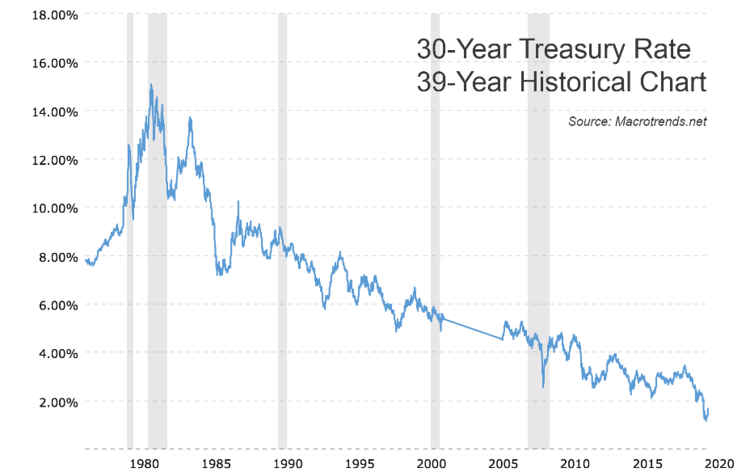


Federal Reserve Further Modifies Eligibility for Municipal Liquidity Facility.

The Federal Reserve expanded the Municipal Liquidity Facility (MLF) eligibility criteria on June 3, 2020 to allow more state and local governments to participate in the program. The MLF was originally established to help state and local governments respond to cash flow issues resulting from COVID-19.

Designated Cities and Counties

Upon its announcement, only states, the District of Columbia, U.S. cities with a population exceeding one million residents, and U.S. counties with a population exceeding two million residents could participate in the MLF program. Subsequently, the city and county population requirements were reduced to allow cities exceeding 250,000 residents and counties exceeding 500,000 residents to participate. However, even after the reduction in population requirements, some states still only had one or zero eligible cities and counties.

The Federal Reserve’s revised Term Sheet granted governors the ability to designate up to two additional “Designated Cities and Counties.” Under the updated Term Sheet, a governor who has been given the ability to designate one Designated City or Designated County may choose either:

  1. The most populous city in their state that has less than 250,000 residents; or
  2. The most populous county in their state that has less than 500,000 residents.

A governor that has been given the ability to designate two Designated Cities and Designated Counties (on a combined basis) may choose any of the following combinations:

  1. The most populous city and most populous county;
  2. The most populous city and second-most populous city; or
  3. The most populous county and second-most populous county.

Designated Cities and Counties may participate in an amount up to 20% of their own sources and utility revenues for the fiscal year 2017.

Designated Revenue Bond Issuers

In addition to designating cities and counties for participation, each governor may designate up to two Revenue Bond Issuers (RBI) to participate in the MLF program. To be eligible for an RBI designation, the RBI must be a state or political subdivision thereof, or a public authority, agency, or instrumentality of a state or political subdivision thereof, that issues bonds secured by a specified source of revenue that is owned by a governmental entity. Eligible RBIs may participate in an amount up to twenty percent of the gross revenue of the RBI for fiscal year 2019.

Security of Obligations Issued under the MLF

Security for notes issued under the MLF are subject to review and approval by the Federal Reserve and will depend on the applicable constitutional and statutory provisions governing the issuer and should be generally consistent with the source of repayment and strongest security typically pledged to repay publicly offered obligations of the issuer. To be eligible to participate, the issuer also must meet a minimum credit rating threshold as determined by the Federal Reserve. If the issuer is a state, city, or county, the notes will be expected to represent general obligations of the issuer, or be backed by tax or other specified governmental revenues. If the issuer is an authority, agency, or other entity of a state, city, or county, the issuer must either commit the credit of, or pledge revenues of, the state, city, or county, or the state, city, or county must guarantee the notes. If the issuer is an RBI, the notes will be expected to be secured by a lien on the gross or net revenues of the RBI.

Unless extended, the MLF program will expire on December 31, 2020.

Frost Brown Todd LLC – Michael A. Brockman, David A. Rogers, Laura H. Theilmann, Carrie J. Cecil , Scott A. Krapf and Stephen M. Sparks

June 10 2020


Second Expansion to the Federal Reserve's Municipal Lending Program: Hunton Andrews Kurth

Recap of Program

In April 2020, the Federal Reserve (the “Fed”) announced the creation of a municipal lending program called the Municipal Liquidity Facility (the “MLF”).1 The MLF, which became operational on May 26, 2020, is a federal loan program offering up to $500 billion in short-term direct lending to state and local governments to help manage cash flow stresses caused by the COVID-19 pandemic. All counties with a population of at least 500,000 residents and cities with a population of at least 250,000 residents are eligible to sell short-term notes (taxable or tax-exempt) directly to the MLF. The Fed maintains a list of the eligible cities and counties based on their populations.2

Program Expansion

On June 3, 2020, the Fed expanded the number of municipal entities that can access the MLF. The expanded regulations permit the governor of each state to designate up to two Revenue Bond Issuers located within such state (“Designated RBIs”) for participation in the MLF. The Designated RBIs may be a state, political subdivision or a public authority, agency, or instrumentality thereof that issues bonds that are secured by revenue from a specified source that is owned by a governmental entity (such as public transit, airports, toll facilities and utilities). In addition to Designated RBIs, other governmental entities that provide essential public services on behalf of an eligible state, city, or county may participate in the MLF by borrowing through an eligible issuer.

Also under the expanded regulations, each state is now guaranteed a minimum of two “population-based” issuers. States which do not have cities/counties that meet the population thresholds are now eligible, by governor designation, to select the two most populous cities or counties to utilize the MLF. Non-qualifying cities and counties are also encouraged to utilize the MLF indirectly by borrowing through a qualifying entity.

Pursuant to the MLF’s purchasing guidelines, an eligible issuer may (i) sell notes directly to the MLF, or (ii) conduct a competitive sale process in conjunction with a direct sale to the MLF. Under the competitive sale model, the MLF will serve as a backstop and agree to purchase notes that are not awarded to other bidders. The MLF will agree to purchase the notes at a price determined by the MLF’s pricing model found here.

The MLF is currently operational. Any eligible issuer that wishes to utilize the MLF should complete a “Notice of Interest” application found here. Among other requirements:

1) At the time it submits a Notice of Interest application, evidence that its status of “Designated RBI” has been verified with the governor; and

2) At the time of the note sale, a certification from the governor reflecting its designation.

To view all formatting for this article (eg, tables, footnotes), please access the original here.

Hunton Andrews Kurth LLP – Martha A. Warthen, Ryan M. Bledsaw, Andrew R. Kintzinger, Christopher G. Kulp, Darren C. McHugh, Douglass P. Selby, Caryl Greenberg Smith, Brendan M. Staley, Yeshake, Audra L. Herrera, Thomas A. Sage , Benjamin Vernon, Clayton T. Holland, William H. McBride, Samantha Gilley Rachlin and Adam Midkiff

June 10 2020


States Contemplate Borrowing to Help Manage Pandemic’s Fiscal Impact

Short-term financing, Federal Reserve program may buy time, but budgets will need adjusting

As Illinois lawmakers in May considered a budget for the fiscal year that starts July 1, they already faced an estimated $7 billion combined revenue shortfall for fiscal 2020 and 2021, in large part attributable to the COVID-19 pandemic. To help close that gap, the General Assembly adopted a spending plan premised on borrowing up to $4.5 billion from the Federal Reserve’s new Municipal Liquidity Facility (MLF)—with the hope that the state will be able to repay those funds with federal budget aid not yet approved by Congress. On June 2, the state announced an initial $1.2 billion of borrowing from the MLF.

Although it is not clear whether federal aid targeted to help states will materialize, the plan illustrates the measures policymakers are considering in response to an unprecedented dive in tax revenue and new demands on spending. Borrowing could help, but it would be only one component in a broader strategy that will require other budget adjustments.

States generally have two options for borrowing money: long-term bonds and short-term notes.

Long-term bonds mainly finance long-lived infrastructure projects. They are often repaid over years or decades and represent the vast majority of municipal debt.

Short-term borrowing most commonly takes the form of “anticipation notes.” These are used to manage cash flow because tax revenue tends to arrive in periodic large amounts while spending demands are spread throughout the year.

States face challenges and limitations using either approach to respond to fiscal emergencies such as those caused by the coronavirus. Creating a long-term liability—as with bonding—to pay for immediate, short-term operating costs is generally considered unsound practice, with potentially negative credit rating implications. Some governments constitutionally or statutorily prohibit it.

Short-term anticipation notes can help states address revenue delays, such as those created by moving the tax filing deadline to July 15 this year. But they are not a budget solution. Anticipation notes require sufficient future revenue to borrow against; however, states will probably have few uncommitted income streams that they can use to fill new, unexpected budget gaps.

Moreover, states usually require that anticipation notes be repaid within 12 months or by the close of the fiscal year. Rhode Island’s constitution, for example, stipulates the latter. This means that notes issued to meet current costs may need to be paid back too soon to make a difference in closing the gap.

And neither short- nor long-term borrowing can solve the harder problem of dramatic revenue declines driven by an economic downturn. Ultimately, balancing state budgets will require longer-term solutions such as spending cuts, tax increases, drawing on rainy day funds, or federal aid. Borrowing can provide immediate cash and buy time to make those decisions but will have to be repaid with interest.

Despite the limitations of borrowing, the current crisis presents such a challenge to state finances that policymakers will likely need to employ a range of tools to weather the storm. Although state rainy day funds, on average, are in better shape now than going into the Great Recession, they will not be enough for most states. Borrowing then may need to be one part of a package of state budget and policy responses.

This time, there is also a new borrowing option for policymakers to consider. In response to unprecedented turmoil in the municipal bond market in March linked to the pandemic, the Federal Reserve announced a plan to purchase up to $500 billion worth of short-term debt from state and local governments through the newly created MLF.

The program will purchase notes directly from all 50 states, counties exceeding 500,000 residents, and cities with more than 250,000. In states with no counties or cities meeting those requirements, governors can designate up to one county and one city to participate. Borrowers can use the funds to help manage revenue delays and declines as well as increased expenses linked to the pandemic, or to lend to governments that don’t meet the size restrictions. The total note size is limited to 20% of the borrower’s 2017 own-source revenue.

In addition, the MLF can purchase notes with maturities of up to three years, longer than typical anticipation notes. That could provide policymakers with more time to decide on sustainable budget solutions—without creating an obligation that weighs on budgets many years into the future, such as with long-term bonds. However, in order to benefit, some states would have to modify their rules to allow borrowing for operating expenses for this length of time.

Borrowing costs could play an important role in determining whether governments will take advantage of the MLF. The Fed requires prospective borrowers to certify that interest rates demanded by the market are higher than normal. After a turbulent March, the muni market stabilized and yields dropped to more ordinary levels, meaning states might not currently meet the requirement.

Further, the laws governing the Fed require it to charge borrowers a “penalty rate” above the typical market rates seen in normal circumstances. This rule is intended to ensure that would-be borrowers turn to the MLF only as a last resort when market rates are substantively above normal. In that event the program might provide a cheaper borrowing opportunity, but until then states may hesitate to tap into the facility.

The Fed has unveiled MLF details on a rolling basis, with additional clarifications and changes still possible. Despite that uncertainty, the significant fiscal challenges that states face because of the pandemic make it likely that policymakers will consider borrowing, whether from the MLF or the market. Understanding the trade-offs of the various options will help them make sound budget decisions.

Jeff Chapman is a director, Adam Levin is a principal associate, and Mark Robyn is a senior officer with The Pew Charitable Trusts’ state fiscal health initiative.

The Pew Charitable Trusts

By: Jeff Chapman, Adam Levin & Mark Robyn

June 9, 2020


Cities Prepared for Rainy Days, but Not a Fiscal Tsunami.

As the pandemic-induced economic downturn continues, cities are facing immediate, significant and irreplaceable losses to major revenue streams. NLC estimates that cities will experience a $360 billion budget shortfall over the next three years.

The question, of course, quickly turns to are cities prepared to weather a fiscal storm this severe?

One critical way to assess fiscal preparedness is levels of General Fund ending balances (also called reserves or rainy-day funds). To better understand the fiscal position of cities, we analyze city ending balances as a percentage of General Fund expenditures.

Continue reading.

National League of Cities

by NLC Staff

June 8, 2020


Biden Calls for More Federal Aid For Cash-Strapped Governments.

Joe Biden said Congress should increase aid to state and local governments to preserve the jobs of first responders and other government workers and to make sure Americans can return to work safely.

Biden, the presumptive Democratic presidential nominee, emphasized the need for aid to state and local governments on a conference call with members of the American Federation of State, County and Municipal Employees, a trade union. The economic shutdown triggered by the coronavirus pandemic has devastated municipal budgets across the country, forcing governments to ask for additional federal aid.

“I’ve called on Congress to increase the funding states have,” Biden said on the call. “This isn’t an exercise in mathematics. The Republican Senate needs to do its job.”

States alone could see $765 billion in budget shortfalls over the next three years, according to projections made by the Center on Budget and Policy Priorities. Cities are expected to see another $360 billion in revenue losses through 2022, according to the National League of Cities. Because states and cities are almost always required to balance their budgets, the shortfalls could result in jobs cuts or reductions in public services.

House Democrats led by Nancy Pelosi passed a $3 trillion package that devoted about one third of that as direct aid to states and localities. The bill has stalled in the Senate. So far, no direct money has been provided to localities aside from an allocation in the first stimulus package that gave them funds to spend only on virus-related expenses.

Public sector job cuts are already happening. The number of workers on state and local government payrolls fell by 571,000 to 18.3 million in May, pushing the number of job losses to about 1.5 million over the past two months, roughly twice as many as were ushered in after the last economic contraction over a decade ago.

Bloomberg Politics

By Fola Akinnibi and Danielle Moran

June 12, 2020, 12:25 PM PDT


S&P: How Artificial Intelligence Technologies Are Changing U.S. Public Finance

Key Takeaways

Continue reading.


Future of Airport Debt in the Midst of Travel Restrictions Around the World.

The constant fear of COVID-19 and the uncertainty about the longevity of its financial impacts has shaken the world to new realities.

One of the very first sectors to be impacted was the airline and tourism sector around the world. As more and more countries assimilated to the reality of COVID-19 and how the coronavirus spreads, they started to impose serious travel restriction that were then adopted worldwide. Furthermore, people were already skeptical about traveling which worsened the overall impact on the travel and airline industry.

In this article, we will take a closer look at how airports around the world are coping with the new reality of minimal travel and the struggle to generate revenue to maintain their operations. Furthermore, what does this mean for municipal debt secured by these revenue sources that have now been slashed and their forecast looks grim?

Continue reading.

municipalbonds.com

by Jayden Sangha

Jun 10, 2020


S&P: U.S. Oil-Producing States Dealt Double Blow From Price Collapse And COVID-19

Key Takeaways

Continue reading.

8 Jun, 2020


Federal Legislative Proposals at a Crossroads? - Ballard Spahr

Surface transportation has been a topic of federal policy consideration in recent weeks. The U.S. House of Representatives floated a partisan, large transportation bill, while the U.S. Senate continues to advocate for a bipartisan surface transportation-heavy bill. The Trump administration, meanwhile, focused largely upon removing ostensible project delivery impediments. There’s been a flurry of activity, yet no clear sign of the compromise.

On June 3, 2020, the House Transportation Committee unveiled the full text of its Investing in a New Vision for the Environment and Surface Transportation in America (INVEST in America) Act. The proposed legislation provides for $494 billion in spending over a five-year period to modernize existing infrastructure, fund new infrastructure projects, and increase funding for related government programs. The proposal would direct $319 billion to the Federal Highway Administration’s Federal-Aid Highway Program, $105 billion to the Federal Transit Administration, and $60 billion to various governmental recipients with the aim of improving intercity railway infrastructure.

The INVEST in America Act places particular emphasis on modernizing and improving the weatherization of existing roads and bridges, with $6.25 billion apportioned for a newly created natural disaster mitigation program aimed at bolstering long-term resilience of existing infrastructure. Mitigation of climate change is also a central aspect of the legislation through measures such as an $8.4 billion carbon reduction program, $1.8 billion in funds for low-emission vehicle infrastructure, and an increase in funding to public transit agencies, including a $958 million increase in the base authorization of FTA’s Capital Investment Grants program. Transportation safety programs would also see funding increases, with the National Highway Traffic Safety Administration and Federal Motor Carrier Safety Administration authorized for $5.3 billion and $4.6 billion in funds, respectively. Where the bill doesn’t appear to turn to public-private partnership (P3) approaches outright to these projects, it is clear that P3s are available and certainly not precluded.

The full text of the INVEST in America Act can be found here.

In the Senate, Environment and Public Works Committee (EPW Committee) Chairman John Barrasso (R-Wyoming) has continued to push for passage of the America’s Transportation Infrastructure Act (ATIA), a bipartisan effort which passed the EPW Committee by a unanimous vote in July 2019. ATIA would authorize $287 billion in spending from the Highway Trust Fund over a five-year period with a primary focus on road and bridge maintenance. The proposed legislation also aims to streamline project delivery by establishing a two-year target for completion of environmental reviews relating to highway projects and a 90-day target for issuance of subsequent related project authorizations. The full text of ATIA can be found here.

Elsewhere, in response to the COVID-19 pandemic, on June 4, 2020, President Trump issued an Executive Order on Accelerating the Nation’s Economic Recovery from the COVID-19 Emergency by Expediting Infrastructure Investments and Other Activities (6/4 EO). The 6/4 EO provides broad direction to federal agencies administering infrastructure projects to “…take all reasonable measures to speed infrastructure investments and to speed other actions in addition to such investments that will strengthen the economy and return Americans to work, while providing appropriate protection for public health and safety, natural resources, and the environment, as required by law.” The 6/4 EO also requires applicable federal agencies to review the National Environmental Policy Act, the Endangered Species Act, and the Clean Water Act, and identify any actions which may be taken thereunder in furtherance of economic recovery. The full text of the 6/4 EO can be found here.

Any of the strategies—the House’s rail/transit-heavy strategy, the Senate’s repair and preserve strategy, and the White House’s expedited delivery strategy (shared with the Senate)—acknowledge the need to establish and implement an infrastructure and transportation public policy. President Trump has been promising a $1 trillion infrastructure plan since his 2016 campaign, although not much progress has been made. With the September expiration of the FAST Act—the last comprehensive federal transportation bill signed into law—the time is now.

Although the release of respective transportation infrastructure bills by the House Transportation Committee and Senate EPW Committee should serve as an important starting point for negotiations between the two chambers, observers caution that the November election and an anticipated focus on short-term funding measures in response to the COVID-19 pandemic make passage of a comprehensive infrastructure bill unlikely in 2020. But collectively, they do appear to mark the spaces and approaches favored by the political parties, and depending on the results of the November elections, which direction transportation public policy will likely proceed.

Attorneys in Ballard Spahr’s P3/Infrastructure Group routinely monitor and report on new developments in federal and state infrastructure programs related to transportation and other types of projects.

Copyright © 2020 by Ballard Spahr LLP.
www.ballardspahr.com
(No claim to original U.S. government material.)

June 10, 2020

All rights reserved. No part of this publication may be reproduced, stored in a retrieval system, or transmitted in any form or by any means, including electronic, mechanical, photocopying, recording, or otherwise, without prior written permission of the author and publisher.

This alert is a periodic publication of Ballard Spahr LLP and is intended to notify recipients of new developments in the law. It should not be construed as legal advice or legal opinion on any specific facts or circumstances. The contents are intended for general informational purposes only, and you are urged to consult your own attorney concerning your situation and specific legal questions you have.


Wall Street Risk Analysts Rise in the Muni Bond Market.

Don’t be fooled by the market’s calm: these are hectic times for Wall Street’s municipal-bond analysts.

The $3.9 trillion state and local government debt market, typically the safest of havens, has suddenly become one where assessing risk matters again, thanks to the economic wreckage wrought by the pandemic.

Since the nation went virtually overnight from a record-setting expansion to the worst recession in decades, analysts at investment firms have been sifting through a wave of bond documents, disclosures and data from governments, city agencies, universities, hospitals, public transit authorities and nursing homes.

The challenge is to figure out what’s still a safe investment bet. That’s a difficult feat considering there’s no clear way to predict how it will keep affecting American life and the worst of the financial effects typically don’t show up until well after a contraction begins.

At DWS Group, an investment firm, six full-time municipal credit analysts are working closely with portfolio managers and traders there, attending two team calls a day to discuss trades and sector trends. “They’re busy,” said Ashton Goodfield, who leads the municipal department.

The municipal market, used by some 50,000 issuers, has gone through a period of unprecedented volatility. In March, investors pulled record amounts out of mutual funds, triggering a steep rout and moves by the Federal Reserve to stabilize the market. Since then, prices have essentially recovered, raising the possibility that the financial impacts of the slowdown have been too deeply discounted.

At Franklin Templeton, the firm’s new head of municipal debt investing, Ben Barber, is also focusing on risk analysis. The firm has more than a dozen credit analysts that have dedicated sector focuses like student housing and tobacco-settlement backed bonds. Tom Walsh leads the company’s municipal credit research effort.

Credit research is “very near and dear to my heart,” Barber said.

Barber started his career as an analyst covering the classic segment of the muni market, states and local governments. He said he still views municipalities positively despite their shutdown-related budget deficits, given that they have tools at their disposal like raising taxes.

The DWS research team has been looking for bonds at risk as well as those that are showing strength, Goodfield said. That way, she said, “if we want to sell something we think is showing weakness, we know where to go with that money, we know what to replace it with.”

Defaults have remained relatively rare compared with other markets, though they’ve started to rise. In a note to clients last week, Municipal Market Analytics said at least 29 borrowers became impaired in May, which includes defaults and steps like tapping reserves to avoid them. That’s the most since December 2014, according to MMA.

Goodfield said that it’s hard to generalize both positively or negatively about the plethora of industries that tap the muni market. For the most part, though, the firm is cautious on high-yield deals that were sold for ventures that seek to make novel products from waste. One such deal for a California project to turn rice waste into fiberboard skipped bond payments in June.

Issuers have been uploading so-called continuing disclosures online that give details to investors on how their business is faring. The volume of those rose nearly 13% in the week ended June 7, according to the Municipal Securities Rulemaking Board.

The increase of information is welcome in a market where issuers are notoriously slow to post financial updates.

Yet some of the filings are more detailed than others. Take Foley, Alabama, which included a big caveat for bond analysts: “This information is subject to change without notice.”

Bloomberg Markets

By Amanda Albright

June 9, 2020, 10:30 AM PDT

— With assistance by Danielle Moran


Investors Are in a Race to Find the Best Models of Climate Risk.

Nobody wants their assets to wind up underwater in 20 years.

Sustainable finance is having a reasonably good pandemic. Environmental themed funds have had fewer outflows, and companies with better environmental, social, and governance ratings have tended to fare more lucratively than their peers.

It makes sense on an intuitive level. The pandemic reminds us of the fragility and importance of the physical world, and also of the threat of sudden, non-linear risks. This has dramatically accelerated the emergence of a hot new finance trend: assessing how potential climate change outcomes such as rising sea levels or heatwaves might affect the performance of an investment.

“Physical risk” or “climate impact risk” used to be a niche concern, mostly consisting of bespoke analysis for companies big investments in massive infrastructure. (This category includes, ironically, oil companies.) That’s changed quickly. Scientists have spent decades refining models of the Earth’s climate, and financial institutions—increasingly conscious that the effects of climate change are already costing them money—want to use sophisticated tools to get an edge on understanding their level of exposure in the years to come.

There’s now an array of companies offering portfolio-wide assessments of physical climate risks, ranging from specialist startups to mid-sized sustainability consultancies to shops within the big global advisory firms. The idea has become so popular, it’s now tough to find a consultancy in the financial services sector that isn’t offering some kind of physical risk analysis. Some investment managers such as BlackRock are even developing their own capabilities in-house as a service for clients.

That said, there’s a steep learning curve with assessing physical climate risk. In the last two years there have been around a dozen guides published by investor networks, consultancies, and research institutions that aim to walk financial institutions through the process. The most recent is from the London-based Institutional Investor Group on Climate Change, published in late May. It advises, for example, that investors not rely on disclosures of physical risks from an investee itself, as most of the reports published by companies don’t contain “decision useful information” for investors.

In other words, those sophisticated climate risk maps now starting to appear in company reports are pretty worthless.

Exploring the risks yourself may be the best option, and like many similar guides, IIGCC’s lays out a detailed process. This includes figuring out which climate-related hazards you’re analyzing—wildfires? flooding? extreme heat?—and how far into the future you’re looking—a few years? several decades?—and where the physical assets and supply chains you’re interested in are located. You need to identify what you’re concerned about: A threshold temperature beyond which facilities—or people—might be unable to function properly? The level of storm surge that could ruin a municipality’s sewage system?

The next step is to actually overlay the data about expected climate change. This is where it gets into really niche expertise.

The data from climate models is hard to access, let alone interpret and apply in a context like finance. This is where those consultants could help—but that too, raises a whole new set of pitfalls. The IIGCC report cautions against consultants who use “black box” approaches, where the method for generating an estimate is opaque or proprietary. Without deep knowledge of the models, how do you believe a colleague, consultant, or an investment manager telling you that a swathe of real estate will be fine (or doomed) in 20 years?

IIGCC also recommends taking care to understand the limitations of the work that’s being done. One such limitation is “downscaling,” or the practice of breaking down the large gridded squares of climate models into smaller, seemingly more precise chunks. Scientists who work with climate models warn that apparent granularity can be worse than illusory and give an even less accurate view of what’s at stake.

The simple answer to all of this is: standards. Rely on scientists set out what can and can’t be done and develop a clear, shared terminology that makes sense to non-specialists. As with most things about climate change, though, it’s not at all easy. Almost two years ago I was involved in kicking off a process to do exactly this in Australia. Only now, after much hard work from numerous experts and practitioners, is that nearing the point of delivering actual recommendations.

One other important thing to remember: these are just the teething pains of an emerging industry in which both buyers and sellers are motivated to find a solution. An infinitely thornier question is what will be done with this information. Selling to a greater fool is one option; investing in “resilience” to protect an at-risk asset is another. KMPG published a case study last month pointing out that a 4 degrees Celsius average annual temperature increase could mean days as hot as 60 degrees C (140 degrees Fahrenheit) in some places.

The authors raise good points about heat extremes, and also about unforeseen second order effects. The resulting lack of travel, for instance, might harm the revenues for a toll road operator. But it’s hard to imagine who, in such a scenario, would be lucky enough to be primarily concerned about revenues.

Bloomberg Green

by Kate Mackenzie

June 12, 2020

Kate Mackenzie writes the Stranded Assets column for Bloomberg Green. She advises organizations working to limit climate change to the Paris Agreement goals. Follow her on Twitter: @kmac. This column does not necessarily reflect the opinion of Bloomberg LP and its owners.


Dual Threats: COVID and Climate Change

The pandemic has intensified existing stresses on U.S. state and municipal economies – with implications for investors.

The COVID-19 pandemic is exhausting local finances and may impact growth trajectories for years to come. As of mid-April, states and municipalities will need at least $500 billion in aid to shore up balance sheets as demand for services intensifies and tax revenue plummets, according to the National Governors Association. At the same time, hurricane season – and the economic havoc it wreaks – is officially upon us.

To understand the implications of this dual threat, we have combined our local economic coronavirus impact modeling with our climate change risk assessments. We find, regrettably, that:

Hurricane damage is expected to produce a negative local GDP impact along the Gulf Coast and Atlantic Basin ranging up to 1.9% annualized GDP loss over the decade.

Some of the regions hardest hit by the pandemic may also have the greatest exposure to hurricane risk and costs from wind and flooding damage. For example, we estimate Miami-Dade County with a joint COVID/Climate annualized loss of 2.6% to 2030
Even those counties with relatively muted GDP impacts from COVID may face more significant losses after factoring in climate risks

As investors navigate the uncharted waters of COVID-19 and look ahead, we recommend that they, too, bear in mind this dual threat of climate change.

Continue reading.

BlackRock

Written by
Amit Madaan, CFA, FRM
Director, BlackRock Financial Modeling Group

Michael Kent
Vice President, BlackRock Sustainable Investing

May 30, 2020


Municipal Borrowers Prepare for New Issuance Surge as CUSIP Request Volume Climbs for Second Straight Month.

NEW YORK, June 15, 2020 /PRNewswire/ — CUSIP Global Services (CGS) today announced the release of its CUSIP Issuance Trends Report for May 2020. The report, which tracks the issuance of new security identifiers as an early indicator of debt and capital markets activity over the next quarter, found a significant surge in request volume for new municipal identifiers and a significant decline in request for new corporate debt identifiers.

CUSIP identifier requests for the broad category of U.S.- and Canada-issued equity and debt totaled 4,325 in May, down 31.9% from last month. On a year-over-year basis, corporate CUSIP requests were up 23.8%. The May 2020 monthly volume declines were focused in U.S. corporate debt, which fell 43.4%, U.S. corporate equity, which was down 12.7% and certificates of deposit with maturities greater than one year, which saw a 39.9% month-over-month slowdown.

Municipal CUSIP request volume increased sharply in April for the second straight month. The aggregate total of all municipal securities – including municipal bonds, long-term and short-term notes, and commercial paper – climbed 53.1% versus April totals. This comes on top of a 12.3% increase the previous month. On an annualized basis, municipal ID request volumes are up 10.6% through May.

“If there was ever any doubt about the ability of municipal bond issuers to access liquidity during the COVID-19 pandemic, our CUSIP Issuance Trends indicator is sending a clear signal that municipalities are putting the pieces in place for a surge in new issuance volume in the weeks and months to come,” said Gerard Faulkner, Director of Operations for CGS. “The corporate market is telling a different story, however. With corporate CUSIP request volume slowing significantly in May, we may be seeing early signs of a slowdown in corporate debt issuance.”

Requests for international equity and debt CUSIPs both grew in May. International equity CUSIP requests were up in May and up 41.2% on a year-over-year basis. International debt CUSIPs increased 27.3% on a monthly basis and 2.0% on a year-over-year basis.

To view the full CUSIP Issuance Trends report for May, click here.


Where Are Munis Getting Their Money?

Summary

Continue reading.

Seeking Alpha

by David Kotok
Chief Investment Officer, Wealth Preservation, portfolio strategy

Cumberland Advisors

Jun. 9, 2020


Risky Munis Shrug Off Recession in Biggest Rally Since 2009.

To judge by the municipal junk-bond market, it would seem like the economic collapse is already over.

High-yield state and local government debt, the most susceptible to defaulting during a sustained slowdown, have returned 7.8% since April 1, putting them on track for the biggest quarterly jump since the end of the Great Recession in 2009.

The rally tracks the broader optimism on display in American financial market that has also lifted stocks and corporate bonds. It signals speculation by investors that even the riskiest borrowers in the $3.9 trillion municipal-securities market are likely to weather the fallout of the coronavirus shutdown that sent unemployment surging, shut businesses and decimated the tax collections of local governments.

Initial fears about the toll prompted investors to pull record amounts out of municipal-debt mutual funds in March, before the Federal Reserve revived confidence by promising to extend short-term loans to governments to head off another liquidity crisis.

“While that didn’t apply to high yield in the muni market, what it did do is give people confidence that munis in general weren’t all going to default,” said Lyle Fitterer, co-head of municipal investments at Baird Advisors, which manages $6 billion of state and local debt. “You saw cash flows from retail investors finally turn around and turn positive.”

Prices on some bonds that were hit the hardest in March are coming back, such as tobacco-settlement backed bonds. Ohio’s Buckeye Tobacco Settlement Financing Authority debt maturing in 2055 with a 5% coupon traded Wednesday at 105 cents on the dollar, up from an average 73.2 cents on March 23, according to data compiled by Bloomberg.

The gain for high-yield municipals in the past 10 weeks follows a 6.9% drop in the first quarter of 2020, according to Bloomberg Barclays Indexes. The last time the sector jumped more in a single quarter was during the three months ending September 30, 2009, right after the formal end of the last recession, when high-yield munis gained 13.6%.

The full economic impact of the shutdowns has likely yet to be felt by many governments and the projects that have been financed in the municipal market, since they have the ability to draw on reserves and tax collections take months to fully reflect a downturn.

“It’s going to take a long time for the economy to recover,” Fitterer said.

“You’re going to see more debt-service reserve draws. You’re going to see more technical defaults. And longer term, it’ll lead into more actual defaults,” he said. “Temporarily, people have forgotten about that.”

Bloomberg Markets

By Michelle Kaske

June 10, 2020, 11:03 AM PDT Updated on June 10, 2020, 12:14 PM PDT


The Fed's State and Municipal Lending Is a Bad Idea

The COVID-19 pandemic has caused sweeping changes in economics and politics. Many have been publicly analyzed and debated. But not all. In particular, the Federal Reserve’s extraordinary new policies haven’t received the scrutiny they deserve. Totaling a planned $2.3 trillion in asset purchases and loans, the Fed’s actions take monetary policy into uncharted territory. Although effective at stabilizing markets in the short term, Fed policy comes with significant long-term costs.

Case in point is the Fed’s Municipal Liquidity Facility. Authorized by Congress under the CARES Act, this facility is intended to help “governments better manage cash flow pressures in order to continue to serve households and businesses in their communities.” Through the Municipal Liquidity Facility, the Fed makes direct loans to state and local governments, purchasing up to $500 billion in debt. This represents a significant expansion of the Fed’s emergency lending powers, as specified in Section 13(3) of the Federal Reserve Act. Traditionally, the Fed only extended emergency credit to non-banks in the event of serious distress in the financial system. While state and local government finances are important, it is very hard to make the case that they are an integral component of financial stability.

This expansion of the Fed’s mandate comes with serious consequences. Many of them are bad.

First, the Fed’s municipal and state lending results in a misallocation of credit. The whole point of the Fed’s programs is that state and local governments can get loans on better terms than they could get elsewhere. This reallocates purchasing power away from other entities in the market to those whose bonds the Fed purchases. The cost to society is the difference between the value of the projects pursued by state and local government with those resources and the value of the projects other entities could have pursued with those same resources.

Second, Fed lending undermines fiscal federalism. History’s greatest political minds, including the framers of the U.S. Constitution, regarded the “power of the purse” as the most significant government power. It’s the political version of the Golden Rule: He who has the gold, makes the rules. For state and local governments, citizens within those jurisdictions are supposed to bear the costs of providing collective goods, such as emergency services and infrastructure. But the Fed’s new programs set a troubling precedent: State and local governments can turn to central bankers for the funding they need. While governments could always borrow from those outside their jurisdiction, the Fed is special. Its monopoly on high-powered money production gives it greater financial wiggle room than other funding sources. As a result, governments will become more dependent on Fed loans, and less responsive to voters.

Third, there is a very real risk Congress will hijack the Fed and turn it into a de facto fiscal policy agent. There are signs that this is already happening. Sen. Charles Schumer (D-N.Y.) recently urged the Fed to grant New York’s Metropolitan Transportation Authority (MTA) access to the Municipal Liquidity Facility. The Fed expanded the criteria for accessing the facility, allowing MTA and several others to take part. Due to the change in Fed policies created by the CARES Act, Congress has an incentive to use the Fed to make spending and budgeting decisions in ways that lack democratic oversight.

Markets are recovering from state-level lockdowns. Unemployment is falling. The stock market is rallying. The Fed’s new policies undoubtedly helped. But in this case, the cure may be worse than the disease. The Fed’s actions impede market allocation of resources, weaken the accountability of local governments and present new avenues for political capture by Congress.

Unless we address these problems soon, we risk the Fed becoming permanently ineffective and unaccountable. If this happens, the next time economic trouble comes knocking, the Fed won’t be able to help us.

THE HILL

BY ALEXANDER WILLIAM SALTER, OPINION CONTRIBUTOR — 06/12/20

THE VIEWS EXPRESSED BY CONTRIBUTORS ARE THEIR OWN AND NOT THE VIEW OF THE HILL

Alexander William Salter is an economics professor in the Rawls College of Business at Texas Tech University, the Comparative Economics Research Fellow at TTU’s Free Market Institute, and a senior fellow with the Sound Money Project. Follow him on Twitter @alexwsalter.


Optimize Community QE - An Open Letter To Fed Chairman Powell

Regular readers of these pages will know that we regularly report on new developments in connection with the Fed’s nascent and potentially ‘game-changing’ Municipal Liquidity Facility (MLF), or Community QE. Thus far the trajectory of change since the MLF’s introduction in early April has been in the direction of progressive liberalization. State and municipal eligibility criteria have loosened, eligible bond maturities have lengthened, and the date of the new window’s closing has been postponed.

There nevertheless remain a number of MLF features that are fundamentally incompatible with the Facility’s purposes. Conspicuous among these are the Facility’s rate and rating requirements, several of its still overly narrow eligibility criteria, and its being housed in the New York Fed alone rather than being distributed over all of the regional Federal Reserve Banks (FRBs).

The first and third sets of flaws register a simple category error, in that they mistakenly treat States and their Subdivisions as though they were speculative Wall Street financial institutions that have gotten themselves into trouble, rather than de facto federal agencies taking the lead role in addressing the Covid pandemic across our entire continental republic. The second set of flaws sound more in degree than in kind – they simply screen out, notwithstanding their gradual liberalization since April, too many de facto federal instrumentalities for which the Facility is meant to provide federal funding.

Continue reading.

Forbes

by Robert Hockett

Jun 14, 2020


Five Reasons Municipals Have Rarely Defaulted.

Default rates by municipal bond issuers have been remarkably low over the years. It’s an impressive track record, and it explains why defaults by municipal issuers Puerto Rico and Detroit have made front-page news when they happen—they’re actually quite rare.

Since 1970, the 10-year cumulative default rate for investment-grade municipal bonds has been 0.1% (Display). Comparing muni default rates with those of investment-grade corporate bonds, which have defaulted at a rate of 2.3%, reinforces the reliability of municipal bonds.

Why is municipal-bond quality so high—and defaults so infrequent? We can find the answer by drilling into the tenets of fundamental analysis: understanding the quality and predictability of a bond’s cash flows and the attributes of bond issuers that make investors more confident that they can deliver.

Here’s a closer look at five reasons that muni defaults are rare:

1) Security: Muni Issuers Have the Power to Raise Taxes and Fees

The two principal types of municipal debt, general obligation (GO) and revenue, have traits that better equip them to deliver steady cash flows.

GO muni bonds are backstopped by the “full faith and credit” of the issuing government. Whether a GO funds schools, transportation infrastructure or other essentials, the issuer typically has the power to raise taxes to make bond payments. Many states and municipalities need voters’ approval even to issue GOs, and they can’t declare bankruptcy—even in a crisis. In the private sector, most companies can’t claim that type of customer backing or pricing flexibility.

Revenue bonds are backed by fees from public-service enterprises like utilities, toll roads and airports. Those fees are pledged to service debt, and in tough times, issuers can raise user fees to make debt payments. Most tax-exempt revenue bonds are at the top of an enterprise’s capital structure. Typical issues include safety provisions like requirements to set rates in excess of budgeted expenses, restrictions on issuing more debt and requirements to fund reserves to cover unexpected events.

Compare a municipal-owned electric utility with one that’s privately owned. Given all the protections in the bond issue, publicly owned utilities can set their own rates. Privately owned utilities, on the other hand, need permission from an independent oversight regulatory commission.

2) Cash Flow: A Steady and Reliable Revenue Engine

Municipalities’ power to tax or charge for public services translates into a reliable revenue engine that yields reliable, quality cash flows.

Taxes, for example, are applied across a diverse base of earnings and property values. This creates a steady revenue stream for GO municipal issuers that’s very different from that of a corporate issuer dependent on discretionary spending. If one sector of the economy is hard hit in a recession, other sectors may be less so, allowing the core of the muni issuer’s revenue stream to stay relatively steady.

In the current recession, muni credits are generally weaker, but default is still a distant risk, in our view. Tax revenues (income, sales and property) and user fees from essential services keep coming and remain diverse. That’s very different from the private sector: when airline usage shrivels or people stop buying cars, companies’ revenue streams dry up.

3) Reserve Funds: Flexibility to Navigate Economic Storms

In a recession, cash is king, and states entered this economic crisis with record-level cash reserves—thanks to mandated-reserves requirements. Both GO and revenue bonds benefit from an embedded culture and legal structure that favors robust reserve funds to weather downturns. As we described earlier, many revenue bonds include mandates for specific cash-reserve levels.

For GO bonds, it’s important to understand how municipalities handle their general fund budgets. We’ve just seen the longest economic expansion on record. What did governments do with these robust tax receipts? For the most part, they added to their rainy-day reserve funds (Display), which helped states and municipalities endure crises without defaulting.

Municipalities have a budgeting advantage over corporations that have to balance bondholder and shareholder interests. Bond investors want cash held in reserve as an added cushion; shareholders want it distributed as dividends. Because municipalities don’t have shareholders to satisfy, they’re free to build reserves when times are good. Stronger reserves mean more wherewithal to avoid missing bond payments during downturns while waiting for revenues to rebound.

4) Principal Repayment: Pay as You Go Reduces Debt and Refinancing Risk

Municipal bonds’ repayment structures are typically like those of home mortgages—scheduled payments include a mix of interest and principal repayment. As a result, the bond’s principal shrinks every year, reducing the debt outstanding and deleveraging the issuer. This avoids the uncertainty of making a big one-time principal repayment, which could come at an inopportune time—like during a recession.

In contrast, many corporate bond issues are five years in duration, and principal often isn’t repaid until the maturity date. When that bill comes due, issuers borrow again to repay the principal on the first bond and start interest payments on the new bond. In times of stress, this rolling borrowing can put corporate bond issuers at the mercy of the market.

5) Essentiality: Services Citizens Can’t Do Without

Muni issuers’ promise to pay bondholders is exceptionally strong because most muni bonds support services essential to public good. Almost all of the nearly $4 trillion in outstanding municipal debt is tied to essential services such as education, public safety, electricity, water and waste treatment.

Communities rely on hospitals, toll roads and airports. It’s hard to imagine the population cancelling these services in an economic downturn. And when things get really challenging, as they are now in the throes of the COVID-19 pandemic, the federal government can step in to keep the essentials operating. Most recently, the CARES Act dispatched unprecedented aid to hospitals, schools and other vital entities, with even more under consideration for state and local governments.

Collectively, these five characteristics have made municipal bond defaults a rare event, equipping them to withstand recessions, pandemics and other challenges along the way.

by David Ambler, Matthew Norton of AllianceBernstein, 6/11/20

David Ambler is a Municipal Credit Research Analyst and Matthew Norton is Co-Head of Municipal Portfolio Management at AllianceBernstein (AB).

The views expressed herein do not constitute research, investment advice or trade recommendations and do not necessarily represent the views of all AB portfolio-management teams. Views are subject to change over time.

© AllianceBernstein L.P.


College Bond-Sale Spree Draws in University of Michigan.

The University of Michigan is the latest elite school to join the higher-education bond selling spree.

The university sold nearly $1 billion of bonds, $850 million of which was taxable, to pay for construction projects and refinance debt, according to preliminary pricing wires viewed by Bloomberg. The taxable securities were priced at yields from 1% to 2.56%, or 57 basis points to 102 basis points over Treasuries, depending on the maturity.

Colleges have issued nearly $23 billion of debt this year, seizing on the decline in interest rates that’s come since markets stabilized over the past two months. That’s about seven times more than was sold during the same period a year earlier, according to data compiled by Bloomberg.

The borrowing comes amid uncertainty about what universities are facing in the fall after having to close campuses early this year due to the coronavirus. While that’s raising the financial risks for some colleges, the most elite universities are being less affected, given their large endowments or ability to draw far more applicants than they can accept.

The University of Michigan plans to make a decision on its fall return date this month.

“It’s pretty attractive borrowing costs for these universities to come in, issue taxable munis, lock in the debt and have full control over the use of proceeds,” said Gabriel Diederich, a portfolio manager with Wells Fargo Asset Management. “These flagship universities that have name recognition. Sometimes the pencils are already sharpened for the deal.”

Yields for top-rated 10 year municipal bonds have fallen to about 0.8%, down from as much as 2.87% in March at the height of the market volatility kicked off by the pandemic.

The University of Michigan, which has an AAA credit rating, is borrowing to finance the construction of an impatient care facility, a parking facility and a transportation maintenance facility, along with expanding its engineering lab, reducing emissions at a power plant and refunding some existing debt, according to documents released ahead of the sale.

“The interest is broad-based and comes from many places including insurance companies, banks, pensions and foreign buyers,” Diederich said before the pricing. “It’s definitely name brand.”

Bloomberg Markets

By Fola Akinnibi

June 9, 2020, 10:56 AM PDT Updated on June 9, 2020, 12:56 PM PDT

— With assistance by Danielle Moran


Where to Find the Best Municipal-Bond Fund Buys.

There is good news and bad news from that relatively obscure corner of the investing world, closed-end municipal bond funds.

Their share prices have recovered from a shocking collapse back in March that took place in tandem with the plunges in the equity and corporate credit markets. But while the major stock indexes such as the S&P 500 have rebounded from their earlier losses, muni closed-end funds have recouped only about half of theirs.

The good news is that, as a result, they still offer high yields, especially compared with much of the Treasury market and money-market funds, which are on the verge of paying bupkus (that’s a technical term) because of the Federal Reserve’s aggressive actions to counter the slide in the markets and the economy from the coronavirus crisis.

Continue reading.

Barron’s

By Randall W. Forsyth

June 10, 2020 11:28 am ET


A Muni-Bond Fund That Lets You Sleep at Night.

Duane McAllister may have been born to be a municipal-bond fund manager.

During his childhood, his family owned a construction company in northwest Illinois that installed water mains and constructed highways—the exact type of projects he now invests in as the senior portfolio manager for the $1.1 billion Baird Short-Term Municipal Bond fund (ticker: BTMSX). His first job after graduating in 1989 with a bachelor’s degree in finance from Northern Illinois University was with Northern Trust’s muni-bond team. At the time, he would have rather joined the bank’s active taxable fixed-income team.

“I thought, ‘I’ll have this market figured out after two or three weeks because obviously munis are so simple.’ So here I am, more than 30 years later,” he jokes.

Continue reading.

Barron’s

By Debbie Carlson

Updated June 11, 2020 / Original June 10, 2020


How Investors Can Evaluate Muni Bonds in the COVID-19 Economy.

Investors and their advisors need to be extremely thorough in the current environment. Technology can help.

With more than 85,000 issuers and approximately 3 million CUSIPs, the municipal bond market can be challenging to navigate in even the calmest economic conditions. At a time like this, when the COVID-19 pandemic has caused severe disruption, volatility and uncertainty, investors and the financial advisors who serve them need to be extremely thorough when evaluating municipal bonds to add to their portfolios.

Looking Into Issuers & Pledges

Bonds can be repaid from many different sources including property taxes, sales taxes, hotel bed taxes, personal income taxes, mortgage revenues, lease payments for use and occupancy of long-lived government assets, and fees for services such as water and sewer.

These repayment sources can come from leases, essential services like water or electricity, or taxes, such as a state sales tax. General obligation bonds (GOs) have stronger protection measures in place for bondholders because they are backed by the full faith and credit of the issuer to tax state or municipality residents to raise money as necessary to pay the debt. Conversely, revenue bonds are backed by pledges of revenue from specific projects, such as hospitals, universities, bridges and toll roads.

All other things being equal, unlimited tax GOs or essential service revenues like water and sewer are generally safer investments. Investors should note that some general obligation bonds can have statutory limitations on their taxing powers, such as a cap on property taxes or the ability to resolve historical delinquencies. Essential service revenue bonds can be subject to dilution of a bond pledge when additional parity debt is authorized and sold. It is important to understand the effect these limitations can have on the creditworthiness of the bond.

A typical strategy for conservative municipal bond investors is to focus on bonds supported by general obligations or essential services and issued by states or municipalities with AAA ratings. While these are certainly healthy characteristics, advisors and investors should also consider additional factors. For example, how diversified is the economy of the state or municipal issuer? Can it successfully withstand extreme market volatility of the type we are currently witnessing? What is the median income of the people who live there? Are there geographic or environmental risks associated with the issuer? How big is the issuer’s market position? (The larger an issuer’s market presence, the wider the audience of prospective buyers, giving their bonds a greater liquidity profile.)

Crucially, are the revenue pledges/obligations of the issuer included as a covenant in the investment contract?

These are all prudent questions to ask when vetting possible municipal bond investments.

Duration and Risk

During times like this, when people are concerned not just about the overall economy but also their physical well-being, investors can naturally gravitate towards investments with less volatility. Municipal bonds, like any fixed income security, are exposed to interest rate risk and vary in duration. With a fixed coupon bond, the longer the time until bond maturity, the more susceptible investors are to interest rate changes that will affect the value of their investment.

Laddering the municipal bonds by final maturity within portfolios may help investors with longer investment horizons help reduce interest rate risk. If, for example, an investor has $1 million to invest in municipal bonds, their advisor can work with them to identify a diverse mix of bonds with shorter durations of two to three years, and longer durations of 10 or 15 years.

While interest rate moves don’t affect the principal, it does affect the secondary market value if bonds need to be sold prior to maturity. Additionally, a bond ladder is exposed to “opportunity cost” or “reinvestment risk” — the capability to reinvest the principal when it comes due at the same or higher interest rate.

By constructing a portfolio composed of municipal bonds with different durations, investors can arrange maturities as they need their original investment returned and mitigate some duration risk.

How Technology Solutions Can Help Muni Bond Investors

The size of the municipal bond universe, and scale of recent market volatility and uncertainty, can make investment selection and management difficult for advisors and investors. Fortunately for them, modern technological innovations can simplify the process significantly.

By partnering with a fintech provider whose fixed income solutions can filter municipal bonds by type of infrastructure (energy, roads, airports, etc.), obligations and pledges, and more, advisors and investors can view a streamlined list of safe and well-priced bonds at their fingertips via electronic alerts. Advisors and investors should also check to see that any fintech vendor they use can compare bonds from different market sources in order to identify the best-priced securities.

When a fixed income investment platform provider combines technology innovation with a team of experienced capital markets professionals, the vendor can help advisors and investors access, and sift through, past official statements or continuing disclosures from issuers — a vital service for determining an issuer’s creditworthiness before investing, and ensuring obligations are covenants in underlying investment contracts. This combination also allows advisors to thoroughly document the process for achieving best execution on every trade.

As long as investors and their advisors have the right mixture of strong market expertise, robust due diligence methodology and innovative technology, they can harness many promising opportunities in the municipal bond market — and utilize these investments to help them navigate the extreme volatility and uncertainty stemming from the COVID-19 pandemic.

ThinkAdvisor

By Jason Ware | June 10, 2020 at 09:57 AM

Jason WareJason Ware is managing director and head of institutional trading at 280 CapMarkets, a fintech firm transforming fixed income through technology.


What's Happening In The Muni CEF Space?

Summary

Continue reading.

Seeking Alpha

Jun. 9, 2020


Fed Expands Municipal Bond Program, Opening Door to Some Smaller Cities.

At least two cities or counties in every state will be able to issue to the central bank’s program, meant to help municipal bond markets.

WASHINGTON — The Federal Reserve said on Wednesday that it would allow states to designate some cities, counties and other debt issuers, like mass transit systems, to raise funds by selling debt to the central bank’s municipal bond-buying program.

The Fed’s program, first announced on April 9, was previously able to buy debt only from cities with populations of 250,000 or more and counties with populations of at least 500,000. Those larger cities and counties, along with some entities that work across state lines, remain eligible to sell notes of up to 36 months to the central bank’s facility.

The change means that states that do not have sufficiently large cities or counties — or that have only one — will be able to designate up to two city or county issuers to use the program. Governors from each state will also be able to designate two bond issuers whose revenues come from operating government activities, like public transit, airports or toll facilities.

Continue reading.

The New York Times

By Jeanna Smialek

June 3, 2020


Fed Expands Municipal Liquidity Program to Include Transit, Airports, Utilities.

WASHINGTON — The Federal Reserve said on Wednesday it will allow governors of U.S. states to designate transit agencies, airports, utilities and other institutions to borrow under its municipal liquidity program as the central bank tries to mitigate economic fallout from the coronavirus pandemic.

Governors will be able to designate two issuers in their states whose revenues are generally derived from operating so-called government activities, the Fed said in a statement.

The central bank also said it is expanding its program to allow all U.S. states to be able to have at least two cities or counties eligible to directly issue notes to the municipal liquidity facility regardless of population.

Currently only U.S. states and cities with a population of at least 250,000 residents or counties with a population of at least 500,000 residents have been able to make use of the $500 billion short-term borrowing program.

The Fed has come under pressures to expand its population criteria from lawmakers whose states have no local governments that met the population thresholds.

New York’s hard-hit Metropolitan Transportation Authority last month asked Fed Chair Jerome Powell for direct access to the program.

Even with the expansion of potential users, demand may be low given the cost.

“It’s been less a question of eligibility and more of a question of pricing,” said William Glasgall, director of state and local initiatives at the Volcker Alliance.

Recent sample purchase rates from the New York Fed range from 1.51% for the highest-rated governments to 3.84% for those with the lowest investment-grade ratings.

On Tuesday, Illinois became the first state or local government to tap the Fed’s program with a $1.2 billion borrowing. Analysts have said the program, announced in April, was set up to be the lender of last resort and would make the most sense for lower-rated governments.

By Reuters

June 3, 2020

(Reporting by Lindsay Dunsmuir and Howard Schneider; Additional reporting by Karen Pierog in Chicago; Editing by Chris Reese, David Gregorio and Will Dunham)


Fed Expands Municipal-Lending Facility to More Localities.

Illinois plans to issue $1.2 billion in one-year notes Friday to become the first borrower to access the central bank’s program

The Federal Reserve said it would again broaden the number of local governments eligible for a new lending program as Illinois announced it would be the first borrower to access the facility.

The central bank said Wednesday it would allow all 50 states to designate two cities or counties to sell debts directly to the central bank’s program, creating an option for states with less populous municipalities to participate. Many state and local governments are facing cash crises as the coronavirus pandemic has crushed both their tax intake and driven an increase in their spending.

The central bank also said state governors will be able to designate an additional two issuers whose revenues are derived from operating activities, such as airports, toll facilities, utilities or public transit, to be eligible to use the facility on their own.

The changes could allow more than 380 issuers, up from around 260 before the latest changes, to access the emergency-lending program, which was first announced in April.

So far, however, few have shown interest in borrowing through the Fed, which has positioned itself as a high-interest lender of last resort.

Illinois becomes the first to tap the program. It is the country’s most indebted state.

Illinois said it would issue $1.2 billion in one-year notes Friday to tide it over until income taxes arrive late in July. The state, which is rated just above junk status, is planning to borrow through the Fed at an interest rate of 3.82%. The rate is more than 10 times what one-year A-rated bonds were going for Wednesday, according to Refinitiv.

“When you can’t get anybody else to lend you money, you’ve got to go to Papa,” said Ben Watkins, director of Florida’s Division of Bond Finance.

Municipalities can issue up to three-year debt under the program originating in federal coronavirus aid legislation. Congress gave $454 billion for the Treasury to use to backstop losses in Fed lending programs, and the Treasury has committed $35 billion of that money for a central bank effort to backstop municipal debt.

The Fed previously made the program available to all 50 states, the District of Columbia, and one borrower for each county of at least 500,000 people and city of at least 250,000. Those thresholds had already been revised once, down from earlier cutoffs of 2 million and 1 million.

The changes will extend participation in the facility to one extra municipality in six states, including Alabama and Hawaii, that currently have just one eligible municipal issuer, and they will allow two municipal issuers in 15 states, including Idaho and Vermont, that had none eligible before.

The announcement of a muni-buying program from the Fed injected confidence into a faltering market. The interest rate on an A-rated 30-year general obligation bond was 2.14% Wednesday, compared with 2.51% on April 8, the day before the Fed formally announced the muni-lending program.

Both Congress and the Federal Reserve are pumping trillions of dollars into the economy to fight the economic damage caused by the coronavirus. WSJ explains where all that stimulus money is coming from. Photo Illustration: Carlos Waters / WSJ
But the facility itself could be useless to many state and local governments whose ability to borrow for operating costs is limited by local law or state constitution. Illinois lawmakers tweaked that state’s law this spring to facilitate borrowing from the Fed facility.

“Balanced budget requirements, legal restrictions on the length for which notes can be outstanding, and prohibitions on counting long-term debt proceeds as current revenue could limit the utility of the Fed’s efforts,” said Clayton Gillette, a professor at New York University School of Law.

Also making state and local governments wary is the high level of uncertainty about how much revenue to expect. Fitch Ratings cautioned in a report Wednesday that governments borrowing in anticipation of delayed revenues could be disappointed if those revenues are lower than expected when they finally do come in.

Wisconsin capital finance director David Erdman said the state doesn’t plan to issue debt for operations, but if it did, he expects it could borrow more cheaply in the market than through the Fed facility.

“But as we’ve learned from everything that’s happened so far in 2020, you really don’t know what tomorrow brings,” he said.

The Wall Street Journal

By Heather Gillers and Nick Timiraos

Updated June 3, 2020 3:17 pm ET

Write to Heather Gillers at heather.gillers@wsj.com and Nick Timiraos at nick.timiraos@wsj.com


Fed Expands Scope of Eligible Issuers for Municipal Liquidity Facility.

The Federal Reserve today announced that they will again expand the scope of cities that will be able to borrow directly from the Municipal Liquidity Facility (MLF). This comes after pressure from Capitol Hill concerning the ability for smaller and rural localities to access the program.

The updated fact sheet can be viewed here.

**BDA Advocacy on all stimulus related legislation and programs can be viewed here.

Municipal Liquidity Facility Updates

The BDA will continue to provide updates as they become available.

Bond Dealers of America

June 3, 2020


BDA Calls on Fed to Include all Banks and Dealers who Provide Liquidity in Emergency Programs.

Today, the BDA submitted additional comments to the Federal Reserve on their continued intervention in the capital markets to discuss market structure, and the need to expand their emergency programs to include all banks and dealers who provide liquidity to the market.

The letter can be viewed here.

**All BDA COVID-19 correspondence can be viewed here.

The letter, while commending Chairman Powell and the Federal Reserve for taking necessary actions to swiftly assistant capital markets, calls on the Fed to be more aware of current market structure:

Bond Dealers of America

June 2, 2020


Fed’s Municipal-Bond Backstop Is Still Too Punishing.

Given the history of state and city defaults, the central bank’s interest rates look steep.

When the Federal Reserve first unveiled its backstop for the $3.9 trillion municipal-bond market in early April, it drew swift backlash for setting arbitrary population cutoffs that excluded many crucial U.S. cities. Within about a month, the central bank significantly lowered its thresholds.

On Wednesday, it went even further, allowing all 50 states to have at least two cities or counties eligible to directly issue notes to the Fed’s Municipal Liquidity Facility, regardless of their size. The central bank also said governors can designate two revenue-bond issuers, like public transit agencies or airports, as eligible borrowers. Apparently, Fed Chair Jerome Powell and his colleagues are trying to make sure that these funds can reach the smaller and poorer communities that need them the most.

Lost in this conversation: The Fed has set interest rates that are overly punitive anyway.

Continue reading.

Bloomberg Opinion

By Brian Chappatta

June 4, 2020, 2:30 AM PDT


Wall Street Vet Guides Fed Plan That Rescued Muni-Bond Market.

In the days after America’s state and local government bond market nearly froze during a record-setting crash set off by the coronavirus, the Federal Reserve hired Kent Hiteshew to make sure it doesn’t happen again.

The 65-year-old former JPMorgan Chase & Co. banker immediately began working the contacts he’d built during nearly three decades on Wall Street and a stint in President Barack Obama’s Treasury Department.

The Fed was moving aggressively to prop up other debt markets being hammered, too, as the economic standstill set off panic on Wall Street.

Yet the mere prospect of the central bank’s first intervention ever into the $3.9 trillion municipal market — authorized by the stimulus plan enacted in Congress — was enough to stop a mass exodus by investors who were yanking tens of billions of dollars out of mutual funds. Even before its details were announced on April 9, prices rallied. Bond deals shelved during the crisis were sold as buyers came back, and investors have been returning cash to mutual funds as the losses that piled up in March disappeared.

Congress has so far failed to extend more help to states, cities and counties facing massive budget shortfalls as tax revenue disappears. As a result, the only lifeline to come from Washington may be the Fed program Hiteshew is helping to guide.

But it’s also a limited one. While the central bank moved aggressively to buy up corporate bonds, the Fed hasn’t been buying municipal debt on the open market. Instead, it opted to make $500 billion available for government loans due within three years. It has made it clear that it’s a credit line of last resort, one to turn to only if markets seize up again or skittish investors demand excessively high interest rates from states and municipalities. It’s set to lapse at the end of the year.

“None of us know today whether the recovery will be V-shaped or take much longer, or how deep it will be,” Hiteshew said during a conference event held last month by the Government Finance Officers Association. “The last thing we want to see is have state and local governments’ balance sheets loaded up with deficit financing that can hinder their ability to provide the essential services and infrastructure financing that we as a nation depend on going forward.”

First Customer

That’s meant that the Fed’s municipal-lending program has had little direct effect, aside from restoring investors’ confidence that it will step in to halt another liquidity crisis.

Illinois, whose bond yields have surged on the risk it could be the first state ever cut to junk, this week became the first to borrow from the Fed. It paid a rate of 3.82% for a $1.2 billion one-year loan. Wall Street analysts have speculated that only struggling municipalities will borrow because those with AAA ratings can borrow for just 0.09% in the public market. The Fed is charging penalties of 1.5 percentage points to 5.9 percentage points over a market benchmark on its loans, depending on the grades assigned by the major rating companies.

That’s drawn criticism from some on Wall Street and in Washington that it should be doing more. Analysts at Citigroup Inc. have said the Fed should extend the program to include buying long-term debt, which would give governments more time to recover from the economic downturn.

“The way they’ve done it is just simply not enough,” said U.S. Senator Bob Menendez, a Democrat from New Jersey who sits on the banking committee.

The Fed has said it is monitoring the market and could step in further if needed. It has already shown a willingness to alter the municipal lending program.

Extending Reach

Hiteshew, who started his career at Morgan Stanley in 1988 before moving on to Bear Stearns Cos. and JPMorgan, was hired as an adviser to the Fed for six months. He spent the early weeks of his job on the phone with credit-rating analysts, Wall Street bankers, investors and groups that represent local government officials.

In late April, after the program drew pushback for allowing only the biggest cities and counties to borrow — freezing out some hard hit cities with large black populations — the Fed lowered its population thresholds to give it broader reach. This week, it went even further, allowing governors in the least populous states to pick up to two municipalities that could borrow if they still weren’t big enough to qualify.

It also extended the lifeline to agencies like public transit operators or airports — with a limit of two per state — to help alleviate the cash shortfalls as air travel and commuting plunges. That will likely help New York’s Metropolitan Transportation Authority, the subway operator that’s looking at borrowing from the Fed to help cover a potential deficit of $8.5 billion.

Former colleagues credit Hiteshew for his deep market knowledge and skill at building consensus. When he led the U.S. Treasury’s Office of State and Local Finance from 2014 to 2017, he helped create support in Congress for legislation allowing Puerto Rico to go bankrupt to provide an orderly way out of its debt crisis.

“Kent is someone who understands his mandate, the limits of the authorities that the institution can exercise, but also the full weight and breadth of the available authorities,” said Antonio Weiss, a counselor to then-Treasury Secretary Jack Lew who oversaw the Puerto Rico rescue. “His creativity and technical expertise will help the Federal Reserve unlock the full extent of its powers in addressing the crisis that states and municipalities face. But it will be within the limits of the mandate, not outside.”

Rebound from Crisis

The Fed’s backstop so far appears to have been enough to return the municipal-bond market to normalcy. By promising to prevent a flood of short-term debt sales by governments seeking to bridge temporary cash shortfalls, it has driven interest rates down steeply. Top-rated two-year bonds are yielding about 0.17%, down from as much as 2.78% in mid-March.

Investors have added money to municipal debt mutual funds since mid-May, with $1.2 billion flowing in during the week ended Wednesday, according to Refinitiv Lipper US Fund Flows. The interest rates on long-term bonds have also plunged, driving the Bond Buyer 20-year index to the lowest since at least 1960.

That may undercut, at least temporarily, the impetus to make long-term loans.

“It’s not free money,” said Thomas Green, a managing director and public finance banker at Citigroup.

Hiteshew is “setting it up to be helpful to those who need it and that’s a helpful thing from the Fed’s point of view,” he said. “They don’t tend to want to get entangled in state and local affairs if they can avoid it.”

Bloomberg Markets

By David Voreacos and Amanda Albright

June 5, 2020, 6:03 AM PDT


Fed Expands Muni Loan Program to Include Smaller Borrowers.

The Federal Reserve is expanding a $500 billion emergency lending program for state and local governments to include smaller borrowers, following concern that some needy communities might miss out.

“Under the new terms, all U.S. states will be able to have at least two cities or counties eligible to directly issue notes” to the Fed’s Municipal Liquidity Facility, “regardless of population,” the U.S. central bank said in a statement Wednesday.

“Governors of each state will also be able to designate two issuers in their jurisdictions whose revenues are generally derived from operating government activities (such as public transit, airports, toll facilities, and utilities) to be eligible to directly use the facility,” the Fed added.

The municipal facility, which is backed by funds from the U.S. Treasury Department and can support up to $500 billion in credit, is one of nine Fed emergency lending programs aimed at mitigating the economic impact of the coronavirus pandemic.

Smaller and Poorer

Fed Chair Jerome Powell and his colleagues worry that severe revenue hits facing state and local governments could make the economic downturn worse if local leaders are forced to cut services and lay off workers. They’ve also taken criticism from those who say the facility’s limits might prevent it from channeling funds to smaller and poorer communities where the need is greatest. Some officials have also pointed at Congress for more fiscal help.

The move comes against a backdrop of protests in cities across the country following the killing of George Floyd, an unarmed black man, by a white Minneapolis police officer that has intensified the national debate over racial inequality.

Before Wednesday’s expansion, the program was open to state issuers, the District of Columbia, U.S. cities with populations of at least 250,000 residents, counties with populations of at least 500,000 and certain other multi-state entities.

Muni yields have plummeted since the Fed stepped in
Since the Fed announced the program on April 9, renewed investor appetite for municipal debt has pushed yields on securities issued by the most highly-rated borrowers to nearly zero, removing for many the need to turn to the central bank for help.

”The program may help relieve some concerns in the municipal market by transferring some near-term liquidity risks to the medium-term, and that may lead investors to view municipal credit challenges in terms of downgrades rather than defaults,” said Robert Amodeo, head of municipals at Western Asset Management Company.

On Tuesday, the state of Illinois became the first borrower to tap the facility, announcing plans for a one-year, $1.2 billion loan at a 3.82% interest rate to cover shortfalls resulting from an extension of this year’s deadline for filing income tax returns.

The Fed’s new term sheet for the program says that governors can designate revenue bond-issuers in their state that are eligible to use the program. That may help New York’s Metropolitan Transportation Authority, which last month asked the Fed to allow it to borrow directly through the program rather than through the state. The MTA estimates its deficit for 2020 may grow to as much as $8.5 billion as ridership sinks due to the pandemic.

Aaron Donovan, an MTA spokesman, declined to comment Wednesday on the most recent changes to the Fed program.

Bloomberg Economics

By Matthew Boesler and Amanda Albright’

June 3, 2020, 10:00 AM PDT Updated on June 3, 2020, 12:42 PM PDT

— With assistance by Michelle Kaske, and Martin Z Braun


UPDATED: Treasury Publishes FAQs – Coronavirus Relief Fund Payments for State, Local, and Tribal Governments - Ballard Spahr

The CARES Act was signed into law by President Trump on March 27, 2020. The CARES Act established a $150 billion Coronavirus Relief Fund (Fund), through which the U.S. Department of Treasury (Treasury) will make direct payments to each state, eligible units of local government, the District of Columbia, U.S. Territories (the Commonwealth of Puerto Rico, the United States Virgin Islands, Guam, American Samoa, and the Commonwealth of the Northern Mariana Islands), and Tribal Governments. The direct payments can be used this year to help with state and local government expenses incurred in connection with the COVID-19 pandemic. Eligible state, territorial, local and tribal governments were required to apply for direct payments from the Fund by April 17, 2020.

Treasury published the Coronavirus Relief Fund Guidance for State, Territorial, Local, and Tribal Governments on April 22, 2020 (Guidance) for recipients of direct payments from the Fund. The Guidance sets forth the Treasury’s interpretations on the permissible use of Fund payments. Treasury published answers to frequently asked questions concerning the Fund to supplement the Guidance on May 4, 2020 and updated the frequently asked questions on May 28, 2020. The FAQ provides additional guidance regarding eligible expenditures and the administration of Fund payments.

The CARES Act only permits direct payments from the Fund to cover those costs that (i) are necessary expenditures incurred due to the public health emergency with respect to COVID-19; (ii) were not accounted for in the budget most recently approved as of March 27, 2020 (the date the CARES Act was enacted) for the government entity; and (iii) were incurred during the period that begins on March 1, 2020, and ends on December 30, 2020. The Guidance offers Treasury’s interpretation of these limits and provides nonexclusive lists of examples of both eligible and ineligible expenditures. The FAQ clarifies that governments are responsible for determining what expenses are necessary and will not need to submit expenditures for Treasury’s approval. The FAQ also provides answers to specific questions relating to Treasury’s lists of eligible and ineligible expenditures in the Guidance.

Treasury provided additional guidance on the following topics, among others, in the FAQ:

by the Finance Group

June 2, 2020

Copyright © 2020 by Ballard Spahr LLP.

www.ballardspahr.com


UPDATED: New York Federal Reserve Expands Eligible Issuers and Provides Indicative Pricing and Sample Transaction Documents for Municipal Liquidity Facility - Ballard Spahr

The Federal Reserve Bank of New York (the New York Fed) has announced an expansion of its $500 billion Municipal Liquidity Facility to allow participation by designated cities and counties that do not meet the population thresholds required for direct participation (cities with populations in excess of 250,000 and counties with populations in excess of 500,000). In addition, up to two designated revenue bond issuers in each state may participate directly by issuing notes to the Facility.

What is a designated city or county?

Governors of states with fewer than two eligible cities and/or counties may designate up to two cities and/or counties (on a combined basis) to participate in the Facility. If a state has one city or county that is eligible to participate on the basis of its population, the governor of that state may designate one additional city or county, for a total of two eligible issuers. In that case a governor may choose either (i) the most populous city in his or her state that has fewer than 250,000 residents or (ii) the most populous county in his or her state that has fewer than 500,000 residents.

If a state has no cities or counties that meet the required population thresholds, the governor of that state may designate two cities and/or counties in any of the following combinations: the most populous city and most populous county; the most populous city and second-most populous city; or the most populous county and second-most populous county.

The New York Fed published a table showing the maximum number of cities and counties (on a combined basis) that each governor may designate. States that already have two cities and/or counties that are eligible to participate based on their population size may not designate additional cities or counties for participation.

What is a designated revenue bond issuer?

Each governor of a state may designate up to two revenue bond issuers (each a Designated RBI) in his or her state for participation in the Facility. The Mayor of Washington, D.C. may designate one revenue bond issuer. The New York Fed’s guidance defines a revenue bond issuer as “a State or political subdivision thereof, or a public authority, agency, or instrumentality of a State or political subdivision thereof, that issues bonds that are secured by revenue from a specified source that is owned by a governmental entity.” Notes issued by a Designated RBI will be expected to be parity obligations of existing debt secured by a senior lien on the gross or net revenues of the Designated RBI.

How does the designation occur?

When submitting a notice of interest to participate in the Facility, each designated city, county, and revenue bond issuer must provide evidence that it has verified with the governor of its state that it will be designated. At the time of closing, the designated entity must also provide a certification from the governor of its state reflecting the designation.

What are the sample rates for purchases of municipal securities?

The New York Fed published an index of sample interest rates for purchases of municipal securities by the Municipal Liquidity Facility (the Facility). The rates are provided as indicative rates as of June 1, 2020, and will be updated weekly. The New York Fed advised that the indicative rates are not intended to be a measure of market conditions and actual transactions will be priced individually and may differ from the published rates.

Are there sample transaction and application documents?

As described in prior guidance from the Federal Reserve, interested issuers will be required to complete a Notice of Interest (NOI) on a form published on the New York Fed’s website. The Facility’s Administrative Agent will send an email confirmation to the issuer when the NOI package has been approved, along with an invitation to complete an application. A sample application and certain form transaction documents have been posted on the New York Fed’s website for informational purposes, to provide issuers with a better understanding of the process and requirements of the Facility. The sample documents include a Note Purchase Commitment (for use in competitive sales), a Note Purchase Agreement (for use in competitive sales and direct purchases), a Continuing Disclosure Undertaking, and forms of certificates to be provided by an issuer. To date, only Illinois, the state with the lowest credit rating, has borrowed through the Facility, with an issuance of $1.2 billion anticipated to close on June 5.

For our summary of the Federal Reserve Board’s initial announcement of, and prior updates to, the Facility, see “The Fed Throws a Cash Flow Lifeline to State and Local Governments”, “Updates to the Federal Reserve Board’s New Municipal Liquidity Facility” and “Federal Reserve Provides Pricing and Other Updates to Municipal Liquidity Facility.”

by the Public Finance Group

Copyright © 2020 by Ballard Spahr LLP.

www.ballardspahr.com

June 4, 2020


Best’s Special Report: Pandemic Creates a Severe Test for Municipal Bond Market

Given the severe medium-term impacts on the municipal bond markets driven by the pandemic, U.S. insurance companies with more significant exposures, particularly revenue bonds for the more vulnerable sectors such as transportation and retail, are more likely to feel the negative market effects, according to a new AM Best special report.

The significant decline in revenue of states and cities during the COVID-19 pandemic likely will affect municipal bondholders. The Best’s Special Report, titled, “Severe Test for the Municipal Bond Market” states that insurers’ municipal bond exposures are significant. Additionally, more than two thirds of the municipal bonds held by insurers are from 15 states, including states hard hit by the pandemic, such as New York, New Jersey, Illinois, Massachusetts and California. Of the three major insurance segments, property/casualty insurers have the greatest municipal bond exposure, although it has decreased by 20% since 2016, when the Tax Cuts and Jobs Act made the tax-exempt status of this asset class less advantageous. Nevertheless, the segment’s exposures remain considerable, as municipal bonds constitute nearly 14% of the property/casualty segment’s invested assets, compared with 12% and 4.1% for the health and life/annuity segments, respectively. The life/annuity segment’s municipal bond exposures represent 42% of their capital and surplus, exceeding that of other two segments. Companies rated by AM Best account for nearly 90% of the insurance industry’s municipal bond holdings.

Given their relative value and tax-exempt characteristics, municipal bonds will continue to play a role in an insurer’s strategic asset allocation. However, selecting appropriate exposures will be critical to insurers’ ability to manage through this tumultuous cycle. “The expertise and risk management practices of insurers and their investment managers will be tested,” said Jason Hopper, associate director, industry research and analytics. “Insurers that have a deep understanding of the municipal bond markets and well-defined risk thresholds based on solid credit risk fundamentals will perform better during and after the pandemic crisis.”

All asset classes have been affected by the pandemic, providing yet another illustration of rising correlations during times of stress. AM Best will continue to monitor the overall impact of deteriorating conditions on insurers’ ability to maintain adequate capital appropriate for their business and investment risks.

To access the full copy of this special report, please visit http://www3.ambest.com/bestweek/purchase.asp?record_code=297861.

To view a video discussion with Hopper about the report, please go to http://www.ambest.com/v.asp?v=municipalbonds620.

AM Best is a global credit rating agency, news publisher and data analytics provider specializing in the insurance industry. Headquartered in the United States, the company does business in over 100 countries with regional offices in New York, London, Amsterdam, Dubai, Hong Kong, Singapore and Mexico City. For more information, visit www.ambest.com.

Business Wire | June 4, 2020

Copyright © 2020 by A.M. Best Rating Services, Inc. and/or its affiliates. ALL RIGHTS RESERVED.


With Stadiums Closed, Municipalities Struggle With Billions in Debt.

Two decades of using borrowed money to pay for new stadiums is coming back to haunt many cities across the country.

At Gila River Arena in Glendale, Ariz., home of hockey’s Arizona Coyotes, the coronavirus pandemic forced the cancellation of eight NHL games, a Celine Dion concert and a professional bull-riding tour, but it didn’t change the schedule for the city’s $10.7 million 2020 debt payment for the venue.

“Are we happy about the slowdown in the revenues that we’re going to see in the foreseeable future? No. But we won’t be cutting services,” said Glendale City Manager Kevin Phelps. The city owes another $12.7 million for Camelback Ranch-Glendale, where Major League Baseball’s spring training shut down in March.

Coronavirus lockdowns have emptied arenas and stadiums indefinitely, shuttering professional sports and concert tours alike, and have significantly reduced taxes. When cities issue bonds and use the proceeds to build stadiums, they pledge to make yearly bond payments on the debt, often counting on revenue from sales, hotel or rental-car taxes to cover the payments.

Public officials have borrowed billions of dollars to build stadiums for major teams. Since 2000, more than 40% of almost $17 billion in tax-exempt municipal bonds sold to finance major-league stadiums were backed by levies on hotels and rental cars—making tourism taxes the predominant means of public stadium finance, according to the Brookings Institution.

The borrowers envisioned the sports facilities as a form of economic development that would attract fans from near and far, raising cities’ national profile and boosting their revenue beyond what was needed to pay back the bonds. The pandemic has turned that calculus on its head, crushing tourism proceeds and turning stadiums into a strain on city budgets—when cities are already hemorrhaging revenue from coronavirus shutdowns.

The National League of Cities, an advocacy group, projects that American cities, towns and villages will experience a combined shortfall of roughly $360 billion through 2022, raising questions about decisions to allocate public money to sports franchises.

Municipalities’ struggle with tourism-linked debt marks the latest strain on the municipal bond market, where millions of investors traditionally put their money as a safe place for retirement. Much of outstanding municipal debt is backed by payments such as property taxes and sewer fees, leading many to consider the securities nearly as safe as Treasurys.

“Investors are looking at what they’re holding and the security they have,” said Howard Cure, director of municipal bond research at Evercore Wealth Management. “The more exposure to tourist taxes, the more concerned they are.”

Prices on a sampling of 20 bonds backing professional and recreational sports facilities are trading at a median 6% lower than they were before mid-February, according to a Wall Street Journal analysis of data from ICE Data Services. The S&P Municipal Bond Index, in contrast, has rebounded almost to its mid-February level.

Maryland Heights, Mo., bonds backing the Centene Community Ice Center, used by the National Hockey League’s St. Louis Blues, have fallen from 109 cents on the dollar at the beginning of March to 68 cents on May 21, the last time the bond was traded. The city uses revenue from the facility, which in normal times hosts athletic activities and programs, to cover most of the debt payment of $3.6 million a year.

Finance Director Dave Watson said the city has significant reserves and expressed confidence in the facility’s long-term success. “If hockey stays popular, the facility will be fine,” he said.

The city, which has a total general-fund budget of $25 million and has seen dips in its casino and hotel revenue as a result of the pandemic, could end up shelling out up to $625,000 toward the debt payment under an agreement to backstop shortfalls.

The risk that empty stadiums will become a revenue drain on cities and counties is greater in some places than others.

Miami-Dade County, which hosted the Super Bowl earlier this year, has already collected nearly twice the dollar amount in sports and tourism tax revenue needed to cover this year’s $15.1 million debt payment on Marlins Park, the home of the Miami Marlins baseball team. Most of that money came in before shelter-in-place rules went into effect.

But even if debt payments are covered, tourist taxes are still likely to take a hit.

Jackson County, Mo., is still determining what the temporary closing of stadiums will mean for the county’s tax revenue.

“There is no question that we are going to take some sales tax hit from these facilities not being in operation,” said Caleb Clifford, chief of staff to the county executive.

The county devotes a third of its total sales tax—the county’s largest single source of income—plus an additional $3.5 million in property taxes to debt payments for and management of the Harry S. Truman Sports Complex, where the Kansas City Royals and the Kansas City Chiefs play.

Elsewhere, stadium debt similarly takes up an outsize proportion of tax dollars. In Glendale, a city of 250,000 residents, around 66% of the city’s public debt is tied to the city’s stadiums and arenas, according to Moody’s Investors Service. The hotels, restaurants and stores typically comprise a major source of revenue for repayment of the bonds.

Glendale expects to patch budget holes this year with one-time revenue from new construction and the sale of city property and may have to draw about $1 million from its rainy-day fund next year, Mr. Phelps said.

Mr. Phelps said that the debt load from Gila River Arena and Camelback Ranch is “probably higher than it should be” but that the facilities represent a long-term investment in the city’s future, while the pandemic is a short-term crisis. The 2023 Super Bowl and the 2024 NCAA Final Four are both set to take place in Glendale.

No stadium bonds involving major professional sports leagues have defaulted in recent memory, but there are signs of strain.

In April, the Oakland Athletics withheld a $1.2 million rent payment to Oakland Coliseum as it furloughed staff members and cut salaries.

Moody’s has placed bonds backing Mercedes-Benz Stadium, home of the Atlanta Falcons, on review for downgrade, while S&P Global Inc. has lowered its outlook to negative on that venue and the BB&T Center, where the Florida Panthers hockey team plays.

Ratings firms evaluate municipal borrowers’ creditworthiness and risk of default or nonpayment. While defaults in the municipal market are rare, a lowered outlook from a ratings firm means the bonds are at increased risk of a downgrade, which can drive up the cost of new debt for the borrower and drive down the market value of bonds for the investors holding them.

A default on a community athletic center and ice hockey facility in Minnesota eight years ago shows the long-lasting and costly consequences stopping payment on a sports venue can have for local budgets.

After revenue fell far short of what was needed to cover debt payments and operations at the local sports complex, Vadnais Heights faced the prospect of significantly increasing taxes and fees on residents, according to Kevin Watson, the city administrator.

Vadnais Heights chose to stop making payments on the two-year-old center, plunging the city into three years of litigation with the complex’s operator, which ended with the city paying $75,000 in settlement costs. Moody’s downgraded Vadnais Heights’ credit to junk, where it remained for two years. Such a rating makes investors wary of buying a city’s debt and means borrowing is difficult and expensive.

Vadnais Heights’ credit rating has since been revised to investment grade, and Mr. Watson said the city’s finances are strong.

That kind of scenario, in which a sports facility becomes so much of a burden on local residents that a city or county stops paying, is what is worrying investors about bonds backed by hotel or rental-car taxes.

Julio Bonilla, a fixed-income portfolio manager at asset management firm Schroders, said bonds sold to build stadiums are among the more vulnerable in the nearly $4 trillion municipal bond market.

“Those issuers who are like built-it-and-they-will-come, whether it’s convention centers, museums, you name it—you really have to question the viability of something like that,” Mr. Bonilla said.

The Wall Street Journal

by Sebastian Pellejero & Heather Gillers

Write to Sebastian Pellejero at sebastian.pellejero@wsj.com and Heather Gillers at heather.gillers@wsj.com


As Covid-19 Closes Stadiums, Municipalities Struggle With Billions in Debt.

Pandemic crushes tourism and turns sports venues into a strain on local budgets

Two decades of using borrowed money to pay for new stadiums is coming back to haunt many cities across the country.

At Gila River Arena in Glendale, Ariz., home of hockey’s Arizona Coyotes, the coronavirus pandemic forced the cancellation of eight NHL games, a Celine Dion concert and a professional bull-riding tour, but it didn’t change the schedule for the city’s $10.7 million 2020 debt payment for the venue.

“Are we happy about the slowdown in the revenues that we’re going to see in the foreseeable future? No. But we won’t be cutting services,” said Glendale City Manager Kevin Phelps. The city owes another $12.7 million for Camelback Ranch-Glendale, where Major League Baseball’s spring training shut down in March.

Continue reading.

The Wall Street Journal

By Sebastian Pellejero and Heather Gillers

June 4, 2020 5:30 am ET


S&P: Activity Estimates For U.S Transportation Infrastructure Show Public Transit And Airports Most Vulnerable To Near-Term Rating Pressure

Key Takeaways

Continue reading.

4 Jun, 2020 | 19:55


S&P: Top 10 Investor Questions On Our Ratings Process

S&P Global Ratings strives to provide the financial markets with timely, transparent, and forward-looking credit ratings. Through this unprecedented time, we continue to engage with borrowers, investors, and other market participants to better understand the credit effects of the coronavirus-related economic shock. Financial markets function best when participants have as much up-to-date information as possible. Through our surveillance, we continue to update our forward-looking credit ratings to incorporate new information relating to the COVID-19 outbreak. We have also been publishing and making freely available our research commenting on the effects of the pandemic on credit to help market participants better understand our thoughts and views.

Here, S&P Global Ratings answers the top 10 investor questions we’ve received regarding the analytical decision-making process.

Does S&P Global Ratings rate through the cycle?
“Rating through the cycle” can be a misleading phrase that means different things to different people. If it’s meant to suggest that S&P Global Ratings will wait for a change in conditions to play out before we adjust our credit views and change ratings, that’s not what we do. Any time our fundamental forward-looking view of credit quality changes–regardless of where we are in an economic or credit cycle–we want our ratings to reflect that. We think markets function best when participants have as much up-to-date information as possible, and that includes credit opinions that evolve to reflect changes to market-related or issuer-specific credit factors. We note that regulations also require credit rating agencies to adjust ratings when their assessment of credit risk changes, in line with their published methodologies.

Our credit ratings have performed well historically as effective measures of relative creditworthiness. Our ratings default and transition studies covering the last 40 years have shown that, across cyclical economic downturns, higher ratings have generally shown lower default rates, and vice-versa. Higher-rated corporate issuers tend to have some combination of more-resilient business models, lower leverage, greater financial flexibility, and more ample sources of liquidity.

Is there a “right” time to change ratings?
As required by regulation, we change ratings if and when our view of credit risk changes, based on our analysis of relevant information and in line with our published methodologies. Sometimes these changes are the result of inherently unpredictable events and developments or significant shifts in the market conditions or issuer-specific credit factors.

Given the movement in economic and credit cycles, we expect credit ratings to change over time, as the creditworthiness of rated issuers and obligations rises and falls. That said, the same economic cycle, or period of stress, may have very different effects on the ratings of different issuers, depending on our view of how the cycle affects the creditworthiness of each. While all issuers and issues we rate are exposed to default and downgrade risk, those with comparatively lower ratings generally experience higher levels of downgrades, and in some cases defaults, than higher-rated entities, during periods of economic or financial stress.

In addition to a rating change, our analysts may also use, when appropriate, an outlook change or CreditWatch placement to identify the potential direction of a credit rating–providing markets with another indicator to better understand the evolution and credit context of a specific entity.

Does S&P Global Ratings need to change its ratings methodology to address this unprecedented situation?
We calibrate our criteria with the aim that it supports the issuance and surveillance of forward-looking credit ratings that are effective measures of relative creditworthiness across a variety of economic situations. For more information on how we look at stress scenarios in the context of our ratings criteria, please see “Understanding S&P Global Ratings’ Rating Definitions,” published June 3, 2009.

This doesn’t mean that our view of an industry or sector, for example, won’t change. Given the movement in economic and credit cycles, we expect ratings of issuers and obligations to change as their creditworthiness rises and falls. And as economies recover from the current crisis, we anticipate that many sectors may face new challenges, and our ratings (adjusted or otherwise) will continue to seek to incorporate our forward-looking opinion of those challenges and their potential effects on creditworthiness.

Before the current crisis, were ratings too high?
Credit ratings aren’t point-in-time assessments of creditworthiness, and aren’t designed to be static. As forward-looking opinions on, and relative rankings of, creditworthiness, ratings are designed to be dynamic and evolve to reflect changes to market conditions or issuer-specific credit factors. Our ability to have our ratings reflect on an ongoing basis more current information helps to make our credit ratings relevant to the markets.

It’s also important to note that among nonfinancial corporate borrowers globally, the median of new issuer ratings had declined two notches, from ‘BB-‘ at the onset of the Global Financial Crisis in 2008, to ‘B’ by the beginning of this year. While downgrades did occur in the intervening decade-plus, nearly 85% of new nonfinancial corporate ratings have originated at speculative-grade since 2017. As a result, one-third of corporate issuers in the U.S. and one-quarter in Europe are rated ‘B’ or below, indicating greater vulnerability to changes in economic and financial cycles (see “Historically Low Ratings In The Run-Up To 2020 Increase Vulnerability To The COVID-19 Crisis,” published May 28, 2020).

When economic conditions change, we may change our assessment of creditworthiness for the issuers most affected. The economic effects of the pandemic, along with depressed oil prices, have driven recent changes to our ratings as part of our ongoing surveillance. The effects have varied across sectors, reflecting the fact that some are more exposed to the effects of these conditions.

Changes in ratings throughout an economic cycle–either upward or downward–are an indication that ratings are doing what they are designed to do. S&P Global Ratings has been publishing and making freely available our research on the credit effects of the pandemic to help market participants better understand our thoughts and views.

How do analytical teams develop their views on individual ratings within the scope of S&P Global’s overall macroeconomic forecasts?
Our economists set our high-level global and regional base-case macroeconomic forecasts–that is, what we see as the most likely macroeconomic outcomes given the information available at the time–with input from the ratings analysts. Our economists typically update these forecasts at least each quarter. In turn, ratings analysts consider these forecasts as inputs for their sector base-case forecasts.

During relatively benign periods of an economic cycle, our macroeconomic base cases may change incrementally as new information becomes available. These adjustments typically don’t have much of an effect on ratings. During such times, entity-specific changes (e.g., acquisitions, divestitures, debt-financed share buybacks), or collateral performance (e.g., a material increase in defaulted loans, significant changes in delinquency rates, or reductions in net cash flows) tend to have a larger influence on ratings.

When economic cycles enter periods of stress, such as those that have been triggered by the coronavirus pandemic, changes to our base case macroeconomic assumptions can become relatively larger drivers in our assessment of creditworthiness. The effects of these changing assumptions are rarely even across industries or sectors–and so our ratings analysts consider how these changes will affect credit in their sectors broadly, and among the issuers in those sectors specifically.

When our macroeconomic base-case forecasts shift in a meaningful way, this can be a driver of ratings changes, especially those at the lower end of the ratings scale. We publish our macroeconomic forecasts regularly, so that markets can understand what high-level assumptions factor into our ratings. We also typically publish sector base cases–such as our forecasts for oil prices, auto sales, or for revenue per available room for the hotel sector–as well as our financial forecasts for individual companies.

At present, are you able to get sufficient information from company managements without meeting in-person to continue your surveillance of credit ratings?
We have more than 1,500 analysts around the world who conduct surveillance on industries and issuers daily. In doing so, during the course of a year they typically meet with managements, investors, and regulators, attend industry conferences, and research developments in their sectors. All of this provides them a unique ability to offer a differentiated view of credit risk.

While our analysts haven’t been able to meet with managements in-person due to the pandemic, we’ve been able to rely on technology to maintain contact with managements. In addition, through our continuing ratings surveillance, our analysts receive ongoing financial information from issuers and various industry sources to formulate and support our forward-looking credit opinions.

How do you ensure that your view on each asset class is informed by behavior of other related asset classes–e.g., the link between corporates and CLOs or banks and structured finance?
S&P Global Ratings established regional Credit Conditions Committees (CCCs) just after the Global Financial Crisis. These committees meet quarterly and on an ad hoc basis to review macroeconomic conditions in each of four regions–North America, Europe, Asia-Pacific, and Emerging Markets ex-Asia. The committees are made up of our economists, research teams, and ratings analysts from across all our ratings practices (e.g., corporates, structured finance, sovereigns) with discussions centering on identifying credit risks and their potential ratings effects in various asset classes, as well as financing conditions for businesses and consumers.

Through the current crisis, the CCCs have been meeting more frequently to monitor the effects of the pandemic on economies and markets. We routinely cascade the outcome of deliberations to ratings staff, as well as to the marketplace, through publications, slide decks, and webcasts.

What in S&P Global Ratings’ view constitutes a default?
Generally, we can split “default” into two broad camps: ‘D’ (default) and ‘SD’ (selective default). We assign a ‘D’ rating when we believe an issuer will fail to pay all or substantially all of its debts as they come due. We assign an ‘SD’ rating when we believe the entity has missed payment on a specific issue or class of debt but will continue to make timely payment on other issues. We typically don’t consider an issuer to have defaulted if we believe payment will be made within five business days, or, in cases of a grace period longer than that, if we believe payment will be made within the stated grace period or 30 days–whichever is earlier.

Sometimes, entities in distress look to restructure their debts, offering lenders less than originally promised. The prospect that lenders could fare even worse in a conventional default may motivate them to accept such offers. S&P Global Ratings treats these as defaults, assuming that two conditions are met: that the offer implies lenders will receive less than originally promised, and that the offer, in our view, is distressed, rather than purely opportunistic.

What about a government’s call for debt moratoria, letting issuers defer payments of bank loan interest or principal?
In cases of government-initiated payment moratoria for corporate and government borrowers, we will consider whether lenders and investors benefit from systemic intervention designed to support and stabilize the financial system–for example, when it provides lenders relief from provisioning, capital guidelines, or liquidity guidelines. We may view the benefits of such intervention as providing lenders adequate offsetting compensation for payment deferrals on bank loans.

If a country’s banking and financial system tangibly benefit from such measures as part of a government’s support, we would view it as adequate offsetting compensation for lenders–and, thus, wouldn’t typically regard an entity’s deferred payment as a default.

This would hold true for bilateral bank loans or club transactions (credit lines or loans where a bank or a group of banks is/are the holder) within a single jurisdiction. However, we would likely take a different view if the deferral applied to payments on capital-market instruments because, unlike banks, capital market investors typically don’t benefit directly from systemic intervention to the same extent as banks do. Nor would this apply when payments are waived or have been forgiven, meaning they are no longer payable, which we would generally view as default (see “Rating Implications Of Exchange Offers And Similar Restructurings, Update,” published June 4, 2020).

Don’t downgrades just exacerbate the pressures (on liquidity, etc.) that issuers face?
Ratings are just one of many inputs that investors and other market participants can consider as part of their decision-making process. Our credit ratings are forward-looking opinions about credit risk, based on quantitative and qualitative analysis of available information, in accordance with our published criteria. As such, our ratings take into account, on a continuing basis, relevant changes in the economic cycle as well as other events that could affect credit risk, in accordance with our published criteria.

As discussed, regulation requires credit rating agencies to change their ratings when their assessment of credit risk changes. We can’t ignore changes that weigh on an entity’s creditworthiness because of the potential effects a downgrade may have. In fact, the International Organization of Securities Commissions Code of Conduct for ratings agencies states that rating agencies should not delay or refrain from taking a rating action based on its potential effect on an issuer or other market participants.


S&P COVID-19 Activity In U.S. Public Finance - Updated as of 6/3/20

Read the Updated S&P Report.


Fitch: Deficit Borrowing in Crisis Recovery Neutral to Negative for U.S. States & Locals

Fitch Ratings-New York-03 June 2020: More frequent use of non-structural measures such as deficit financing to offset the rapid and severe decline in revenues triggered by the coronavirus pandemic and related containment measures is likely for state and local governments, according to Fitch Ratings. Whether such measures will affect an issuer’s credit quality will depend on the ability to regain financial resilience once recovery takes hold and on any long-lasting impact on gap-closing ability (comprised of revenue-raising ability, expenditure flexibility and reserves) and the long-term liability burden (debt and pension obligations relative to personal income). For rating stability, budgeting decisions must both effectively address the near-term crisis and be sustainable through future economic cycles.

If deficit financing is used as part of a comprehensive plan to protect fiscal stability and does not meaningfully affect the burden of long-term liabilities on an entity’s budget and overall resource base, Fitch will view it as neutral to credit quality. However, Fitch envisions negative rating impact if the ability to rebuild financial resilience post-debt issuance is unclear — for example, the issuer becomes reliant on debt for operating needs on a regular basis or is not able to begin replenishing reserves once the recovery is under way — or if the debt makes the long-term liability burden more restrictive.

Short-term borrowing for timing mismatches between receipts and disbursements typically does not affect Fitch’s view of long-term credit quality and is not considered deficit financing. However, Fitch does not believe that short-term borrowing will be an effective mitigant to the pandemic-related revenue declines because lost revenues are unlikely to be fully recouped over the term of the borrowing, making long-term deficit financing more likely.

Since the onset of the pandemic early in 2020, U.S. state and local governments have developed and revised budgets in anticipation of immediate and significant declines in revenues that are now beginning to show. Given the rapid and dramatic shift in revenue receipt — many entities that are now seeing severe declines experienced above-budget revenues prior to the onset of the pandemic — near-term measures to preserve liquidity and maintain essential services are necessarily different from those used in an expansion or even a moderate downturn.

Tools available vary depending on legal and practical constraints and include revenue-raising measures, expenditure reductions, use of reserves and long- and short-term borrowing. Long-term borrowing for operating needs, or deficit financing, is rare among the typically highly-rated issuers in Fitch’s portfolio of U.S. state and local governments as it is perceived by many issuers as a last resort due to the costs to future budgets and potential impact on ratings.

While deficit financing is likely to remain uncommon among U.S. state and local governments, it is used regularly by other sub-national governments internationally as a means to address fiscal and economic downturns. For example, Canadian provinces, which are highly-rated by Fitch and operate in a federalism framework with some similarities to U.S. states, have regularly issued operating debt to manage service reductions and provide economic and fiscal stimulus during downturns and then paid it down during economic expansions. Canadian provinces typically bear more responsibility for service delivery and economic oversight than U.S. states.

New York City (Issuer Default Rating AA/Negative), Illinois (BBB-/Negative) and New Jersey (A-/Negative) are among the largest Fitch-rated state and local governments considering sizable deficit financings in order to address the anticipated severe fiscal implications of the coronavirus pandemic. Fitch will review each issuer’s budget mitigation actions individually and will assess deficit financing in the context of the entity’s overall strategy for addressing the current unprecedented situation. We recognize the difficult trade-offs most issuers now face between increasing their debt burden and employing other budget-balancing tools including tax increases or reductions in key services. Each decision will affect longer-term economic and fiscal recovery, and Fitch will assess the impact of these decisions on credit quality accordingly.

Contact:

Amy Laskey
Managing Director
+1-212-908-0568
Fitch Ratings, Inc.
300 West 57th Street
New York, NY 10019

Eric Kim
Senior Director
+1-212-908-0241

Michael Rinaldi
Senior Director
+1-212-908-0833

Arlene Bohner
Managing Director
+1-212-908-0554

Media Relations: Sandro Scenga, New York, Tel: +1 212 908 0278, Email: sandro.scenga@thefitchgroup.com

Additional information is available on www.fitchratings.com


House Introduces Surface Transportation Package Bond Provisions not Included in Initial Draft.

Today, the House Committee on Transportation and Infrastructure introduced the Invest in America Act, a reauthorization bill focused on surface transportation and environmental impacts. The bill is part of the original Moving America Framework, the House Democrats January infrastructure outline, however this package includes no bond provisions as the original framework provided.

The BDA continues to work with our partners on the Hill to ensure they know the importance of municipal bonds in any infrastructure package. This includes last week engaging with the House Committee on Ways and Means and submitting a principles document to the Committee asking them to follow the Moving America framework and include municipal market priorities such as:

Bond Dealers of America

June 3, 2020


Government Job Losses Are Piling Up, and It Could Get Worse.

Jobs with state and city governments are usually a source of stability in the U.S. economy, but the financial devastation wrought by the coronavirus pandemic has forced cuts that will reduce public services — from schools to trash pickup.

Even as the U.S. added some jobs in May, the number of people employed by federal, state and local governments dropped by 585,000. The overall job losses among public workers have reached more than 1.5 million since March, according to seasonally adjusted federal jobs data released Friday. The number of government employees is now the lowest it’s been since 2001, and most of the cuts are at the local level.

“With that comes a decline in essential public services,” Lee Saunders, president of the American Federation of State, County and Municipal Employees, said on a conference call with reporters this week. For instance, “911 calls are taking a long time to be answered.”

Clean drinking water and trash pickups also are being affected in some places, he said.

Tax revenue from businesses walloped by coronavirus restrictions has plummeted, forcing cuts by cities and states that rely on that money. It’s likely to get worse in the coming months unless Congress delivers additional aid to states and cities.

Several states are projecting tax revenue will be down 20% or more for the fiscal year starting next month, and governments are facing rising costs resulting from the virus and the police and National Guard response to protests over racial injustice and police brutality.

The layoffs and furloughs are coming amid calls for governments and school districts to do more to respond to the outbreak — from hiring workers to find those who had contact with people infected with the coronavirus to additional janitors needed to sanitize schools and make them safe for students and teachers to return.

“It’s going to make it very, very difficult to reopen schools in the fall because you need more money, not less money to reopen,” said Randi Weingarten, president of the American Federation of Teachers.

In the Chicago suburbs, Lyons School District No. 103 laid off health aides at its six schools. One of them, Maureen Jacobsen, said she was told the workers, who give students medicine and first aid for minor injuries, were being laid off in anticipation of a new requirement that each school has a nurse. A district official did not return a call Friday.

So at 58, Jacobsen is working on her resume for the first time in 21 years. She said the students at Robinson Elementary will be affected by not having her there to help them when school resumes next fall.

“When they go back, they’re looking for the familiar,” Jacobsen said. “I could tell you that I had 280 kids in my building, and I knew their names.”

She may be on the leading edge of permanent layoffs for government employees.

The federal numbers do not provide precise breakdowns, but many of those out of government jobs so far have been temporarily furloughed. And some of the first to go were those whose absence would not be felt deeply when stay-at-home orders were in effect.

For instance, the Pittsburgh Parking Authority furloughed its three dozen enforcement officers and meter technicians. In Michigan, nearly two-thirds of state government workers have been furloughed through July. And in North Carolina, more than 9,000 state Department of Transportation employees have been told to take unpaid time off by June 26.

But union officials warn that the cuts could become deeper and permanent as budgets are ironed out. New Jersey Gov. Phil Murphy said his state alone could lose 200,000 government jobs.

Some permanent cuts already have been made or proposed. Last week, the Pennsylvania Turnpike Authority voted to lay off 500 toll collectors as part of a move to make the road system cashless. And California Gov. Gavin Newsom is calling for 10% salary cuts for many state government employees.

Lily Eskelsen Garcia, president of the National Education Association, said the impact will be biggest in lower-income areas.

“A 30% cut in a poor school district’s budget means you just lost your arts program, you just lost your sports program,” she said. “We are going to have to lay off one teacher in each grade.”

And the first workers to be cut also could be the most vulnerable.

“Very often the first people who will go will be all the administrative staff, the public works department and custodial staff and many, many people who are low paid, who are women, who are black and brown,” said Hetty Rosenstein, New Jersey director of Communications Workers of America, the largest union of state government employees there.

Unions and bipartisan groups are pushing Congress to send state and local governments more help quickly. Following a $2.2 trillion coronavirus aid package in March, the Democratic-led House last month approved an additional $3 trillion bill, which includes $1 trillion for governments. But Senate Majority Leader Mitch McConnell has said his chamber will not agree to such as large amount — or anything quickly — as the economy reopens.

For Ashley Sims, a library assistant in Louisville, Kentucky, being furloughed when libraries were closed did not cause a financial strain. With a $600 weekly boost in unemployment benefits as part of a federal response to the crisis, she said her pay has been higher than when she was working.

But there are worries about permanent layoffs. Sims, who’s president of the library workers union, said she may consider a voluntary layoff to save the jobs of some of her coworkers.

She said many who rely most on libraries are lower-income people and immigrants who can’t afford computers and use them to search for work, among other tasks.

“It would be an incredible loss,” Sims said. “Libraries are the lifeblood of communities.”

By The Associated Press

June 6, 2020

___

Associated Press reporters Gary Robertson in Raleigh, North Carolina, and David Eggert in Lansing, Michigan, contributed to this article. Mulvihill reported from Cherry Hill, New Jersey. Follow him on Twitter at http://www.twitter.com/geoffmulvihill.


Illinois Fed Deal Bodes Well for Future Transactions.

The Federal Reserve’s first short-term note deal with the state of Illinois is a good start to the federal program that could jump-start its use with more local governments.

Tuesday afternoon, Illinois became the first issuer to use the Fed’s $500 billion Municipal Liquidity Facility and as a large issuer, that could bode well for the program’s short future.

“The MLF is being operated as if it’s a start up asset manager so being able to do the credit analysis and the paperwork and everything else on the large state for a large amount of money is a good way to start out the facility,” said Patrick Luby, senior municipal strategist at CreditSights.

A large trade of $1.2 billion of one-year, general obligation notes will be a new experience for the Fed since this marks the first time it has bought municipal notes. Going through it first with a large issuer should make transactions move faster for other issuers going forward, Luby said.

The maximum amount of eligible notes Illinois can sell through the program is just over $9.6 billion, and other states have caps set by the Fed as well. Illinois is choosing to start off borrowing much less than what is available to it.

Illinois has long planned to sell only $1.2 billion certificates to make up for a revenue hit in the current fiscal year. The state legislature late last month approved up to $5 billion of borrowing to aid the fiscal 2021 budget. The budget allows the state to go out to up to 10 years on the $5 billion if the MLF extends its current 36-month term.

“If we see more large issuers come in and borrow and indicate that they don’t need to borrow as much as their maximum, that might free up some lending capacity that the Fed might make available to other issuers,” Luby said.

That could mean the Fed could decide to extend the eligibility of issuers able to take advantage of the program, Luby said. Currently, counties with a population of 500,000 and cities with 250,000 can use the program directly.

On Wednesday, the Fed announced it was expanding the facility by allowing all U.S. states to have at least two cities or counties eligible to directly issue notes to the MLF regardless of population, though the direct access population limits remain in place.

As the program continues to be used and the Fed gets a greater sense of the appetite for borrowing in it, they could decide to widen those parameters further, Luby said.

The Fed recently expanded the maturity of eligible securities to 36 months from 24 months, but Illinois is only borrowing for 12.

“The fact that Illinois is borrowing for a shorter time period than they could is encouraging,” Luby said. “It suggests comfort that they will be able to refinance that on reasonable terms a year from now.”

Illinois could not go out any further with the notes as it issued the certificates with a one-year term as they were selling under the state’s short-term borrowing statutes which require that the debt be repaid in the next fiscal year.

Dealer groups were pleased to see the first transaction go through the MLF program and said Illinois’ borrowing was exactly the kind of transaction MLF was designed for.

Illinois will pay a rate of 3.82%, based on MLF pricing guidance, based on a comparable maturity overnight index swap. The issue is expected to close June 5, according to state officials.

Interest rates are calculated through spreads to the curve depending on the issuer’s credit rating, ranging from 150 basis points for a triple-A rated issuer to 590 basis points for below investment grade issuers. Pricing aligns with the Fed’s notion that it plans to serve as a backstop for issuers.

Financing with the Fed could also bring states like Illinois with pension woes closer to their pension funding goals. With Illinois tapping into the MLF, the extra financing could help Illinois and other states’ pensions in the long term to get close to a good funding level for pensions.

Michael Imber, former commissioner for the Connecticut Pension Sustainability Commission and managing director at Conway MacKenzie, said the MLF should not be used as a way to save pensions, calling it a partial bridge to help, but said pension systems still need transformational change.

Imber also noted Illinois’ attempt to get to the market in early May. The state initially intended to competitively sell the $1.2 billion in short-term notes last month, but did not go through with it.

The state could have sold the deal but faced a steep borrowing penalty ahead of the competitive sale, according to market participants.

“Their inability to get to the market in early May was a big wake-up call and I think that not just Illinois, but communities all over the country, have an opportunity to take advantage of the crisis,” Imber said.

By Sarah Wynn

BY SOURCEMEDIA | MUNICIPAL | 06/03/20 01:18 PM EDT


Protests Raise Latest Question Mark for Municipal-Bond Market.

The U.S. municipal-bond market has been largely unscathed by the wave of protests against police brutality and racism, but the specter of delayed economic recovery will weigh on the outlook for munis, analysts said.

“We haven’t seen a market reaction, and it’s unclear what kind of economic impact will happen,” says Randall Gerardes, head of municipal strategy at Wells Fargo. Nevertheless, “civil unrest happening in major cities could have a limiting impact on how quickly the economic environment returns to normal.”

Since Memorial Day, when protests began in Minneapolis following the death of George Floyd in police custody, the iShares National Muni Bond exchange-traded fund (ticker: MUB), the largest ETF tracking muni-bond markets, is up 0.4%. The Minnesota Municipal Income fund (ETMNX) is up 0.16%, and the Nuveen Minnesota Municipal Bond fund (FYMNX) is up 0.39%.

As the protests continued, President Donald Trump threatened to deploy the U.S. military.

The protests could delay economic recovery at a time when beleaguered cities face financial woes. Nearly 90% of U.S. cities expect revenue shortfalls, The Wall Street Journal reported.

Meanwhile, the Congressional Budget Office said that gross domestic product isn’t expected to catch up to previously forecast levels until the fourth quarter of 2029.

“The recurring violent demonstrations and government reaction is an evolving situation,” writes Tom Kozlik, head of municipal strategy at Hilltop Securities. “Unfortunately, the increasing levels of social unrest across the country reallocated efforts and scarce resources away from the former focus of getting state, regional, and local economies back to some semblance of normalcy.”

For example, New York City plans to reopen by June 8, yet it also put in place a nighttime curfew that will last until June 7. “What that timeline looks like now is even more tentative,” Kozlik writes.

Given the unrest, local governments can’t afford to make many substantial cuts to core programs, even though revenues have been crushed.

Some relief will come from the Federal Reserve, which has started a new lending program for municipalities. Illinois announced Tuesday that it will sell $1.2 billion of one-year general-obligation certificates to the Fed’s Municipal Liquidity Facility.

Still, the Fed may not be able to help smaller municipalities. This week, Senate Banking Committee Chairman Mike Crapo (R., Idaho) worried that the Fed’s municipal facility is still too restrictive.

Meanwhile, other federal help is difficult to imagine. Since the House passed the $3 trillion Heroes Act in mid-May, there hasn’t been significant progress on potential relief to state and local governments, says Kozlik. On Friday, Senate Majority Leader Mitch McConnell (R., Ky.), who opposes sending more relief to states and municipalities, said the next coronavirus relief package will be the “final” one and described it as “narrowly crafted, designed to help us where we are a month from now, not where we were three months ago.”

Delays in reopening will hurt revenues further. With property at risk, there is also some academic evidence suggesting property values may be depressed. Meanwhile, violent protests can also cause a shortfall in municipal finances. After protests following the beating of Rodney King by four police officers in 1992, riots in Los Angeles had a lasting impact on the city’s economic performance, according to a 2004 study by Victor Matheson and Robert Baade.

In addition, lack of insurance coverage for smaller retailers will “cause delays and lengthen the amount of time it will take for municipal entities to return to financial equilibrium,” Kozlik says.

Barron’s

By Leslie P. Norton

June 3, 2020 10:10 am ET

Write to Leslie P. Norton at leslie.norton@barrons.com


Video Webinar On-demand: See Expert Panelists from UBS, BAM, BNY Mellon, and MacKay Shields

Municipal bond prices are stabilizing after weeks of nearly-unprecedented volatility when investors fought to understand the impacts of the COVID-19 pandemic on states and local governments. In this web seminar, a group of market veterans will discuss current market conditions and the key questions municipal bond buyers should consider as they manage their investments in the coming months, including topics like:

Click here to watch.

municipalbonds.com

by Camila Campos

May 29, 2020


Where Some Investors See Red, These ‘Banks’ See Green.

States are tapping public financing institutions to advance a green agenda and create jobs as they plan their economic rebound from the coronavirus pandemic.

New Jersey adopted the idea in April, saying it will set up a green bank by the end of the year to finance environmentally friendly infrastructure. The state follows in the footsteps of Connecticut, New York and other states that provide loans and grants to fund carbon-cutting projects, such as community solar and energy efficiency retrofits.

As other lenders pull back during the economic downturn, taxpayer-backed green banks can aid recovery by keeping money flowing to construction projects, their supporters say. Green banks in New York and Connecticut, for example, have continued financing during the pandemic even as many homeowners and small businesses put projects on hold.

The New Jersey Economic Development Authority will seed its green bank — essentially a pot of capital, not an actual bank — with some $12 million in annual revenue it collects from the Regional Greenhouse Gas Initiative, a carbon cap-and-trade program. The project will prioritize projects that offer employment training and create jobs.

“Access to affordable financing and job training will be instrumental in helping New Jersey build back better,” said Pari Kasotia, Mid-Atlantic director for the nonprofit advocacy group Vote Solar. “By being able to invest in clean energy now, New Jersey’s low-income and environmental justice communities will also be more economically resilient to the next crisis, thanks to lower energy bills.”

While the banks aren’t new — Connecticut launched the nation’s first in 2011 — their numbers are growing. In 2019, the nine global members of the Green Bank Network committed a total of nearly $15 billion, mobilizing $50 billion in public and private capital. Now the coronavirus pandemic is giving them a chance to flex their muscle as other lenders rein in business.

Money is invested in projects that deliver environmental, health, social — and financial — returns. And the institutions are designed to demonstrate to Wall Street and local banks that an investment in clean energy can be a safe bet.

“At a time when we’ve had such a strong negative economic shock, all sources of capital are pulling back a little bit [but] green infrastructure is largely identified as a clear, safe and solid place to put money moving forward,” said Brian Sabina, the senior vice president of economic transformation at the New Jersey Economic Development Authority.

In New York, Green Bank President Alfred Griffin said his team is modifying deals with loan recipients to keep people on payrolls and provide flexibility around construction timelines to deal with Covid-19-related supply chain issues.

“The primary focus is to get those businesses back up and get those people back on those jobs,” Griffin said. “The needs of the market evolve, just like today, what we’re seeing in this unprecedented period.”

Bryan Garcia, president and CEO of the Connecticut Green Bank, said his group is resetting contract terms, restructuring borrower debt and allowing delayed payments. But the bank’s loans generally are low-risk and borrowers — especially low- and moderate-income families — are making payments.

“We had expected them to be more delinquent,” Garcia said, but “they’re paying their bills because they’ve seen the energy burden reduction benefit and they don’t want to lose it.”

New Jersey’s initial $12 million investment might not sound like much — New York established its bank with $1 billion in 2013 — but it will be “a ton of money” if it can lure private capital off the sidelines to launch new projects, said Jeffrey Schub, executive director of the Coalition for Green Capital, a nonprofit that advocates for the creation of green banks.

“It’s obviously not enough to decarbonize the entire economy or reemploy the millions of New Jerseyans who are out of work, but it’s the start you need to build off of because the hardest thing to find is the first investment of risk capital,” Schub said. “It can be a way of priming the pump, getting private capital back into the market.”

New Jersey could learn from New York and Connecticut’s emphasis on investments in community solar for households that rent or just can’t afford solar. Access to clean energy technology cuts utility costs and makes a market segment traditionally perceived as risky more attractive to private investors.

“At the end of the day, it is a wealth-building program,” Garcia said. “It is reducing the amount of monthly budget a low-to-moderate income family spends on energy and allows them to save more of it and use it for other things.”

But as states struggle to close budget gaps torn open by the coronavirus pandemic, green banks could be facing a challenge from some of the policymakers who created them.

Connecticut’s green bank is funded by $26 million from the state’s clean energy fund and about $4 million from Regional Greenhouse Gas Initiative proceeds. But in fiscal 2018 and 2019, state lawmakers diverted $28 million in clean energy funds and $4 million in greenhouse gas funds that were planned for the bank.

Bank officials filled the gap by issuing bonds, cutting operating expenses and transferring staff to an associated but independent nonprofit.

“We’re now on a path to organizational sustainability,” Garcia said. “The interest income we’re receiving from financing projects using the clean energy fund and RGGI allowance proceeds is close to covering our operating expenses.”

New Jersey officials must decide how to set up its green bank to deliver the biggest economic bang for the buck to withstand changing political tides. Part of this will entail figuring out what kind of entity the green bank will be: a specialized state entity, like New York’s, an independent, quasi-public institution like Connecticut’s, or something else altogether different.

New Jersey “will move like heck to crowd in as much capital as we can to get projects going,” Sabina said. “It’s going to be important as part of the recovery.

POLITICO.COM

By SAMANTHA MALDONADO 06/02/2020 08:14 PM EDT


GFOA Economic Indicator Dashboard.

GFOA created the following dashboards to provide one location for local government finance officers to easily access an up-to-date array of data/trends/indices to help them forecast revenue, expenditures, debt issuance, employment and other short- and long-run economic factors impacting their constituents. They are divided into six differernt dashboards based on type of data: (1) Covid-19 Prediction Model; (2) Employment; (3); Market; (4) Housing; (5) Income and Personal Debt; and (6) Local Tax Revenue.

Access the GFOA Economic Indicator Dashboard.


Cities’ Next Coronavirus Dilemma: Cut Essential Services or Take On More Debt

Shutdowns dry up local revenues, leaving leaders with no good options to keep cities running

Cities across the U.S. are hemorrhaging money as the coronavirus pandemic shut down commerce, entertainment and tourism activities that provide much of their revenue.

The shortfalls are hitting cities ranging from struggling towns to thriving metropolises. Nearly 90% of cities expect revenue shortfalls, according to a survey by two advocacy groups, the National League of Cities and the U.S. Conference of Mayors, which polled 2,463 cities and towns that are home to 93 million people.

Cities have long funded core services by capitalizing on their role as gathering places, charging to park in their downtowns, enter through their ports and eat in their restaurants. They are now having to keep running without any clear sign of when those revenues will return to normal levels.

Continue reading.

The Wall Street Journal

By Heather Gillers

May 31, 2020 11:00 am ET


Fed Posts Fee Schedule for Municipal Liquidity Facility.

The New York Federal Reserve Bank on Thursday posted a schedule of fees to be paid to BLX LLC, the administrative agent for its Municipal Liquidity Facility, the $500 billion borrowing program for states and local governments hurt by the coronavirus outbreak.

The schedule can be found on page 32 of the administrative agent services agreement.  Other details for the program can be found here.

Reuters

May 28, 2020

(Reporting by Ann Saphir; Editing by Sandra Maler)


U.S. States, Cities May Snub Fed Lending Program Over High Rates.

CHICAGO — High borrowing costs will limit participation in a $500 billion U.S. Federal Reserve short-term borrowing program set up to address state and city revenue shortfalls due to the economic fallout from the coronavirus outbreak, analysts said.

While Illinois, the lowest-rated U.S. state at a notch above junk, passed a bill late last week authorizing borrowing up to $5 billion through the Fed’s municipal liquidity facility (MLF), legislation is pending in few other states.

Cooper Howard, director of fixed-income strategy at the Schwab Center for Financial Research, said sample purchase rates released by the New York Federal Reserve on Wednesday are much heftier than what highly rated governments can obtain in the U.S. municipal market.

The Fed “wants to be the lender of last resort,” he said, adding that for lower-rated issuers like Illinois, the program makes more sense.

Sample rates for issuers rated BBB-minus or Baa3 like Illinois would range from 3.84% for a one-year loan to 3.85% for a three-year loan, according to the Fed. That is lower than the current 400 to 411 basis-point spread over Municipal Market Data’s benchmark triple-A yield scale for Illinois bonds with maturities from 2021 through 2023.

A BofA Global Research report on Wednesday projected borrowing under the MLF with its current terms would only total $90 billion.

“If the Fed wanted to provide more relief to municipals we believe the Fed could lower the rate on the facilities, purchase more in the secondary market, and extend the tenor of their activity,” the report said.

Besides Illinois, New York, California and Hawaii have bills directly related to the MLF, according to the National Conference of State Legislatures. New Jersey Governor Phil Murphy is pushing state lawmakers for emergency bond legislation.

New York’s hard-hit Metropolitan Transportation Authority, which oversees the New York City subway and commuter trains serving the New York City area, last week asked the Fed for direct access to the program.

By Reuters

May 28, 2020

(Reporting by Karen Pierog; editing by Megan Davies and Leslie Adler)


Fed Publishes MLF Sample Purchase Rates.

Today, the New York Fed published the first sample purchase rates for the Municipal Liquidity Facility, and plans to release new rates each week solely to provide indicative pricing information to market participants.

The MFL Sample Purchase Rates can be viewed here.

Key Points:

Bond Dealers of America

May 27, 2020


Fed Continues ETF Buying, Signals Muni Lending Facility Imminent.

The Federal Reserve’s weekly balance sheet update showed its holdings of exchange-traded funds continued to grow over the past week, while also signaling that a lending program for states and municipalities would soon be operational.

Fed holdings of ETFs invested in corporate debt rose to $2.98 billion as of May 26, according to the data released Thursday, up from $1.8 billion a week earlier. The ETF purchases, which began on May 12, are part of an emergency lending program designed to backstop large corporate borrowers amid the coronavirus pandemic.

Total assets held in the special-purpose vehicle set up for that program, known as the Secondary Market Corporate Credit Facility, was shown as a much larger amount. But a note with the release explained that this reflected the U.S. Treasury Department’s equity contribution to the facility to shield the Fed from losses, of which 85% must be invested in non-marketable Treasury securities and reported in the net holdings of the program.

The Fed also added a line item for another emergency lending program for state and local government borrowers, known as the Municipal Liquidity Facility, which has yet to launch.

“On May 26, 2020, the Federal Reserve Bank of New York received Treasury’s equity contribution for the MLF program,” the explanatory note said.

Bloomberg Markets

By Matthew Boesler

May 28, 2020, 2:06 PM PDT


Bickering and Confusion Stall $150 Billion Meant to Boost States.

Weeks after states began receiving billions in federal Cares Act money in response to the Covid-19 crisis, lawmakers are fighting for control of it, interest groups are pushing for a piece of it, and governments are dragging their feet on spending it.

In a bailout that critics now say was badly designed, states with revenue strangled by lockdowns got at least $1.25 billion apiece, but aren’t allowed to use the money for anything other than unbudgeted costs related to the pandemic, even in areas with relatively few Covid-19 cases.

Many are cutting budgets and anticipating dismissing public servants even as trade groups, farmers and activists lobby for investments in business and infrastructure. Proposals have ranged from nonstarters — like using pandemic relief dollars to build a new Alabama statehouse — to the worthy but pricey, like providing broadband to every Vermont student. Many states are simply delaying spending in hopes that the rules will change.

“On the one hand, we have this big pot of money, and on the other we are looking at cutting our budget by 8%,” said Amy Shollenberger, a lobbyist with Action Circles, which represents poor and rural residents of Vermont. The state’s Cares funding is a sum equal to almost one-sixth of the state’s entire budget, but can’t be used to fund it. “There’s a lot of tension on both sides of that.”

Some states are bailing out small business, farmers and nursing homes or considering building housing for the homeless. The windfall must be spent by Dec. 31 or returned.

“There’s a lot of advocacy happening to retroactively make the coronavirus relief fund more flexible,” said Michael Wallace, program director for community and economic development for the National League of Cities. “There’s a huge mismatch of resources to need right now.”

The Cares Act passed in March, sending $150 billion to states, large local governments and tribes with little instruction on how to use it. The largest states got the most, including more than $9 billion for California. But each got at least $1.25 billion, regardless of how much it suffered from the pandemic.

For example, Alaska has 412 confirmed virus cases and 10 deaths. It got $1.25 billion that it can’t use to plug its $1 billion budget hole. The state is sending a large percentage of its Cares funding to cities and counties too small to qualify for direct federal relief; the U.S. Treasury permitted the use a month after the Cares bill passed.

But local governments are also limited to spending the money on pandemic costs, which has led to complaints and confusion. In Louisiana, which also is sending money downstream, so many local government leaders flooded a state-hosted Zoom conference on the money that they crashed it.

Hasty Work

The Cares Act came together quickly and messily in Congress, in an attempt to stimulate an economy ravaged by lockdowns and the resulting loss of jobs and tax revenue. Senate Republicans — particularly Majority Leader Mitch McConnell — insisted the money for states shouldn’t be used to address budget woes. McConnell has said as recently as this week that he doesn’t want to bail out governments that he said had been fiscally irresponsible or that underfunded their pensions.

He has suggested that states should be allowed to file for bankruptcy instead. That could be disastrous for the $3.9 trillion municipal bond market, which pays for things like roads, public transportation and schools.

States across the U.S. are now looking at budget cuts. Michael Leachman, vice president for fiscal policy at the Center on Budget and Policy Priorities in Washington, estimates $765 billion in revenue shortfalls through fiscal 2022 for all 50 states combined. Because states have to balance budgets every year, their only option is cuts, which will delay economic recovery, he said.

The Cares Act rules are encouraging strapped states to look at big-ticket spending that can be justified as pandemic related: overhauling nursing homes or prisons where the virus spreads, helping businesses, stocking up on masks and gloves, or expanding broadband for online school.

And legislatures and governors have been fighting for control of the money.

Some battles are partisan. Kansas’s Republican legislature met all through the night last week to pass a bill limiting Democratic Governor Laura Kelly’s powers, including her control of the money. In New Hampshire, Democrats went to court to stop Republican Governor Chris Sununu from spending Cares money on his own — and lost. Colorado Republican lawmakers accused Democratic Governor Jared Polis of a spending “power grab.”

In two states, the grab for cash was internecine. Mississippi’s Republican-led legislature passed a bill taking away Republican Governor Tate Reeves’s control of the money, prompting an angry back-and-forth.

“I cannot do my job without the funds that the Trump administration secured for and expects governors to use,” Reeves said at a May 1 press briefing, before eventually agreeing to a compromise.

So far, Mississippi lawmakers have allocated $300 million for small business aid.

In Alabama, Republican Governor Kay Ivey first ceded authority to the Republican legislature, then took it back after lawmakers proposed spending $200 million on a new statehouse. Her plans for the $1.9 billion include $300 million for rural broadband and $200 million for the state’s notoriously overcrowded Department of Corrections.

Other states are delaying spending, while lobbying federal officials for permission to spend the money on their budgets. Some of those officials appear to be listening. A group of Republican senators led by John Kennedy of Louisiana met with President Donald Trump this month to propose loosening the restrictions.

The U.S. House of Representatives passed a new $3 trillion stimulus bill May 15 that would include more than $1 trillion for state and local governments with fewer strings than the Cares Act money. The Senate has yet to take it up, and many provisions are seen as anathema to Republicans.

The delays, bickering and confusion are likely to persist without more clarity or flexibility, said Josh Goodman, senior officer with the Pew Charitable Trusts.

“The biggest part of the conversation is what they can’t use it for,” Goodman said.

Bloomberg Politics

By Fola Akinnibi and Margaret Newkirk

May 28, 2020, 4:30 AM PDT

— With assistance by Vincent Del Giudice, Christopher Brown, and Laura Davison


How Should States, Localities Spend CARES Act’s Coronavirus Relief Fund?

The CARES Act includes a $150 billion Coronavirus Relief Fund (CRF) to help states, populous cities and counties, tribal governments, and U.S. territories cover unanticipated costs from the COVID-19 pandemic and its economic effects. Working from Treasury Department guidance and an associated “Frequently Asked Questions” document on the CRF’s permissible uses, the fund’s recipients should maximize its impact to help meet the extraordinary fiscal challenges they face.

Unfortunately, Treasury’s guidance forbids using the funds to offset revenue losses due to the pandemic. That’s a serious problem since state, local, and tribal revenues have dropped precipitously and federal relief to date (including the CRF) is far less than needed. States alone face an astonishing $765 billion in shortfalls through June 2022, and revenues for localities, tribes, and Puerto Rico and other territories are also way down. Policymakers should quickly approve much more fiscal relief and rescind the CRF restrictions.

That said, states, localities, tribal nations, and territories should make the most of the CRF to meet the immediate crisis. As with all spending choices, states and other fund recipients should consider, in responding to the crisis, how to build anti-racist, equitable, and inclusive communities and an economic recovery whose gains are broadly shared. Fund recipients should:

Continue reading.

Center for Budget and Policy Priorities

by Michael Leachman
Vice President for State Fiscal Policy

MAY 28, 2020


Coronavirus Will Have an Unequal Impact on School Budgets.

Districts that can largely support themselves with local tax dollars are in a better position as the economic downturn continues.

As the coronavirus-driven slowdown pummels state budgets, the education funding gains many school districts saw in recent years—or were about to see—are in peril.

In Hawaii, where public schools are run by the state, the governor has proposed a 20% cut in teacher pay starting next month. Kansas lawmakers are likely to suggest education cuts to close a $650 million budget gap just a year after the state resolved a decade-long lawsuit over insufficient school spending. Wichita Public Schools, the state’s biggest district, has already approved $18 million in budget cuts, while projecting a total budget hit of nearly twice that amount.

But, as it has with other facets of life and policy, the Covid-19 slowdown is affecting school districts differently. In Boston, public schools actually expect a $26 million spending boost for the upcoming school year. In Montgomery County, Maryland, County Executive Marc Elrich is contemplating raising taxes to pay for staffing increases, primarily for public schools.

Continue reading.

Route Fifty

By Liz Farmer

MAY 28, 2020


A Looming Financial Meltdown For America's Schools.

Austin Beutner looked haggard, his face a curtain of worry lines. The superintendent of the second-largest school district in the nation sat at a desk last week delivering a video address to Los Angeles families. But he began with a stark message clearly meant for another audience:

Lawmakers in Sacramento and Washington, D.C.

“Cuts to funding at schools will forever impact the lives of children,” Beutner said less than a week after California’s governor called for emergency cuts in education spending. The harm children face from these cuts, Beutner warned, “is just as real a threat to them as is the coronavirus.”

Continue reading.

IOWA PUBLIC RADIO

By CORY TURNER • MAY 26, 2020


Fitch Ratings Updates Criteria for US HFAs: Mortgage Insurance or Guarantee Fund Programs.

Link to Fitch Ratings’ Report(s): U.S. Housing Finance Agencies: Mortgage Insurance or Guarantee Fund Program Rating Criteria

Fitch Ratings-New York-27 May 2020: Fitch Ratings has published an updated criteria report titled ‘U.S. Housing Finance Agencies: Mortgage Insurance or Guarantee Fund Program Rating Criteria.’ The report replaces the existing criteria dated July 2, 2019.

The scope of the report has been updated to include local housing finance agencies (HFAs) that are similar to state HFAs in terms of portfolio size, debt outstanding and management oversight. No changes to the ratings of existing transactions are anticipated as a result of the application of the updated rating criteria.

The full report is available at www.fitchratings.com.

Contact
Mikiyon Alexander
Director
+1-646-582-4796
Fitch Ratings, Inc.
33 Whitehall Street
New York, NY 10004

Kasia Reed
Analytical Consultant
+1-646-582-4864

Media Relations: Sandro Scenga, New York, Tel: +1 212 908 0278, Email: sandro.scenga@thefitchgroup.com

Additional information is available on www.fitchratings.com


Fitch Ratings Updates Thermal Power Project Rating Criteria.

Link to Fitch Ratings’ Report(s): Thermal Power Project Rating Criteria

Fitch Ratings-London-27 May 2020: Fitch Ratings has published an update of its “Thermal Power Project Rating Criteria”.

The update includes removing material that is covered separately in the related “Infrastructure and Project Finance Rating Criteria” report, such as details in relation to debt structure, and the completion risk key rating driver assessments covered in the “Completion Risk Rating Criteria” report. The update further harmonises relevant sections with the “Renewable Project Rating Criteria” report. Overall, the intention is to reduce repetition and description of fundamentals that are not directly unique to this sector rating methodology.

Fitch does not expect any rating changes as a result of the updated criteria. The report replaces the version dated 24 March 2020 and is available at www.fitchratings.com or by clicking on the link above.

Contact:

Kim Locherer
Director
+44 203 530 1918
Fitch Ratings Limited
30 North Colonnade
London E14 5GN

Andrew Joynt
Senior Director
+1 212 908 0594

Sajal Kishore
Senior Director
+65 6796 7095

Alex Nouvakhov
Director
+1 646 582 4876

Greg Remec
Senior Director
+1 312 606 2339

Alvaro Utrera
Director
+34 91 076 1981

Media Relations: Athos Larkou, London, Tel: +44 20 3530 1549, Email: athos.larkou@thefitchgroup.com

Additional information is available on www.fitchratings.com


S&P: A Bumpy Recovery Is Ahead For Hospitals And Other Health Providers As Non-Emergent Procedures Restart

Table of Contents

Key Takeaways

Continue reading.


S&P: Hospitality Sector Rating Outlook Revised To Negative Amid COVID-19 Impact.

(Editor’s Note: In the original report published April 3, 2020, bond ratings on Dickinson, Glendale, Hillsborough County, and Orlando were misstated in the table as a result of an administrative error. A corrected version follows.)

FARMERS BRANCH (S&P Global Ratings) April 3, 2020–S&P Global Ratings revised the outlook to negative from stable and affirmed numerous long-term ratings and underlying ratings on bonds secured by priority-lien tax revenue pledges. The outlook revision and rating action are taken on bonds secured by hospitality taxes (including hotel occupancy taxes and sales taxes on prepared food and beverage sales). The negative outlook reflects our view that the affected credits face at least a one-in-three likelihood of a negative rating action over the intermediate term (generally up to two years).

As the COVID-19 pandemic persists and the social risk from the spread of the virus grows, the implications on the leisure and hospitality sector have been acute and dramatic. Restrictions on travel and consumer activity–driven by social distancing and stay-at-home orders intended to flatten the curve and slow the viral infection rate–have led to hotel booking cancellations and deferrals, convention and conference cancellations, and the widespread closure of bars and restaurants. Although the closure decisions are prudent, in our opinion, the health and safety aspect of this action in the near term will materially affect coverage, financial results, and liquidity, which we believe might deteriorate further as a result of the onset of a global recession, and is reflective of our analysis of environmental, social, and governance risks. While the precise impact on bonds secured by hotel occupancy taxes and by sales taxes on prepared food and beverages is unknown, we believe that the decline in pledged revenue will be precipitous and likely last well into the second quarter.

With almost 200 million Americans either under shelter-in-place orders or being urged to stay at home in a concerted effort to contain the spread of COVID-19, we believe that the longest economic expansion in U.S. history has come to an abrupt end. (See “It’s Game Over For The Record U.S. Run; The Timing Of A Restart Remains Uncertain,” published March 27, 2020 on RatingsDirect.) S&P Global Economics now forecasts a global slowdown in GDP growth, with a base case assumption of a 1.3% decline in U.S. GDP in 2020 and annualized declines of 2.1% in the first quarter and 12.7% in the second quarter. We also believe that there is a high risk to credit if the coronavirus outbreak widens substantially in the U.S., with the impact being a protracted and more prolonged period of coronavirus-containment measures that further amplify the current U.S. economic recession.

Continue reading.


The State Pension Crisis Goes Beyond the Big Blue States.

Politicians and fund administrators everywhere wasted the reform potential of an 11-year bull market.

Legislators from Illinois and New Jersey provoked an outcry in April when they asked Washington to bail out their failing pension systems. Senate Majority Leader Mitch McConnell offered instead to let states file for bankruptcy. His message: Don’t expect aid for problems that have little to do with fighting the novel coronavirus and the economic slowdown accompanying it.

The crisis in state pension systems is a result of decades of fiscal mismanagement. The problem, however, goes well beyond deeply indebted Illinois and New Jersey. Many state and municipal retirement funds have been on an unrelenting downward trajectory for 20 years, failing to gain ground even during the 11-year bull market that followed the 2007-09 recession. Now, with the economy in tatters because of the coronavirus, more government pension systems are close to a crisis, and taxpayers are running out of time to demand a solution.

The figures are startling. At the end of the 1990s, most pension systems were fully funded, with no debt. But the steep market declines of 2000 and 2001 drove funding levels down to 89% by 2003, and debt soared to $233 billion, according to Pew Research. Though pension administrators assured taxpayers the funds would rebound, the plunge in financial markets in 2008 sent systems reeling again. By 2010 state funds were on average only 75% funded, and unfunded liabilities had tripled to $750 billion. Years of subsequent market gains haven’t reversed the trend. By 2018 state pension debt had reached $1.2 trillion, and the latest market downturn has almost certainly sent it soaring again.

This fiscal nightmare stems in part from politicians’ habit of increasing employee benefits while markets are booming, thereby squandering fund surpluses. California’s Legislature gave workers rich new benefits in 2000, allowing some 200,000 employees to retire with full pensions at 55 and granting Highway Patrol officers pensions equal to 90% of their final salaries. Although executives of the California Public Employees’ Retirement System, which was 120% funded at the time, assured legislators they could pay those benefits without additional contributions from governments, subsequent market downturns have forced the state and local governments to increase their annual contributions to $15 billion last year, up from $362 million in 2000. Calpers’ funding level, meanwhile, shrank to 70% last year—and is even lower now.

Politicians have consistently neglected to contribute to these systems even during good budgetary times, preferring to fund more popular programs. While the economy was expanding from 2015-17, 27 states failed to put enough money into pensions systems to reduce their debt, according to a Pew survey.

Meanwhile, elected officials and pension administrators have endorsed overly optimistic economic assumptions that made their systems look affordable. In 2007, for instance, most state funds projected an annual return of 8% or more on their investments. Under intense criticism, many have now pared down projected returns to 7.25%, but doing so has added billions of dollars of debt. Here’s a reality check: Over the past decade, state pension systems averaged only 6.8% actual returns, according to Wilshire.

Even before the most recent market drop, a striking number of funds were already at or dangerously close to crisis levels. A 2019 study by Milliman identified a dozen state and big municipal plans with less than half the funding needed to fulfill their obligations, and another 14 with funding below 60%. That included the Pennsylvania school retirement system (54%), South Carolina’s retirement system (54.1%), the Massachusetts teachers’ system (54.8%), and the state plans in Colorado (58.8%) and Missouri (59%).

This is worrisome because, as Calpers officials admitted after a 2015 review of their operations, once a pension system slips below half-funded, it may be impossible to save it no matter how much taxpayers contribute. The money that should be earning market returns simply isn’t there. That’s why it’s urgent for taxpayers to demand reforms now.

One alternative, proposed in 2015 by a bipartisan New Jersey study commission, would close the state’s deeply indebted defined-contribution plan and migrate workers into a cash-balance program that provides a modest annuity roughly equivalent to Social Security, supplemented by a 401(k)-style savings plan. The Garden State’s powerful unions blocked that plan, but other states might consider adopting it.

Another option, enacted by Utah, allows workers to join their defined-benefit plan only if they agree to pay any extraordinary costs incurred from market downturns. Otherwise, workers enroll in a 401(k)-style contribution plan that limits taxpayer liability.

For some pension funds, stronger medicine is necessary. The New Jersey teachers’ retirement plan is 26.5% funded, according to Milliman, and pays nearly $1.7 billion more in pensions every year than it receives in contributions, Although Mr. McConnell backed off his state-bankruptcy plan, in 2016 the Manhattan Institute proposed model legislation that would allow states to place their pension systems alone in bankruptcy to reorganize.

There are other options for reform, too. But they all require something that’s been missing: political will. Something else that’s needed, time, is running out.

Wall Street Journal Opinion

By Steven Malanga

May 29, 2020 6:34 pm ET

Mr. Malanga is a senior fellow at the Manhattan Institute and senior editor of City Journal.


How State Bond Banks Could Supercharge Fiscal Federalism.

With an expanded role, they could serve as an efficient conduit between local governments of all sizes and federal financial resources for revenue shortfalls and infrastructure.

The COVID-19 pandemic has hit states, counties, cities, school districts and other jurisdictions and public agencies like a financial tidal wave. In March, the municipal bond market became fiscal flotsam. Fortunately, the Federal Reserve System and Congress acted more swiftly and decisively than ever before and built a makeshift breakwater.

Most Governing readers are well aware of the multi-trillion-dollar federal bailouts of large and small companies, which were funded by Congress and implemented through the Treasury Department and the Federal Reserve. But some may not know that the Fed also surgically injected unprecedented liquidity into the municipal bond market. Public officials at the state and local level need to learn how this works and what it portends for a more resilient future in muni finance. Then the opportunity to fully leverage fiscal federalism becomes more obvious.

State bond banks, which consolidate local bond issues to garner better interest rates and lower issuance costs, could supercharge the Fed’s municipal-market operations and kickstart local infrastructure projects whenever Congress opens its construction checkbook. But to function as hubs in the intergovernmental finance network, the bond banks would need to expand their charters.

Continue reading.

GOVERNING.COM

GIRARD MILLER, FINANCE COLUMNIST | MAY 26, 2020 | OPINION


Biggest Muni Rally in Decade Drives Yields to Cusp of Zero.

Interest rates have fallen so quickly and so steeply in the $3.9 trillion municipal-bond market that states and cities can borrow virtually for free.

Even with the economic fallout of the coronavirus pandemic driving local governments toward what may be their biggest fiscal crisis in decades, a rally in the bond market is leaving yields flirting with zero.

That marks a dramatic shift from two months ago, when yields were surging as waves of panicked selling raced through Wall Street. Municipal securities are now headed toward their biggest monthly gain since 2009, driving yields on top-rated bonds due in 2021 to just 0.05%, down from as much as 2.8% in late March.

The massive move in part tracks the Treasury market, where yields had already been hovering near zero, said Jason Diefenthaler, director of tax-exempt portfolio management at Wasmer Schroeder. Short-term securities have also benefited from two Federal Reserve programs aimed at municipal debt, including one that could lend as much as $500 billion to governments facing budget shortfalls.

“It was just a matter of time,” he said.

The drop marks a test of how low short-term rates can go — and whether they could flip negative. Firms including Bank of America Corp., the biggest underwriter, have dismissed the likelihood of that, since that would erase the tax advantages that are a principal reason for buying municipal debt instead of other securities like Treasuries.

Moreover, the individuals who are the primary investors wouldn’t have much incentive to buy debt that doesn’t yield anything, Diefenthaler said. He said that dynamic could prevent short-term yields from dropping much more.

Still, he added: “Anything’s possible.”

Bloomberg Markets

By Amanda Albright

May 27, 2020, 10:30 AM PDT Updated on May 27, 2020, 12:10 PM PDT


Muni Bonds Having Strong May, But Are They A Good Long-Term Investment Amid Budget Deficits?

KEY POINTS

As cities and state across the country hurtle towards the worst fiscal crisis in decades amid an unprecedented economic collapse, the $3.9 trillion muni bond market has gained 2.96% for the month through Friday, according to the Bloomberg Barclays Muni Bond index.

The bond rally in May offset the big loss the asset class suffered in March – as yields fell to 60-plus year lows (yields drop when bond prices rise). On Friday, the yield on the benchmark 10-year tax-exempt muni debt tumbled 5 basis points to 0.83%.

In May through Friday, the iShares National Muni Bond ETF (MUB), the largest exchange-traded fund tracking muni-bond markets, gained 1.03%.

In April, MUB dropped 1.38%; while in March, the ETF plunged 2.98%.

Bloomberg reported that the May rally has been facilitated by an inflow of cash into muni bond funds – even the riskiest ones – due to efforts by the Federal Reserve to protect the markets from another liquidity crisis.

In addition, as more states start to reopen some businesses and coronavirus deaths appear to be leveling off, investor sentiment has improved.

Patrick Luby, a muni bond analyst with CreditSights Inc., a financial research firm, said, state and city governments are expected to seek to balance budgets which were hammered by a plunge in tax collections.

“The serious and thoughtful way in which many [muni bond] issuers are beginning to wrestle with what are going to be really painful decisions from a financial and human perspective is constructive to the [bond] market,” Luby said.

Most state governments are predicting significant budget shortfalls in the coming years, which will no doubt mean massive layoffs to cut costs.

International Business Times

By Palash Ghosh

05/26/20 AT 8:27 AM


Municipal Bond Yields Show Investors Willing to Pay Premium for Debt that Addresses Climate Change.

Municipal bond investors are increasingly confident that as climate change accelerates, cities will be forced to prioritize projects that seek to mitigate the consequences, according to a newly published analysis of bond yields I conducted.

The findings suggest investors believe such climate-related investments are safer – and more likely to be repaid – than other types of long-term city projects that may have less of a chance of happening because of limited funds. This can be seen in the higher prices – and lower rates of return – investors are willing to pay for longer-term municipal bonds certified by the Climate Bonds Initiative compared with similar debt that doesn’t carry that certification.

Why it matters

Cities and other governments have for years been fiercely debating what if anything to do about climate change. My research shows that there’s a reward, in terms of relatively low financing costs, to pursue long-term climate action now. It suggests investors have already acknowledged the consequences of human-induced climate change are real and have created a financial incentive for those cities that are trying to adapt. And this could help fuel a faster transition to a low-carbon world.

What still isn’t known

It’s unclear if this climate project premium holds for other types of debt, such as that issued by companies or federal governments. The market for Climate Bonds Initiative-certified bonds is still quite young, with about US$120 billion issued worldwide since 2014 – just a drop in the bucket for a bond market worth more than $100 trillion.

What other research is being done

Beyond the market that I looked at, there is a much larger market for self-labeled “green” and climate-aligned bonds that are not certified. Researchers are trying to determine if investors are willing to pay a premium – dubbed a “greenium” – when bonds are issued by corporations or governments to fund any environmental or climate-related projects. Currently, the results have been inconclusive, as different studies have reported conflicting results. If a premium on all green and climate-aligned bonds exists, this would supply further evidence of an investor subsidy provided to borrowers who claim to use their proceeds for environmental or climate-related purposes.

theconversation.com

by Carolin Schellhorn

May 26, 2020 8.16am EDT


Retirement Communities Financed by Munis Pushed to Edge by Virus.

The coronavirus, especially lethal to the elderly, is pushing a growing number of retirement communities into financial turmoil and fueling distress in the municipal bonds that financed them.

Henry Ford Village, a 1,040-bed community in Dearborn, Michigan, has incurred “extraordinary expenses,” to contain an outbreak of the new coronavirus, which has killed at least 26 residents. Unable to accept new occupants, the operator is using a stimulus loan to make payroll and drew on a debt service reserve to make a May 15 interest payment.

StoryPoint Senior Living has canceled tours at four new facilities in Indiana and Ohio and reported it doesn’t expect occupancy to increase through July. StoryPoint, projecting a $5 million operating loss this year, wants bondholders to forgo interest payments for the next 12 months.

“We believe the senior housing industry has a very bright future,” said Brian Stoy, an executive with Common Sail Investment Group and StoryPoint Investments, said in a May 12 call with bondholders. “Short term, however, we are playing defense and for the next 18 months we are in the fight of our lives until there’s a vaccine for Covid-19.”

Signs of Distress

Since the beginning of March, at least five retirement communities have missed a debt payment, drawn on reserves or violated bond covenants, according to data compiled by Bloomberg. At least one assisted living facility and one nursing home operator have missed debt payments.

More than 80% of the $42 billion municipal bonds issued for senior housing have financed continuing care retirement communities, which offer independent housing, assisted living and skilled nursing on one campus. Most units at CCRC’s are for seniors who live by themselves and need less care, so the facilities have largely avoided the tens of thousands of deaths at nursing homes and assisted living facilities.

But they’re grappling with higher costs to protect patients and unable to generate revenue through new admissions. The facilities rely on a constant flow of entrance fees from new seniors who move into independent units after residents move on to higher levels of care or die.

Spending on masks, gowns, overtime and additional screening for staff has soared. Moratoriums on elective surgeries mean patients aren’t coming in from hospitals for rehab after hip or knee replacements. Seniors who want to move in can’t because the facilities are locked down to protect current residents, while fear is causing some prospects to put plans on hold.

‘Murky’ Demand

“There’s been a lot of quote unquote headline risk in this space, obviously, given the market’s susceptibility and the relatively high mortality rate,” said Matthew Stephan, head of muni credit research at Columbia Management. “The post-Covid senior living demand picture of the next year is murky at best.”

To stay afloat, many operators have sought loans through the Payroll Protection Program under the CARES Act. The Trousdale Foundation, which borrowed $165 million in 2018 in part to acquire four communities in Ohio, Florida and Tennessee, received a $7.6 million loan, according to a bond filing. Occupancy has declined to 69% as of May 12 from 72% at the end of March.

“Our assisted and independent living census has been disrupted as many potential residents are in fear of moving into any facility in light of the spread of the virus,” Trousdale said in an April 2 bond filing. Trousdale drew $4.3 million from debt service reserve funds to make an April 1 bond payment.

These facilities in the U.S. number about 1,900, according to the National Investment Center for Seniors Housing & Care, and about 75% are operated by non-profits. By contrast, assisted living facilities and nursing homes are typically owned by for-profit companies.

There were 15,600 nursing homes and 28,900 assisted living facilities in the U.S. in 2016, according to a report by the Centers for Disease Control. One-third of all coronavirus deaths in the U.S. are nursing home residents or workers, according to a report by the New York Times.

Boomer Bet

The pace of municipal bond offerings for CCRC’s ramped up in the last four years as, operators, betting on a tidal wave of retiring baby boomers took advantage of record demand for higher-yielding securities to finance projects.

Even before coronavirus, the CCRC sector was among riskiest in the state and local debt market. Since incoming residents frequently need to sell their homes to move in, the projects are vulnerable to real estate downturns. Two-thirds of the facilities charge entrance fees, which averaged $335,000, according to a 2018 report by commercial real estate services firm CBRE Group Inc. Residents also pay service fees of $3,250 per month on average.

Since 2010, 80 borrowers in the municipal retirement sector have defaulted, used reserves to cover payments or violated covenants, more than any other sector according to Municipal Market Analytics. Almost half of the $35 billion in CCRC debt outstanding is unrated and almost $3 billion is distressed or in default, according to data compiled by Bloomberg.

Invesco Ltd is among the biggest investors in municipal bonds issued for retirement communities, which can carry tax-exempt coupons as high as 10%. At the end of March, almost $1.2 billion of Invesco’s $9.4 billion high-yield municipal fund was invested in the sector.

Pre-virus Woes

Bonds with a face of value of $385 million in the Invesco fund were classified as distressed as of March 31, including securities issued by Henry Ford Village, StoryPoint and Trousdale, according to data compiled by Bloomberg. Not all of those borrowers missed debt payments. Some violated bond covenants, such as falling short of having a certain number of days cash on hand. Most were struggling before the pandemic.

“This is a high yield sector and there are going to be communities that struggle from time to time as in all sectors,” said Mary Jane Minier, head of opportunistic credit strategy at Invesco. “You need to look at each individual community.”

Borrowers in Invesco’s portfolio have shown “incredible resilience,” in protecting residents and employees, said Minier. Some continue to accept new residents, she said.

“Their meals are getting delivered to their door, their groceries are getting delivered to their door. They’re getting wellness checks. They have a sense of community even while observing social distancing,” Minier said.

By itself, the impact of the coronavirus is unlikely to trigger a wave of defaults among CCRC’s, said Louis Robichaux, a senior managing director at Ankura Consulting Group, who has worked on several dozen CCRC restructurings.

However, those struggling before the virus will almost certainly face additional financial stress that could result in additional defaults and restructurings. Older facilities facing more competition, and those with a larger percentage of assisted living, memory care and skilled nursing units are most at risk, he said.

“It’s not my sense there are hundreds of communities on the bubble, but there are some,” Robichaux said. “Bondholders may find themselves without many attractive options other than to negotiate the best forbearance arrangements possible, and ride this out.”

Bloomberg Law

by Martin Z. Bruan

May 28, 2020

To contact the reporter on this story:
Martin Z. Braun in New York at mbraun6@bloomberg.net

To contact the editors responsible for this story:
Elizabeth Campbell at ecampbell14@bloomberg.net

William Selway

© 2020 Bloomberg L.P. All rights reserved. Used with permission.


New York Federal Reserve Releases Municipal Liquidity Facility Application and Form Documents: McGuireWoods

On May 18, 2020 the New York Federal Reserve released additional information regarding the Municipal Liquidity Facility (MLF) program, including (i) a sample application to the MLF program and (ii) multiple form documents including a note purchase agreement, a note purchase commitment, a continuing disclosure undertaking, and Eligible Issuer certifications. The sample application and form documents are provided for informational purposes to assist an Eligible Issuer’s understanding of the process and requirements of the MLF program. This announcement follows the Federal Reserve’s release of a pricing index for the purchase of Eligible Notes by the MLF.

As described in prior guidance provided by the Federal Reserve, Eligible Issuers must first complete a notice of interest (NOI) and e-mail the NOI, with the required supporting documentation, to MLFnoi@blxgroup.com. Once the NOI is submitted by an authorized officer of the Eligible Issuer, the MLF administrative agent will send an email confirmation to the authorized officer. The NOI will be reviewed for completeness and compliance with the initial MLF program eligibility requirements. If the NOI is approved, the MLF administrative agent will email the authorized officer an NOI approval along with an invitation to complete an application. Applications should be submitted by invitation only.

The Note Purchase Commitment (NPC) and Note Purchase Agreement (NPA) forms provide guidance on the competitive bid and direct placement process for the MLF. For competitive bids, the purchaser of Eligible Notes (the “Purchaser”) must send a completed and executed NPC to the Eligible Issuer within three business days after the Purchaser has approved the application. The NPC includes forms of its exhibits, which consist of the notice of results of the competitive bid, a certificate of the officer of the Eligible Issuer, the continuing disclosure undertaking and the language for the notice of sale. For both competitive bid and direct purchases, the Purchaser must send an executed NPA to the Eligible Issuer on (i) the pricing date for a direct purchase without competitive bid and (ii) within three business days after the Purchaser has approved the application for a fallback purchase following the competitive bid process. The NPA form contains bracketed provisions that should be included in the competitive bid structure, including references to the preliminary official statement and final official statement. The NPA form also provides templates of its exhibits, including the notice of results of the competitive bid, the certificate of the officer of the Eligible Issuer, the continuing disclosure undertaking and the language for the notice of sale.

The continuing disclosure undertaking form is consistent with the requirements of Rule 15c2-12 but also sets forth additional disclosure obligations including the requirements to provide (i) quarterly cash flows and financial reports, (ii) notice of any changes in long-term ratings applicable to the security for the Eligible Notes, and (iii) not less than six months prior to the maturity of an Eligible Note, a written report explaining the Eligible Issuer’s plan to pay the Eligible Note at maturity.

The form documents also include an Eligible Issuer certification packet that provides new insight into the certifications required of Eligible Issuers. To participate in the MLF, the Eligible Issuer must certify (i) as to its solvency pursuant to Section 13(3) of the Federal Reserve Act and the Federal Reserve System Board of Governors’ Regulation A; (ii) that it is unable to secure adequate credit accommodations from other banking institutions pursuant to 13(3) of the Federal Reserve Act and the Federal Reserve System Board of Governors’ Regulation A; (iii) that it is not subject to the conflict of interest requirements in Section 4019 of the CARES Act; (iv) that it is not subject to the U.S. business requirement in Section 4003(c)(3)(C) of the CARES Act; and (v) that the closing documents are identical to the forms submitted with its application. The Federal Reserve retains the right to modify the form documents.

Any additional questions regarding this process may be directed to MLFinfo@blxgroup.com.

McGuireWoods has published additional thought leadership analyzing how companies across industries can address crucial business and legal issues related to COVID-19.

May 20, 2020


New York Fed Releases Application Materials for the Municipal Liquidity Facility.

The Federal Reserve continues to take steps to operationalize the Municipal Liquidity Facility, today releasing a sample application and form documents and certifications with detailed information for potential issuers who wish to sell eligible notes to the MLF.

The Municipal Liquidity Facility Application materials can be found here.

This follows last weeks Federal Reserve announcement of the release of the Notice of Interest (NOI) for Eligible Issuers to express interest in selling notes to the special purpose vehicle (SPV) Municipal Liquidity Facility LLC.

The BDA will continue to provide MLF updates as they become available.

Bond Dealers of America

May 18, 2020


Fed Chair: Municipal Liquidity Facility to Launch by End of Month

Today, Federal Reserve Chairman Jerome Powell and Treasury Secretary Steven Mnuchin virtually testified before the Senate Committee on Banking providing a quarterly update on the Main Street Lending Program and the Municipal Liquidity Facility as required by the CARES Act.

*The BDA continues to be active with the Fed and all letters can be found here.

Included in his testimony, Powell indicated that the MLF will be fully operational by the end of May, and that they expect the program to “have a big impact on the markets.”

The Chairman also acknowledged a recent letter by a bi-partisian group of Senatorsurging the Fed to intervene in the secondary municipal market, but gave no indication they were preparing to do so. These follow Kent Hiteshew’s comments yesterday that the MFL is open for business and is able to accept NOI’s and applications from approved issuers.

The BDA will continue to provide updates as they become available.

Bond Dealers of America

May 19, 2020


The Federal Reserve’s Municipal Liquidity Facility: Providing Financial Relief but at What Cost? - Dinsmore & Shohl

State and local governments throughout the nation are struggling to address the financial impact of the COVID-19 pandemic. The Coronavirus Aid, Relief, and Economic Security Act, or CARES Act, enacted by Congress on March 28, 2020 appears to provide insufficient funding, and many state and local governments need more federal financial assistance. Guided by its mandate from Congress, the Federal Reserve created the “Municipal Liquidity Facility” (MLF) to provide up to $500 billion in short term loans to “eligible issuers,” which include states, certain counties and cities, and multi-state entities. Participating counties must have a minimum population exceeding 500,000 residents and participating cities must have a minimum population exceeding 250,000 residents. Only one issuer per state, county, city, or multi-state entity is eligible to participate in the program. The Federal Reserve published a list of eligible issuers (click HERE for the list). Eligible issuers may use the proceeds to support additional counties and cities not identified as eligible issuers. The Federal Reserve is currently accepting letters of intent for eligible issuers. The MLF will be administered on a first-come-first-served basis.

Under the MLF, the Federal Reserve will lend to a special purpose vehicle (SPV) on a recourse basis, which will then purchase notes directly from eligible issuers or act as a backstop to notes competitively sold. While the MLF provides market access to many state and local governments in need of cash-flow relief, the program is not a grant program, but instead intended to help facilitate short-term borrowings. The Federal Reserve has stated that the MLF is intended to serve as a backstop rather than a competitive market participant. In other words, the MLF is a facility of last resort after a state or local government has engaged in an earnest attempt to access the market and has no alternatives or inefficient alternatives. Other important features of the MLF are identified below.

MLF Purpose, Duration, and Note Eligibility:

MLF Cost and Issuer Eligibility:

Click HERE for a copy of the latest materials in connection with the MLF.

Dinsmore & Shohl LLP – Bradley N. Ruwe and Marc T. Kamer

May 20 2020


Forewarned Is Forearmed: Tips And Pointers For Municipal Bond Workouts

I hate to be the bearer of bad news in these difficult times, but investors in high yield municipal bonds: brace yourself for defaults and bankruptcies. The Covid-19 pandemic has already compelled a spate of municipal bond defaults and at least one bankruptcy. More are coming. Don’t say you weren’t forewarned.

The good news is that forewarned is forearmed. If you find yourself face to face with a municipal bond workout, here are several factors to keep in mind.

Avoid a Bankruptcy Filing

Having gone through three bankruptcies, including testifying in Federal Bankruptcy Court, I draw on these experiences to offer this advice to borrowers and investors: avoid the bankruptcy option. Either Chapter 9 for municipalities or Chapter 11 for private entities (including nonprofits), bankruptcy is time consuming, expensive for all parties involved, often creates polarization when you need cooperation, and the results are usually not much better than had something been negotiated between the stakeholders. This is particularly true for Chapter 9 filings, where the case law is not well defined. You definitely don’t want to be on the wrong end of setting precedent. Read this piece, What ‘Adult Entertainment,’ Puerto Rico and Chapter 9 Bankruptcy Have In Common for a well-detailed breakdown of the issues in Chapter 9 filings.

The Upside: If you absolutely cannot find any other alternative than a bankruptcy filing, strive to go to court with a “pre-pack” in hand. A pre-pack is a bankruptcy where all the issues are resolved and the path forward is clear. All you need is the judge’s gavel for approval.

Essential Services

Project financings for hospitals, senior care, senior living projects, and public works utilities are generally attractive to investors because they are, or are perceived to be, more secure because they provide essential services to their community. They are “‘too essential to fail.”

But that becomes a double-edged sword in a workout. The fundamental economics of a single-purpose project can be an impediment. Essentiality of purpose can mean an inelasticity in demand. The community—be it defined by geography, demographics, or needs—still requires services. Water needs to flow, waste needs to be processed, electricity needs to be generated, patients need care. Operations have to be kept open, even if at a minimum. This limits budget flexibility. The only place for big savings may be in debt service, either reduced or deferred.

The Upside: The good news for bondholders is that essentiality of services still presents an economic safety-net. The financial issues bedeviling the borrower may be temporary (even if the ‘temporary’ time frame is counted in months or years). A resolution taking a long view (and why not, since the bondholder isn’t getting paid in the interim anyway) can usually be found and with higher recovery.

Tax-Exempt Financing

Tax-exempt financing comes laden with regulations and restrictions, mostly from the U.S. tax code governing the “use of proceeds.” This limits workout options. Original maturities can’t be extended, a new debt structure might fall under reissuance rules, and the bonds can’t be advance refunded. Moreover, the only capital source on the table is debt. Unlike the seemingly endless permutations of equity structures, debt can only be parsed so many ways.

The Upside: Even though capital options are restricted to debt in one form or another, there are still a few ways to restructure debt. For example, deferred payments are always popular because they give relief to the borrower but preserves principal and interest for the bondholder. Additionally, senior debt that is in default under the existing cash flow might offer some payment if bifurcated into a senior-subordinate security structure. Another alternative is a current refunding with taxable debt. Freed of code restrictions, it opens up operational doors precluded under tax-exempt bond rules. The trade-off between flexibility and the premium of taxable loan’s higher rates is worth considering.

Fixed Assets

Sitting at the table of one workout I was involved in, a simple solution emerged—well, at least in my head: put the over-built project on wheels and roll it down the road to a better and bigger market. But alas, the facility wasn’t on wheels. It was a very fixed asset. This highlights two problems bondholders and borrowers alike face with a fixed asset—immobility and illiquidity.

Most of the time, as much as you wish you could move a project, you just can’t. Moreover, it’s not just fixed in place. It’s fixed in size. When a project is just too big for the market, it can be hard to shrink. An overbuilt continuing care retirement center or for-profit student housing can close wings or floors, but it rarely can be made physically smaller. There is no shrinkage. A special purpose or special design facility—think proton therapy projects—is bound equally by location and purpose. The fixed nature of the asset also defines its budget to large degree. Empty units still need to be heated and cooled, physical plant maintained.

The immobility, special purpose, and fixed size also limits liquidity. Yes, there are business brokers for CCRCs and college campuses—if supply and demand exist, a business will emerge to fill the niche. But given this is a small market with limited buyers and few comparable transactions, the bid-ask spread can be wide, particularly if the project hasn’t worked as built. However, an appraisal based on the traditional discount present value of cash-flows won’t work when there is no cash flowing. The appraisal valuation then turns to real estate value. That’s a valuation mismatch. Bond values are based on payments from operating businesses, not underlying real estate. The underlying real estate value is usually considerably lower than a going-concern’s value. Ouch.

The Upside: In some cases, particularly in senior living or housing, there may be some renovation or remodeling to reduce the number of units and right-size both the units and overall facility for the marketplace. The fees per unit may still remain unchanged—or have to be decreased—to attract residents, but better to have full occupancy at a lower rate than an empty facility at a higher one.

Another consideration is repurposing space for other types of revenue producing services. Acquisition by a national or regional service provider might provide an alternative as well. A new and better-known brand name on the entrance sign improves reputation immediately as well offers greater resources, both for services and management. None of these options are simple, but for bondholders, finding a solution generating some cash flow is better than no cash flow. For borrowers, the project keeps all or most of its original intent. Everyone still sorta wins.

Government Funding

When it comes to public projects, there is usually federal or state funding in the revenue mix—reimbursements, set fees, grants, revenue-sharing, loan guarantees, and so forth. While the fairly steady, if regulated, revenue stream is initially attractive for creditors, the strictures it imposes in a workout quickly makes it a yoke. In healthcare or senior services, the facility can be limited in the fees it charges or caps service payments. Revenue-sharing, grants, and loan guarantees apply more to secondary schools, including charter schools, and higher education institutions. Cuts in funding cannot be readily made up with higher taxes or higher tuition.

Problems can emerge if the organization has not been well run or, worse, if there is financial malfeasance. With those government funds almost inevitably comes a first and prior security lien in one form or another, priming whatever the bondholder thinks they are secured by in their well-crafted bond documents. For example, with health care providers, there are Medicare and Medicaid “claw-backs.” Miscategorized filings resulting in over-reimbursement can trigger a demand for the project to repay the overage. Discovering this during a workout can rent asunder any agreement between bondholder and borrower.

In higher education institutions, there is the risk of running afoul of Title 4 funding (federally backed student loan programs). These days, unacceptable student loan default rates can trigger a claw-back. Moreover, when a college or university closes, all of their federal funding has to be accounted for. If the school has poor management and weak administrative controls, this forensics exercise becomes a very time consuming and unavoidable process—which only drags out finding any solution. And this assumes no irregularities are found, which, inevitably, there are.

The Upside: If the bondholders suspect malfeasance or even simple ineptitude on the part of the borrower in causing the default, federal and state overseers can be powerful allies in compelling information disclosure. While understandably wary of government intervention (the jokey nostrum “‘we’re from the government and we’re here to help” can be all too real), it is a valid cudgel to wield if a borrower is dragging its feet on releasing information. The borrower may see it as a bluff, knowing most bondholders don’t want yet another stakeholder in the mix, but if a borrower is being particularly obstinate, the bondholders don’t have much to lose given they won’t get much by doing nothing.

Low Interest Rates

As any first year MBA learns, the cheaper the capital source, the higher the valuation. Think of it like a home mortgage. You can afford a lot more home at a 2% mortgage rate than you can at a 5% mortgage rate. Same as with a new project financed by municipal bonds. A project that didn’t work at a higher interest rate, suddenly, with the wave of a Harry Potter-esque magic wand of “Lowerus Raterus,” becomes tenable.

Well, tenable at least in spreadsheets and financial models. As the real-world kicks in, the magic fades and the borrower and bondholder alike come to discover a facility can be overleveraged just as much, if not more, with a lower interest rate as it can with a higher interest rate.

The workout problem in a low rate environment is that there isn’t a lot of flexibility. When a bond with an 8% coupon defaults, reducing the coupon to 4% can mean a material difference on the income statement, giving some breathing room for operations. But in a low interest rate environment, there isn’t much room to go if you are already near the floor. Negative rates aren’t really an option.

That leaves the only other financial lever—reducing, deferring or restructuring principal. The relationship between total debt service and principal reduction, regardless of the form it takes, is readily calculated. Whatever dollar-amount operations are needed for it to succeed, it’s going to come out of principal.

The Upside: Even in a low inflation environment, the future value of principal loses value with every passing year. For bondholders, better to give in on principal and preserve what really matters: tax-exempt income in hand now. It may be cold comfort, but at least the effective rate on the remaining restructured bonds is going to be higher than the rate on the initial financing—and probably more accurately reflects the risk the bonds should have been valued on in the first place.

The Snarling Attorney

Unfortunately, in some workouts, a borrower opts to go the belligerent route. They retain a firm of litigious counsel—“lawyering-up,” as the phrase goes. Usually this is initiated by a management with something to hide (the ‘good-offense-is-good-defense’ strategy), an over eager attorney (usually one not familiar with workouts or bankruptcy), or someone on the Board who read Barbarians At The Gate or watches too much Shark Tank and now wants to prove they can play the hard-nosed Wall Street game.

I’ve faced a few of these. It wastes a lot of time, money, and energy that otherwise might be used productively. Plus, it never works. But in a default, you’re not getting people at their best. Emotions run high, the impulse to fight overwhelms reason. So, you have to deal with it.

Faced with this strategy, investors might quickly find the borrower using the essentiality of their purpose as leverage, portraying bondholders as greedy Wall Streeters trying to extract their pound of flesh from a this poor distressed nonprofit. Because of the demographics they serve, borrowers might also bring political pressure to bear as well. Knowing that investment firms generally don’t want their brand and reputation besmirched, borrowers try to gain an upper negotiating hand by leveraging press and politics.

The Upside: Of course, bondholders are not without recourse. Big firms have deep pockets to fund protracted litigation is they so choose. Counter threats of forensic audits and suits against boards of directors for negligence in oversight have been known to level the playing field pretty quickly. After all, mud-raking and accusations of wrongdoing can go both ways. While institutions may briefly lose a little reputational luster, individuals can lose homes, savings, and livelihoods. But that usually only drags out the misery and, while bringing some short-term emotional satisfaction, does not generate much economic satisfaction.

Bondholders are urged to keep in mind they have another option a borrower does not: selling the bonds to a vulture fund. Yes, the vulture fund is going to pay a pennies-on-the-dollar-bottom-basement price. But ridding one’s self of the aggravation of protracted dealings with a hostile and intransigent borrower may be worth the cost.

The borrower would be wise to keep this in mind before entering into any hostile strategy. A large, well-respected financial firm has the ability and resources to find a compromise for an outcome best for all stakeholders. On the other hand, a vulture fund generally doesn’t care about borrowers’ essential purposes or services. They don’t care if they are dragged through the mud, having been down in the mud many times. All they want is profit. They know how to give twice as hard as they get and have no compunction about putting the borrower’s reputation at risk. After all, the borrower is in default, already on shaky ground to start throwing stones. To mix metaphors.

Summary

For sure, Covid-19 is a “black swan” event, or at least one hopes so. But to dismiss it as once in a lifetime occurrence without learning some lessons would be foolish. No matter what the event, black-swan, market, or rate environment, the best protection against an unwanted financial outcome for both borrowers as builders and bondholders as lenders, is to have a clearly defined and quantified risk assessment methodology for project and investment, respectively. Be it a city council, nonprofit board, financial advisor or fund investment committee, this is the one strategy that continues to prove successful time and again in protecting the interests of all stakeholders. It is the core of being a fiduciary, to protecting and meeting the needs of clients, residents, patients, students, or whatever community you are serving.

And that’s what’s really essential.

Forbes

by Barnet Sherman

May 19, 2020


Fitch: US Federal Aid to Public Finance Sectors Provides Limited Relief

Fitch Ratings-New York-21 May 2020: The US federal government has provided funding to various public finance sectors under a number of different programs in the past few months in response to the economic contraction triggered by the coronavirus pandemic. While programs will help the public sector to bridge short-term cash flow gaps, states and local governments and other public enterprises will face longer-term budget pressures as the economy gradually recovers, Fitch Ratings says. We discuss federal aid measures in our latest special report U.S. Public Finance Entities Benefit from Federal Aid Although Needs Persist.

The Coronavirus Aid, Relief and Economic Security (CARES) Act provides the most wide-ranging funding, allocating funds to states and local governments, higher education, not-for-profit hospitals, public transit, airports, and housing, among other entities. Conditions on the use and distribution of the aid limit its usefulness in addressing fiscal challenges in some cases. The $150 billion Coronavirus Relief Fund established under the CARES Act provides payments to states and local governments, generally on a per-capita basis. This fund is only to be used for coronavirus expense reimbursement rather than to offset revenue losses.

The CARES Act also establishes a $31 billion Education Stabilization Fund supporting both K-12 and higher education. Colleges and universities are receiving $14.3 billion, which will help relieve budget pressures as a result of the pandemic and subsequent decisions to shut down campuses. However, these funds are not sufficient to fully compensate for revenue losses and increased expenses.

Fitch expects the not-for-profit hospital sector will suffer significant operational losses in calendar year 2020, primarily from a loss of revenues for elective surgeries and procedures. While funding under the CARES Act will help offset not-for-profit hospital losses associated with the coronavirus outbreak, we believe that it will not make them whole. Most of the disbursements for the $100 billion earmarked for healthcare providers in the CARES Act were already distributed, with $50 billion allocated as a general distribution to Medicare providers. Additional funding was allocated to hospitals in the areas most affected by the coronavirus, reimbursement for coronavirus-related treatment of the uninsured, and rural health clinics and hospitals.

Grants of $25 billion to public transit agencies under the CARES Act are expected to offset a meaningful amount of revenue losses and cost increases but will not solve some of the longer-term imbalances. The aid amount is large relative to transit agency budgets, equaling roughly a third of total transit agency spending in the most recent year. While the funding helps, it does not signal an end to the stress on the sector. Estimates of the total cost of the crisis are continuing to increase. Forecasts of sales taxes and other economically sensitive transit revenues are particularly subject to revision, which could re-widen transit budget gaps narrowed by the CARES Act.

Approximately $10 billion in aid provided to airports under the CARES Act will help offset declines in airline and passenger related revenue. These figures have seen several negative revisions since the outbreak materially impaired airport passenger traffic. Fitch expects airports to take varying courses of action with this assistance, ranging from rate and rent relief to air carriers and concession tenants to directly offsetting operating costs and upcoming debt payments.

Supplemental funding for certain housing programs is also provided under the CARES Act to help prevent erosion of providers’ existing liquidity, and payment relief measures for homeowners will help buffer single and multifamily loan performance.


Copyright © 2026 Bond Case Briefs | bondcasebriefs.com